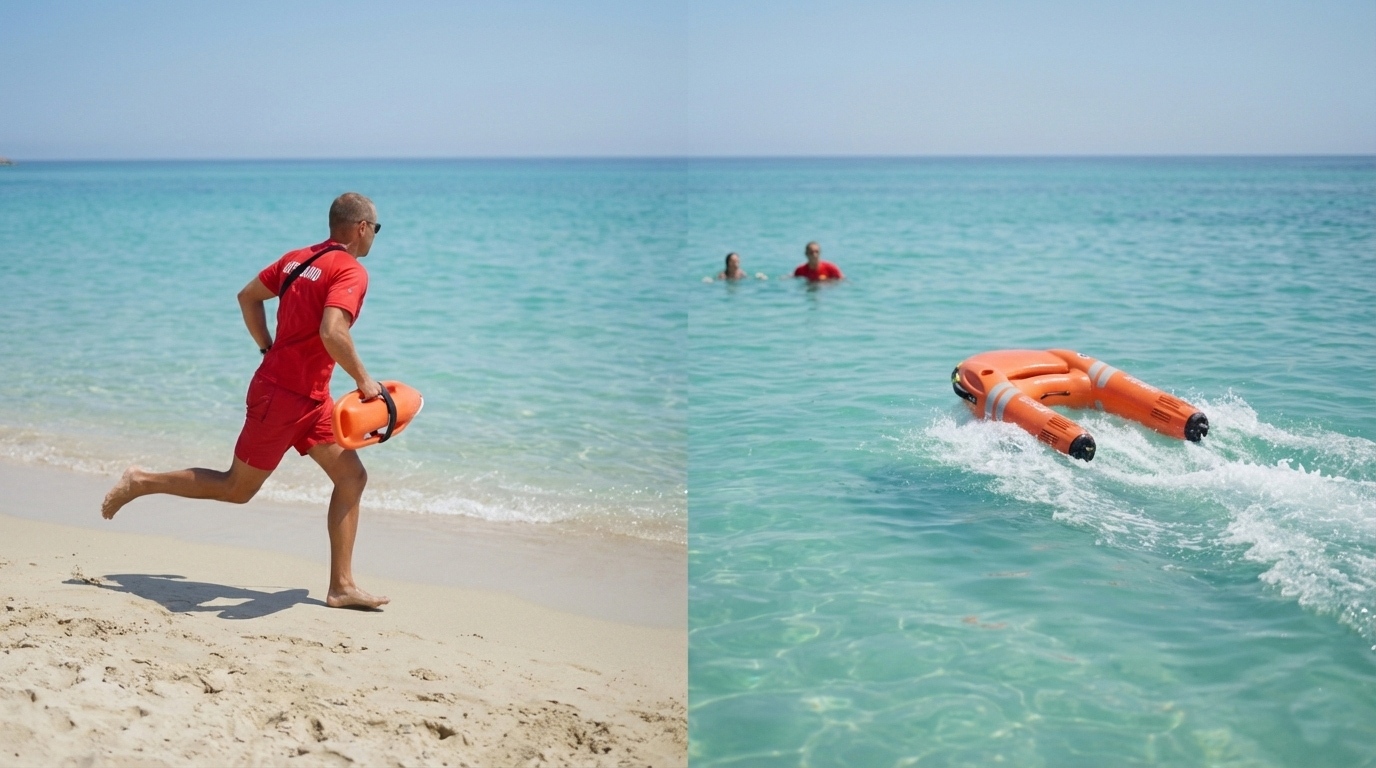
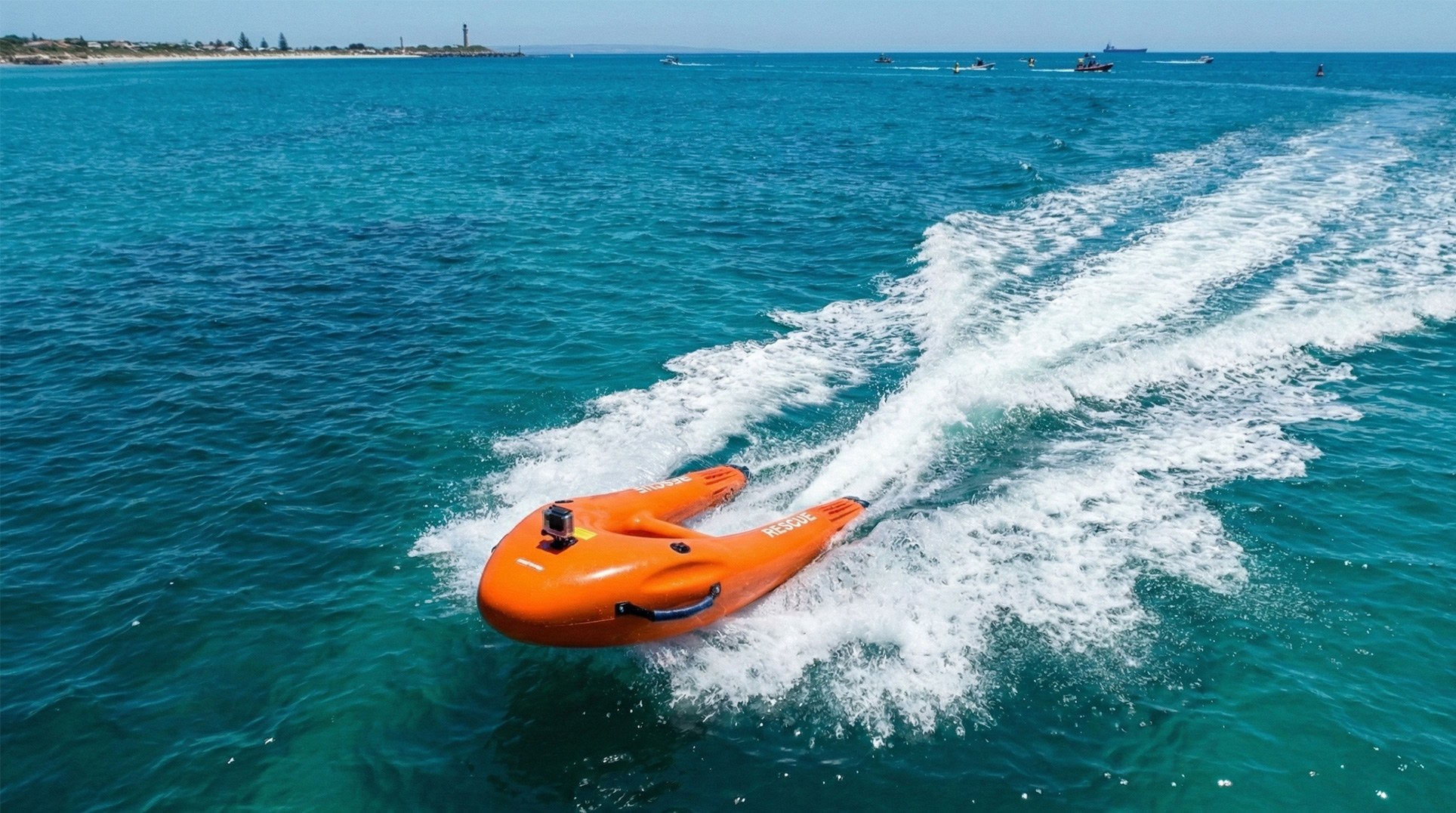
Remote Control Rescue Buoys represent one of the most important safety innovations ever introduced into aquatic rescue operations. This category focuses on the technology that is fundamentally changing how lives are saved in open water.
Traditional rescues often require swimmers or boat crews to place themselves in dangerous conditions to reach distressed victims. RCRBs reverse that model. Operated remotely from shore, vessel or helicopter, these high-speed electric flotation devices reach victims in seconds without exposing rescuers to risk.
Modern RCRBs combine sealed electric propulsion units, high-visibility flotation bodies, encrypted radio control links and GPS tracking systems. Advanced models integrate autonomous return functions, stabilisation control, emergency lighting and long-range communications.
Global adoption is accelerating rapidly. Surf lifesaving clubs, coast guards, harbours and military units are deploying RCRBs as first-response tools in surf rescues, flood operations and offshore emergencies. In Australia, where long surf beaches and dangerous rip currents create constant rescue demand, this technology is proving invaluable.
At WSI, RCRBs are treated as professional rescue systems, not consumer toys. We examine propulsion reliability, radio signal security, endurance performance, flotation ergonomics and compliance with Australian maritime safety standards.
The future of this category includes integration with rescue drones, autonomous patrol craft and AI-guided response networks. RCRBs are already saving lives. Their continued development will reshape aquatic rescue worldwide.