
Send contributions and photos to editor@watersportinnovations.com.au
Water sports is entering the most significant period of transformation in its history. For more than a century, progress in boating and personal watercraft followed a predictable path — larger engines, higher speeds, heavier fuel consumption and increasing environmental impact.
Today, that model is being replaced by a new generation of intelligent, electric-powered and digitally controlled watercraft that are reshaping the future of marine recreation, rescue operations and personal water mobility.
The Future of Water Sports Technology category exists to document and explain this transformation. At Water Sport Innovations, our role is not simply to report on new products, but to provide independent, technically accurate insight into the technologies that will define the next twenty years of water sports.
This is no longer a hobby industry driven by novelty. It is now a rapidly evolving technology sector shaped by sustainability, advanced propulsion systems, safety engineering, regulatory change and digital integration.
For most of the twentieth century, water sports innovation progressed slowly. Marine propulsion relied almost exclusively on petrol engines, mechanical controls and relatively simple hull designs.
While aviation and automotive industries embraced electronic control systems, composite materials and energy efficiency decades earlier, marine technology remained conservative.
That situation began to change in the early 2000s with the introduction of lithium battery systems, brushless electric motors and high-strength composite materials. These technologies allowed the first viable electric personal watercraft, hydrofoils and autonomous rescue devices to emerge.
Initially, performance and endurance were limited. Early electric craft lacked range, reliability and safety systems suitable for professional use. Over the last decade, however, rapid advances in battery chemistry, thermal management, digital motor controllers and sealed marine electronics have completely altered the landscape.
Modern electric watercraft now rival — and in many cases surpass — petrol-powered craft in acceleration, controllability and operational safety. This shift marks the beginning of a new era in water sports engineering.
Today’s water sports innovation is driven by several converging technology streams.
Electric propulsion systems now deliver instant torque, silent operation and precise control. High-efficiency jet pumps, ducted propellers and modular drive units allow compact craft to achieve performance levels once reserved for full-size jet skis and powerboats.
Battery technology has become the critical enabler. European-certified lithium systems, advanced battery management units and sealed waterproof housings provide stable energy delivery while protecting against thermal runaway and water ingress.
Safety standards have risen dramatically as charging fires and poor-quality imports have highlighted the risks of inadequate engineering.
Digital control systems now govern propulsion, stabilisation and navigation. Gyroscopic sensors, electronic throttle mapping and intelligent power management optimise efficiency while improving rider safety. GPS tracking, telemetry and remote diagnostics are increasingly standard in professional-grade platforms.
Hydrodynamic design has also advanced rapidly. Hydrofoil systems reduce drag by lifting craft above the water, dramatically extending range and smoothing ride quality. Lightweight carbon-fibre structures and advanced hull geometries allow higher speeds with lower energy consumption.
These technologies are no longer experimental. They are being deployed across electric mini jet boats, foil boards, rescue craft, underwater scooters and autonomous platforms worldwide.
The global water sports industry is undergoing a structural shift.
Environmental regulation is accelerating the transition away from petrol engines. Noise restrictions, emissions controls and fuel bans in sensitive waterways are creating strong demand for electric alternatives. At the same time, rising fuel costs and maintenance burdens are making traditional engines increasingly unattractive.
Professional organisations are leading adoption. Surf lifesaving clubs, marine rescue authorities, yacht operators and eco-tourism providers are rapidly integrating electric and remotely operated craft into daily operations. These users demand reliability, safety and compliance — driving the development of true professional-grade platforms.
Consumer markets are following closely behind. Electric surfboards, foil boards and compact jet boats are opening water sports to new demographics, including older users, environmentally conscious riders and urban waterfront communities.
The result is a rapidly expanding ecosystem of new craft categories, specialised safety equipment and digitally connected marine platforms.
The next decade will reshape water sports more dramatically than any period since the invention of the outboard motor.
Electric propulsion will become the dominant standard for small and medium personal watercraft. Petrol engines will remain only in high-power offshore applications. Hydrofoil platforms will expand into patrol boats, ferries and rescue craft as efficiency advantages become impossible to ignore.
Autonomous and semi-autonomous systems will transform safety operations. Remote rescue buoys, unmanned patrol craft and AI-assisted search platforms will become standard equipment for professional agencies.
Battery technology will continue to improve in energy density, fire resistance and charging speed. Solid-state batteries, modular pack systems and advanced cooling designs will further extend range and service life.
Digital integration will deepen. Real-time telemetry, remote diagnostics, geofencing and automated safety shut-downs will become standard features across the industry.
The water sports of the future will be quieter, cleaner, safer and far more technologically sophisticated than anything seen before.
Water Sports Innovations exists to provide independent, technically accurate guidance through this transformation.
Unlike sales-driven platforms, WSI operates as an educational and research authority. We analyse propulsion systems, battery safety, hydrodynamics, regulatory frameworks and long-term reliability without commercial bias. Our mission is to protect buyers, professionals and organisations by providing clarity in a rapidly evolving and often poorly regulated market.
Our research covers emerging watercraft categories, professional rescue systems, electric propulsion engineering, compliance standards and future mobility platforms. Every article published on this site is designed to build practical understanding, reduce risk and promote responsible adoption of advanced water sports technology.
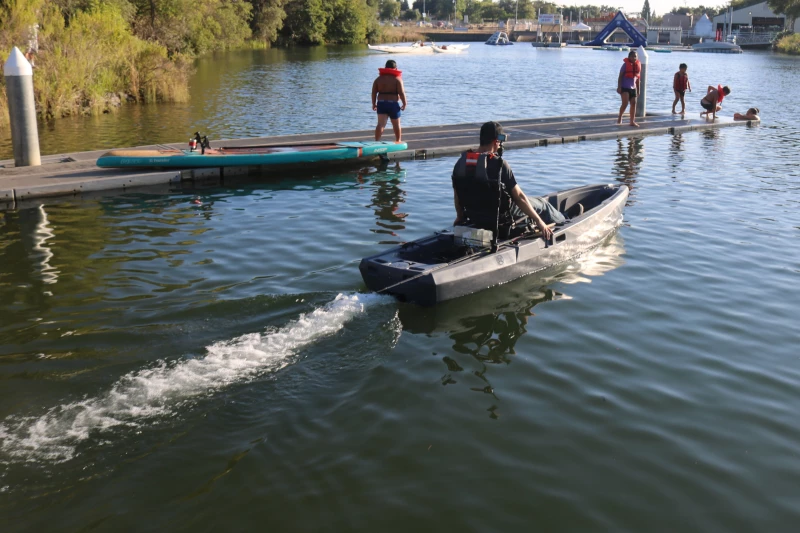
The Rise of Integrated Electric Jet Propulsion For decades, designers of kayaks, paddlecraft, and compact