
A Complete Technical and Practical Guide for Australian Buyers, Safety Organisations, and Serious Water Users
Introduction: Why Thrust Matters Underwater
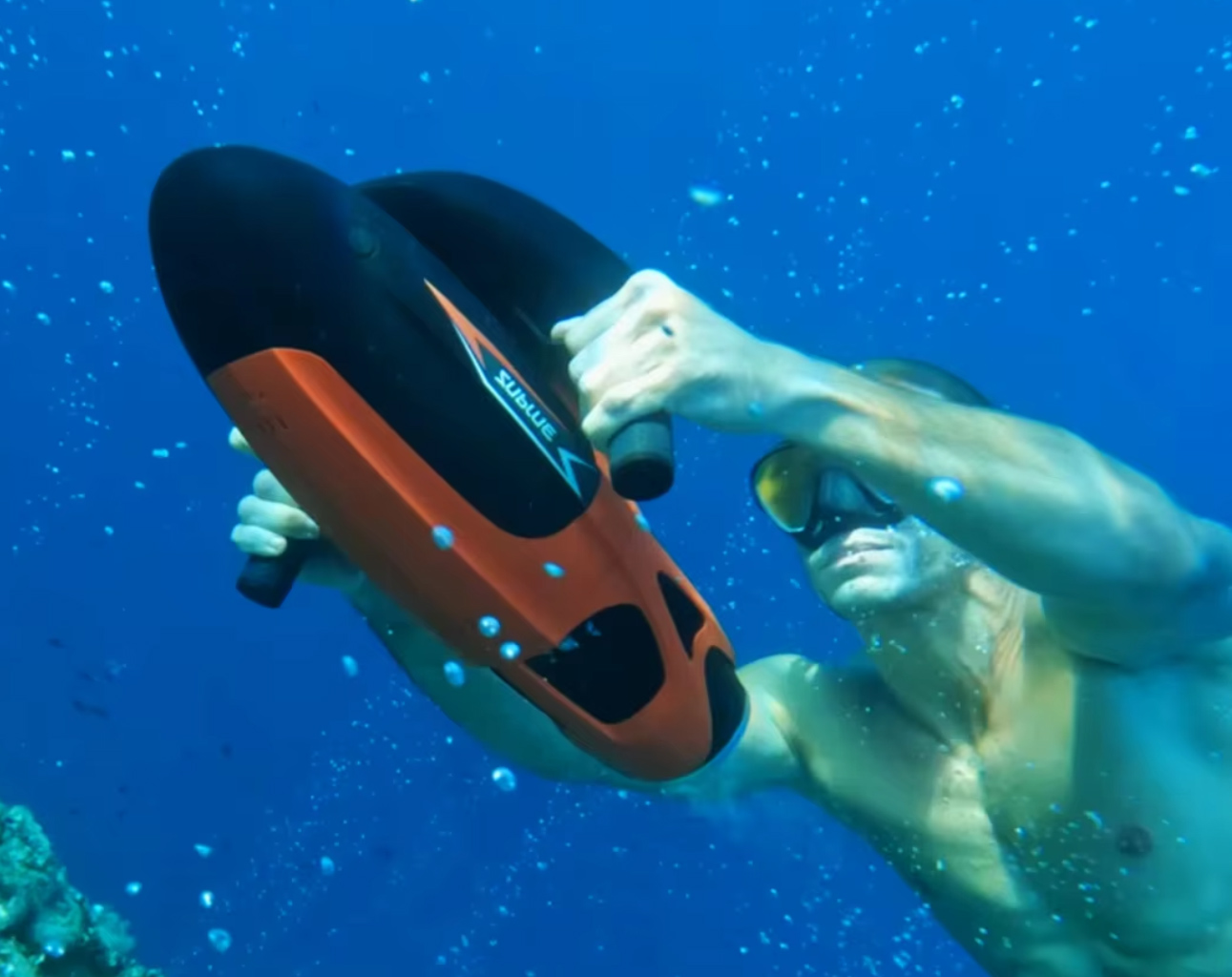
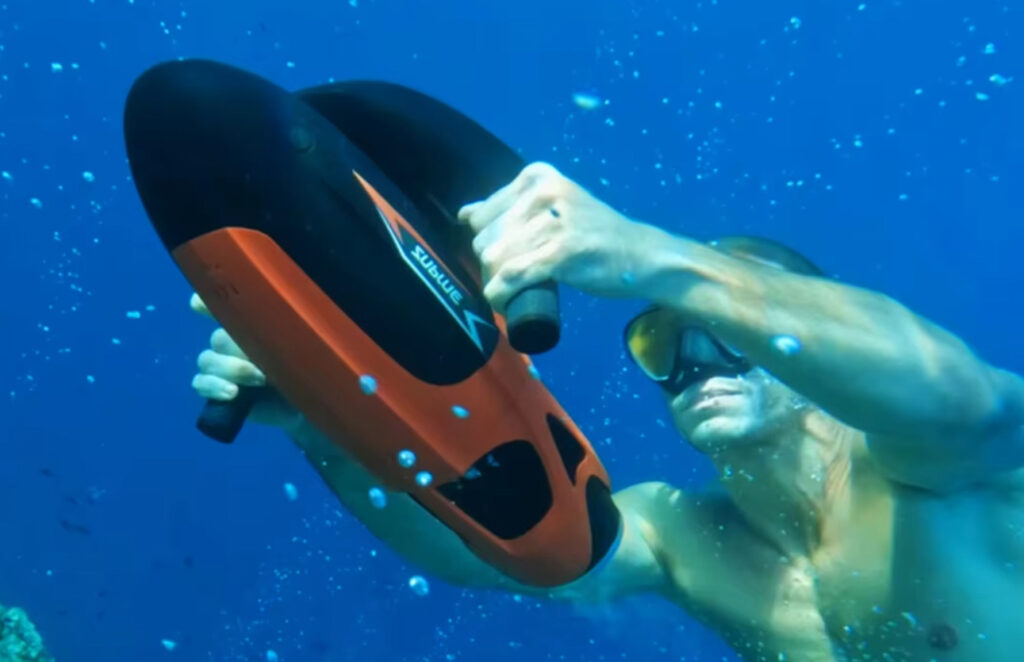
Underwater scooters, often referred to as diver propulsion vehicles (DPVs), rescue propulsion devices, or powered swim aids, have moved well beyond niche diving tools. In Australia, they are now used by recreational divers, spearfishers, freedivers, marine researchers, surf life saving clubs, councils, and private operators requiring rapid water response capability.
At the heart of every underwater scooter is one fundamental principle: thrust generation. Without efficient, predictable thrust, an underwater scooter is little more than a sealed battery with a propeller attached. Understanding how thrust is created, controlled, and translated into real-world underwater performance is essential for buyers who want reliability, safety, and genuine capability — not just impressive marketing claims.
This article explains, in practical and technical terms, how underwater scooters generate thrust, why some designs are vastly superior to others, and how this directly affects speed, efficiency, runtime, safety, and user control in Australian waters.
The Basic Physics of Thrust Underwater
Thrust is the force that propels an object forward by pushing mass in the opposite direction. In water, this is achieved by accelerating a volume of water rearwards, creating an equal and opposite reaction force that moves the scooter forward.
Underwater thrust is fundamentally different from thrust in air due to:
- Water being approximately 800 times denser than air
- Higher resistance and drag forces
- Greater importance of laminar vs turbulent flow
- Increased energy demand per unit of speed
Because of this, underwater propulsion systems must be engineered with far greater precision than surface or aerial systems.
Core Components Involved in Thrust Generation
Every underwater scooter, regardless of size or application, relies on four integrated systems to generate thrust effectively:
Electric Motor
The motor converts electrical energy from the battery into rotational energy. In high-quality underwater scooters, this is typically a brushless DC motor, chosen for:
- Higher efficiency
- Lower heat generation
- Longer service life
- Precise speed control
- Reduced electrical noise and interference
Motor quality is one of the biggest differentiators between professional-grade underwater scooters and cheap consumer imports.
Propeller or Impeller System
The propeller (or impeller) is the component that physically moves water. Its design determines:
- How much water is displaced per rotation
- The velocity at which water is expelled
- The balance between thrust and efficiency
Underwater scooters may use open propellers, ducted propellers, or enclosed impeller systems. Each design has specific implications for thrust smoothness, safety, and drag, which will be discussed later in this article.
Nozzle, Ducting, or Shroud
Many high-end underwater scooters incorporate a duct or nozzle around the propeller. This is not cosmetic — it plays a critical role in thrust efficiency by:
- Reducing tip vortices
- Directing water flow rearward
- Increasing pressure differential
- Improving thrust per watt consumed
A properly designed duct can increase usable thrust by 20–30% compared to an open propeller.
Control Electronics
Electronic speed controllers regulate how power is delivered to the motor. These systems determine:
- Throttle smoothness
- Acceleration curves
- Torque availability at low speeds
- Battery efficiency under load
- Safety cut-offs and overload protection
Superior thrust is not just about raw motor power — it is about how intelligently that power is delivered.
How Water Is Accelerated to Create Forward Motion
Thrust is created when the propeller or impeller accelerates water rearwards. The effectiveness of this process depends on three key variables:
- Mass of water moved
- Speed at which the water is accelerated
- Direction and smoothness of flow
Underwater scooters aim to move a large mass of water at moderate speed, rather than a small mass at extreme speed. This approach produces smoother, more controllable thrust and significantly improves efficiency.
Open Propeller vs Ducted Thrust Systems
Open Propeller Systems
These are commonly found in cheaper or older designs.
Advantages: Simple construction, Lower manufacturing cost, Slightly lighter weight.
Disadvantages: Reduced efficiency, Higher turbulence, Increased cavitation risk, Greater safety hazards, Loss of thrust at higher speeds.
In open systems, a significant amount of energy is lost as sideways and turbulent water flow.
Ducted or Shrouded Propeller Systems
Most professional and rescue-grade underwater scooters use ducted designs.
Advantages: Higher thrust efficiency, Better directional stability, Reduced cavitation, Improved safety, Stronger low-speed torque.
The duct forces water to move in a controlled, linear path, maximising the forward reaction force. For Australian rescue and safety applications, ducted systems are widely regarded as the superior and safer option.
Cavitation: The Hidden Enemy of Thrust
Cavitation occurs when water pressure drops low enough for vapour bubbles to form and collapse around the propeller blades. This causes:
- Loss of thrust
- Noise and vibration
- Blade erosion
- Reduced efficiency
- Unpredictable handling
High-quality underwater scooters are designed to avoid cavitation by optimising blade shape and pitch, limiting rotational speed, using ducted flow control, and matching motor output precisely to propeller design. Cheap scooters often chase headline speed figures, unknowingly pushing into cavitation zones where real thrust actually decreases.
Blade Design and Pitch: Why Shape Matters
Propeller blades are carefully engineered components, not generic paddles. Key blade characteristics include pitch angle, blade count, surface area, and leading and trailing edge geometry. A higher pitch blade produces more thrust per revolution but requires more torque. A lower pitch blade spins faster but may lack pulling power under load. Professional underwater scooters are designed with blade geometry matched precisely to motor torque curves and expected operating conditions.
Torque vs RPM: The Real Driver of Usable Thrust
One of the most misunderstood aspects of underwater propulsion is the difference between speed and thrust. RPM determines how fast the propeller spins, while torque determines how much force it can apply to the water. In underwater environments, torque is more important than RPM. High torque allows the scooter to maintain thrust against drag, push a swimmer or diver plus equipment, accelerate smoothly, and operate efficiently at lower speeds. This is why quality underwater scooters focus on torque-rich motor systems rather than chasing top speed numbers.
Thrust Under Load: Real-World Performance
Many underwater scooters are tested without load, producing impressive speed figures on paper. In reality, thrust must overcome human body drag, wetsuits and fins, rescue payloads, currents and surge, and turbulence near the surface or seabed. True thrust capability is revealed only under load. Professional-grade scooters maintain stable thrust even when pushing significant mass.
Throttle Control and Progressive Power Delivery
Effective thrust is not just about maximum output — it is about control. Modern underwater scooters use multi-stage throttle systems that allow users to select precise speed levels, maintain efficient cruising thrust, and access higher thrust only when needed. This reduces fatigue, improves safety, and dramatically extends runtime.
Efficiency: Thrust Per Watt Matters More Than Speed
Efficiency is measured as thrust produced per unit of electrical energy consumed. A well-designed underwater scooter will produce usable thrust at lower power levels, avoid energy waste through turbulence, and maintain consistent output as battery voltage drops. This is why two scooters with similar batteries can have vastly different runtimes and performance.
Australian Conditions and Thrust Requirements
Australian waters present unique challenges for underwater propulsion: strong coastal currents, surf zones and swell, variable visibility, warm water density differences, and long response distances for rescues. Underwater scooters used locally must generate predictable, controllable thrust, not just bursts of speed.
Why Understanding Thrust Protects Buyers
Buyers who understand how thrust is generated are far less likely to be misled by inflated speed claims, unrealistic runtime figures, inadequate safety design, and poorly matched components. Thrust quality determines safety, reliability, battery longevity, and long-term value.
Final Thoughts: Thrust Is the Foundation of Performance
Every other performance metric — speed, runtime, depth rating, safety, and durability — flows directly from how well an underwater scooter generates thrust. Well-engineered thrust systems combine high-torque motors, optimised propeller design, controlled water flow, intelligent electronics, and real-world load testing. For serious Australian users, understanding thrust is not optional — it is the foundation of informed purchasing and safe operation.
See More at www.vectorwatercraft.com.au