Introduction: Operating Across Two Worlds
Watercraft have traditionally been designed to operate in a single domain. Boats move on the surface. Submersibles operate below it. Each environment imposes distinct physical, mechanical, and safety constraints, and for most of marine history those constraints made hybridisation impractical. That separation is now being challenged.
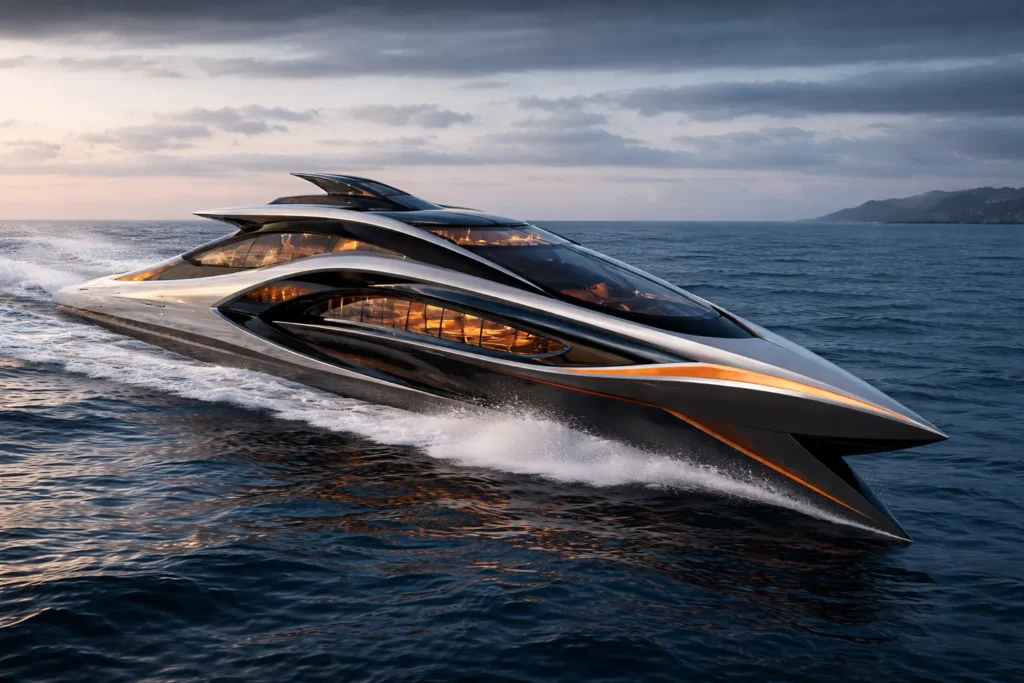
Advances in electric propulsion, sealed power systems, lightweight structures, and electronic control have revived serious interest in hybrid surface–subsurface watercraft—craft capable of operating efficiently on the surface while also functioning below it for defined periods or purposes. These designs are no longer confined to science fiction or military experimentation. They are now appearing in civilian, rescue, research, and recreational contexts.
This article examines what hybrid surface–subsurface watercraft are, why they are emerging now, what engineering challenges define their limits, and which concepts are realistically viable over the next decade.
What Defines a Hybrid Surface–Subsurface Watercraft
A hybrid surface–subsurface watercraft is not simply a submersible with surface capability, nor a surface craft that can momentarily dip below the waterline. True hybrids are designed to operate intentionally and controllably in both modes.
Key defining characteristics include:
- Efficient surface operation with predictable handling
- Controlled sub-surface operation with managed buoyancy
- Seamless transition between modes
- Fully sealed propulsion and power systems
- Structural integrity under both hydrodynamic and hydrostatic loads
The challenge is not achieving any one of these features, but achieving all of them without excessive compromise.
Why These Craft Were Historically Impractical
Historically, hybridisation failed for three main reasons.
First, internal combustion engines are fundamentally incompatible with submerged operation. Air intake, exhaust, cooling, and fuel systems all rely on surface exposure. Sealing these systems adds complexity and risk.
Second, traditional materials struggled with repeated pressure cycling. Hulls designed for surface loads were poorly suited to hydrostatic pressure, while submersible hulls were inefficient and unstable on the surface.
Third, control systems lacked the sophistication required to manage transitions between modes safely. Mechanical systems could not adapt dynamically to changing operating conditions.
These limitations confined hybrid concepts to niche military applications with high budgets and narrow use cases.
Electric Propulsion Changes the Equation
Electric propulsion removes the single largest barrier to hybrid operation. Electric motors function identically whether on the surface or submerged. There is no requirement for air intake or exhaust. Cooling systems can be sealed and pressure-tolerant. Power delivery is electronic rather than mechanical.
This allows propulsion systems to remain unchanged across operating modes, simplifying design and improving reliability. Once propulsion is solved, hybridisation becomes an engineering problem rather than a mechanical impossibility.
Buoyancy Control: The Central Engineering Challenge
The defining challenge of hybrid craft is buoyancy control. Surface craft rely on positive buoyancy and planing forces. Subsurface craft rely on neutral or slightly negative buoyancy, often controlled through ballast systems. Managing both within a single platform requires precision.
Modern hybrid designs use combinations of:
- Variable ballast tanks
- Active buoyancy adjustment
- Hydrodynamic lift surfaces
- Distributed mass control
Electronic control systems are essential. Manual systems are too slow and imprecise for safe transitions. Poor buoyancy control is the most common reason hybrid designs fail.
Transition Dynamics: Surface to Subsurface and Back Again
The transition between surface and subsurface modes is where engineering discipline matters most. During descent, lift must be reduced without inducing instability. During ascent, buoyancy must increase without uncontrolled surfacing. These transitions must be smooth, predictable, and repeatable.
Designers must account for:
- Changes in drag profiles
- Shifts in centre of buoyancy
- Thrust vector alignment
- Operator orientation and situational awareness
Successful hybrids treat transition as a controlled phase, not an incidental event.
Hull Design Trade-Offs
Hull design represents a fundamental compromise in hybrid craft. Surface hulls favour flat or stepped forms to promote planing and stability. Subsurface hulls favour rounded forms to resist pressure and minimise drag. Combining these requirements requires careful prioritisation.
Most viable designs favour surface performance first, with limited sub-surface depth capability. Fully deep-diving hybrids remain impractical for civilian use due to structural and safety requirements. This reality defines the limits of hybridisation in recreational and light professional contexts.
Depth Capability: Realistic Expectations
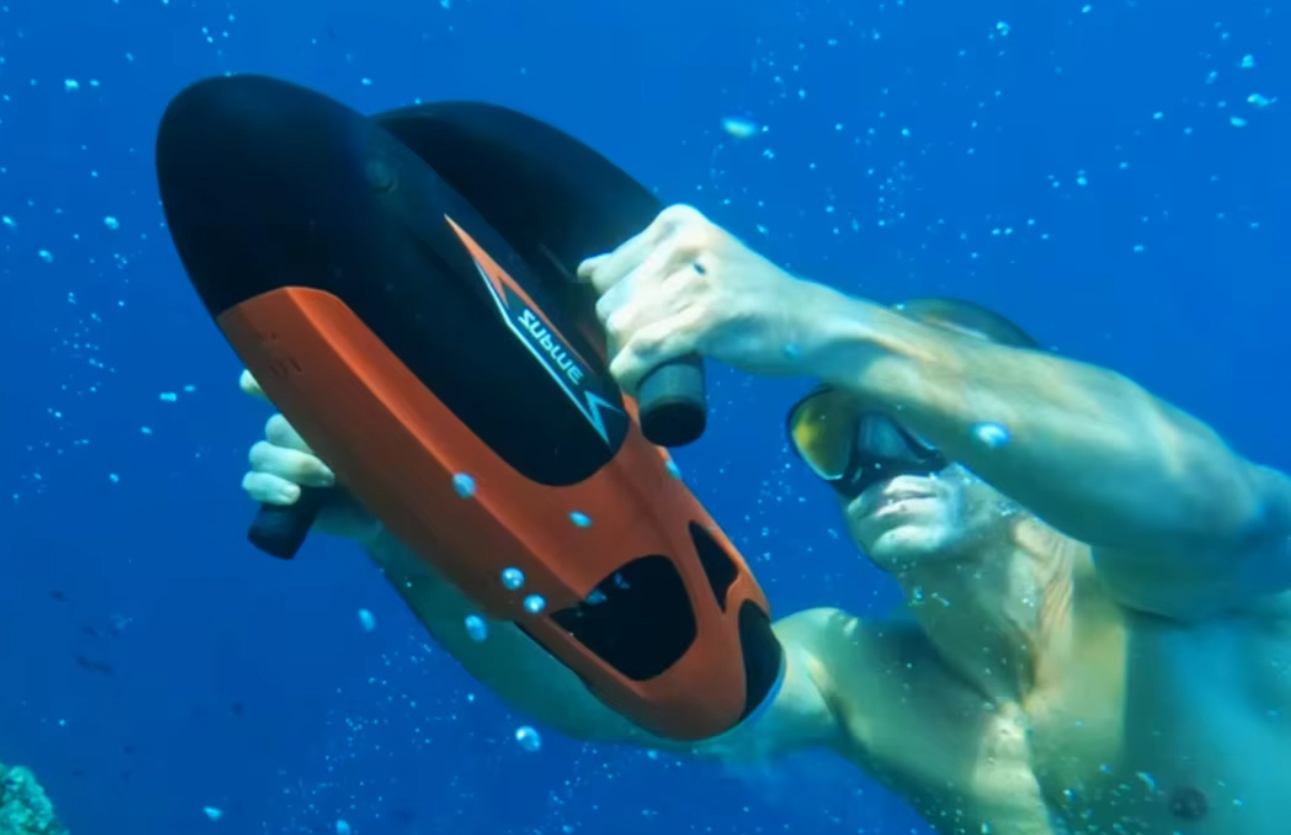
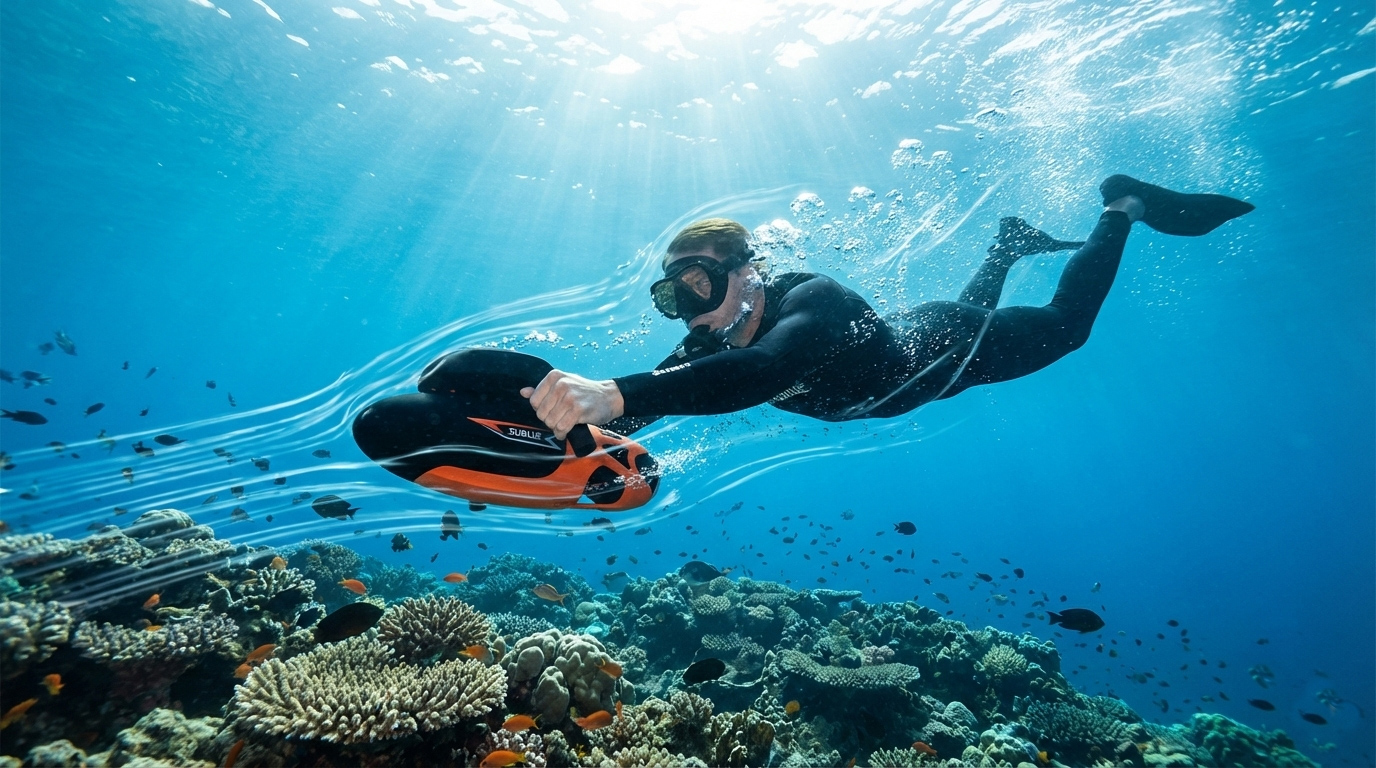
A critical misunderstanding in popular discussions is depth capability. Most emerging hybrid surface–subsurface watercraft are not designed for significant depth. They operate in shallow sub-surface environments—typically a few metres below the surface—for inspection, observation, or manoeuvring.
This limitation is not a flaw. It reflects practical use cases and safety considerations. Attempting deep submersion dramatically increases structural complexity, cost, and regulatory burden.
Human Factors and Operator Safety
Operating below the surface introduces human factors that do not exist in traditional watercraft. Visibility changes rapidly. Orientation cues are reduced. Psychological stress can increase. Hybrid craft must account for these factors through design rather than relying solely on operator skill.
Key considerations include:
- Clear visual feedback systems
- Controlled descent and ascent rates
- Automated safety limits
- Emergency surface protocols
Hybrid designs that ignore human factors are unlikely to gain acceptance outside specialist environments.
Applications Driving Hybrid Development
Hybrid surface–subsurface watercraft are not emerging randomly. Specific applications are driving development:
- Shallow-water inspection and surveying
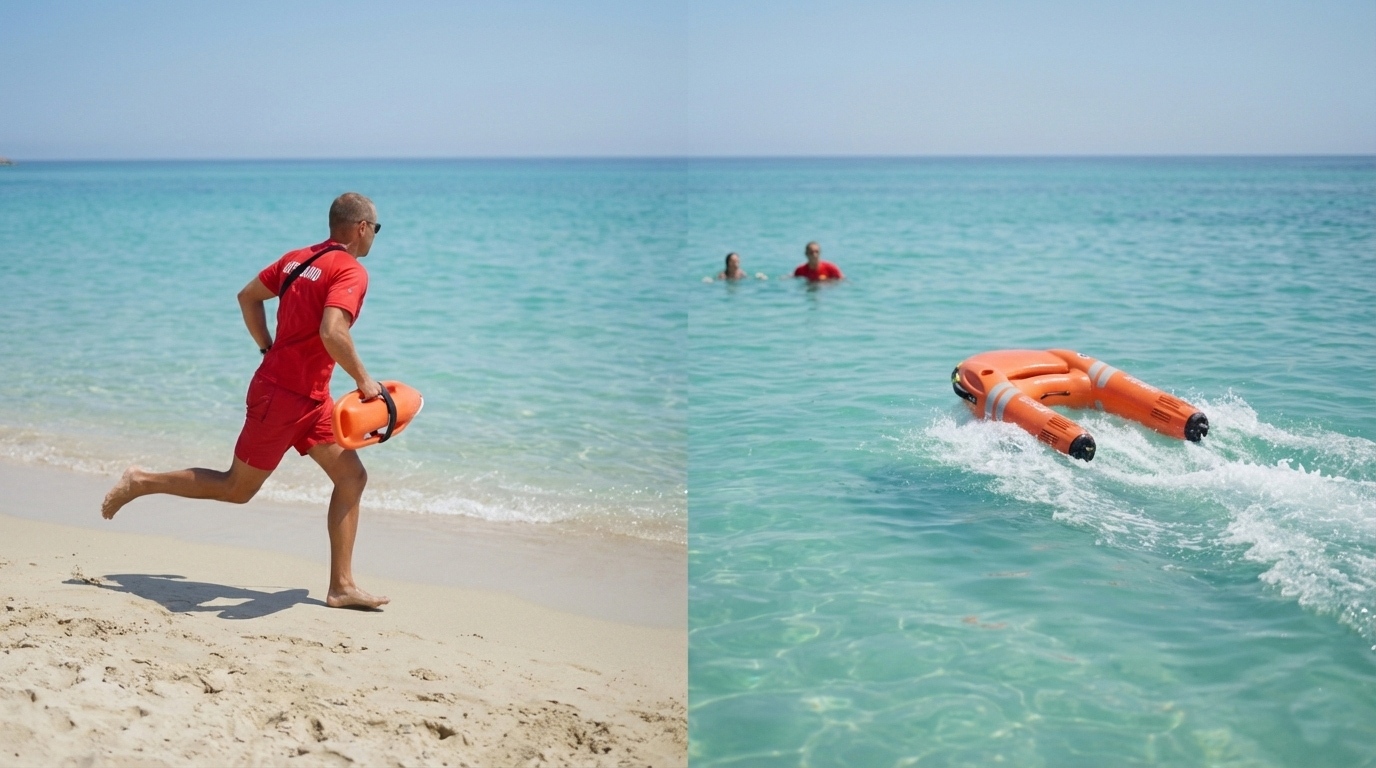
- Search and rescue support
- Environmental monitoring
- Underwater photography and exploration
- Infrastructure inspection
These applications benefit from the ability to transition between surface mobility and sub-surface observation without deploying separate equipment.
Why Recreational Adoption Is Limited but Growing
Recreational adoption of hybrid craft remains limited, but interest is growing. Most recreational users do not require sub-surface capability, but those who do value simplicity and safety over depth or endurance. Electric hybrids designed for brief, controlled sub-surface operation align with these expectations.
As designs become more refined and intuitive, recreational acceptance is likely to increase—particularly in guided or supervised environments.
Regulatory and Certification Considerations
Hybrid craft challenge traditional regulatory categories. They are neither conventional boats nor submersibles. This creates uncertainty around certification, operating rules, and safety equipment requirements.
However, this ambiguity also allows for adaptive frameworks. Regulators can assess behaviour—depth capability, speed, operating zones—rather than relying solely on classification. Australia’s safety-outcome-focused regulatory approach is well suited to this evolution.
Failure Modes Unique to Hybrid Craft
Hybrid watercraft introduce unique failure risks that must be managed:
- Loss of buoyancy control
- Electrical sealing failure
- Transition instability
- Operator disorientation
Successful designs incorporate multiple layers of redundancy and conservative operating limits. Hybridisation rewards caution far more than ambition.
Why Many Concepts Will Remain Experimental
Despite technological advances, many hybrid concepts will remain experimental. The engineering compromises required limit mass-market appeal. Costs remain higher than single-mode craft. Regulatory uncertainty persists. This does not mean hybridisation has failed. It means its role will remain specialised rather than universal.
The Most Viable Hybrid Path Forward
The most viable hybrid designs share common traits:
- Limited sub-surface depth
- Surface-first performance
- Automated buoyancy control
- Strong emphasis on safety and redundancy
These craft do not attempt to be all things. They are designed for specific use cases where hybrid capability adds real value.
The Next Decade of Hybrid Innovation
Over the next decade, expect incremental rather than radical progress. Better sealing systems, improved control electronics, and refined hull forms will expand capability gradually. Hybridisation will remain a niche, but an important one. Its influence will extend beyond the hybrids themselves, informing design thinking across watercraft categories.
Conclusion: Possibility Bounded by Physics
Hybrid surface–subsurface watercraft are no longer theoretical. They are technically feasible and increasingly practical within defined limits. Those limits are set by physics, human factors, and safety—not by imagination. Successful designs respect those boundaries.
Hybridisation will not redefine all watercraft, but it will redefine what is possible at the edges. In doing so, it expands the vocabulary of marine design and opens new pathways for innovation grounded in reality rather than spectacle.
See More at vectorwatercraft.com.au.