Introduction: The Boat That Proved Sailing Could Fly
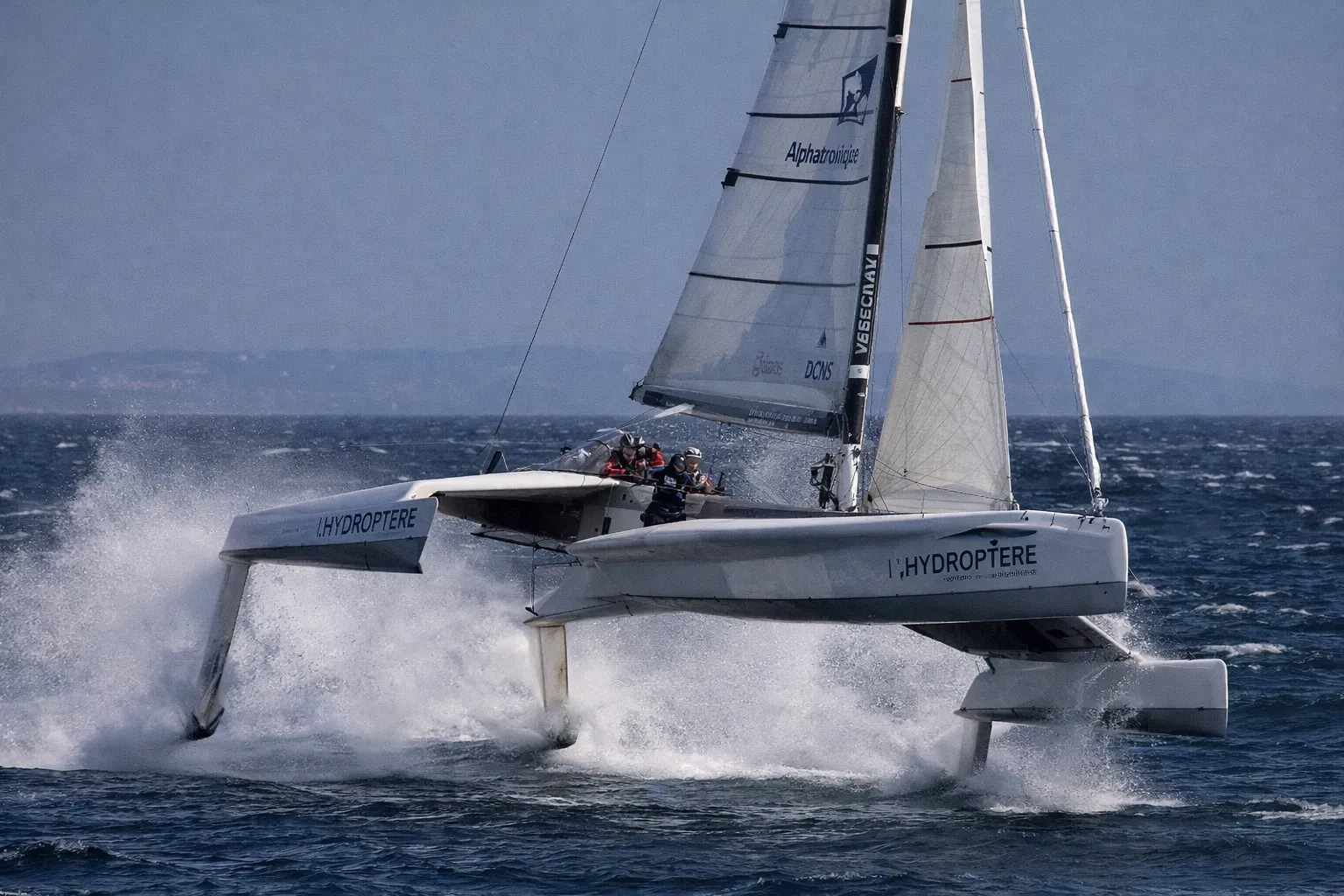
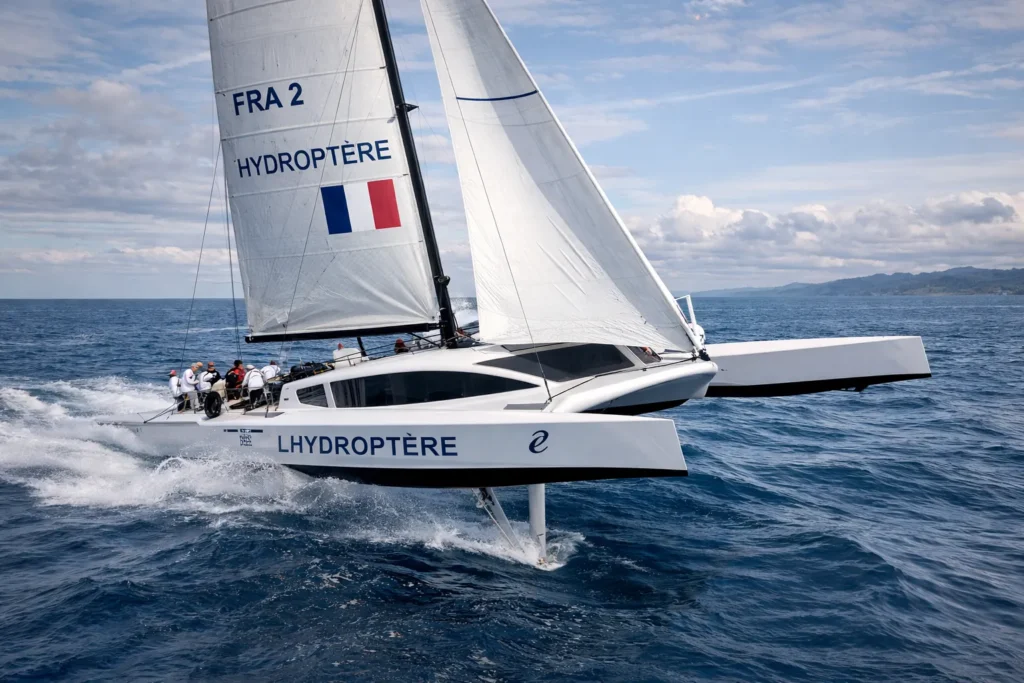
Few watercraft in history have fundamentally altered how speed on water is understood. Among that rare group stands L’Hydroptère, the French experimental hydrofoil trimaran that did not merely push the limits of sailing—it redefined them.
Where most sailing innovation had focused on incremental gains in hull efficiency, rigging, and materials, L’Hydroptère pursued a far more radical objective: to lift an ocean-going sailing vessel completely clear of the water and sustain it at unprecedented speeds.
In doing so, L’Hydroptère became one of the most important experimental watercraft ever built, laying the technological and conceptual foundations for the hydrofoil revolution now sweeping across modern sailing, foiling yachts, and even electric watercraft.
Origins: French Engineering Meets Aeronautical Thinking
L’Hydroptère was conceived by Alain Thébault, a French sailor and engineer with a background in aeronautics, not traditional naval architecture. This distinction is critical to understanding the vessel.
Rather than viewing water as a surface to be displaced or planed upon, Thébault approached the sea as a fluid medium capable of generating lift, much like air over an aircraft wing. His inspiration came from:
- Aircraft wing theory
- Supersonic flow research
- Aerospace composite structures
- Early hydrofoil experiments
The ambition was audacious: to build a large, offshore-capable sailing craft that could fly stably on foils at speeds previously thought impossible for wind-powered vessels.
Why Hydrofoils Were Central to the Vision
Before L’Hydroptère, hydrofoils existed primarily on small experimental boats, river craft, and military prototypes. They were rarely applied to large, ocean-going sailing vessels due to structural complexity, control instability, and extreme load forces. L’Hydroptère deliberately embraced these challenges.
The core principle was simple but unforgiving: Remove hull drag almost entirely, and speed becomes limited not by water resistance, but by structural strength and aerodynamic control. By lifting the hull clear of the sea, hydrofoils reduce wetted surface area by orders of magnitude—unlocking speed potential unattainable by conventional hulls.
Trimaran Platform: Stability Before Speed
L’Hydroptère was built on a trimaran configuration, chosen not for tradition, but necessity. The trimaran offered:
- Wide beam for lateral stability
- Structural separation of foil loads
- Space for large foil arms
- Redundancy in extreme conditions
The central hull housed crew and rig loads, while the outer floats provided leverage and balance as the vessel transitioned from displacement sailing to full foiling flight. This configuration was essential to managing the immense forces generated once the vessel exceeded 40 knots.
Foil Design and Lift Dynamics
The hydrofoils on L’Hydroptère were not simple appendages; they were aerodynamic lifting surfaces operating in water, subject to enormous stresses. Key characteristics included:
- Large, swept foil arms
- Precisely engineered foil sections
- Vertical and horizontal foil components
- Structural integration with the main crossbeams
At speed, the foils generated lift sufficient to raise nearly the entire vessel clear of the water, leaving only the foils themselves in contact with the sea. This dramatically reduced drag—but introduced extreme challenges in control and stability.
The Cavitation Barrier
One of L’Hydroptère’s most critical technical challenges was cavitation. At very high speeds, pressure drops around the foil surfaces cause water to vaporise, forming bubbles that destroy lift, increase drag, cause violent vibration, and damage foil surfaces.
For decades, cavitation was thought to impose an upper speed limit on hydrofoil craft. L’Hydroptère confronted this barrier directly through:
- Advanced foil profiles
- Surface treatments
- Material selection
- Structural stiffness to prevent deformation
Over time, these innovations allowed the vessel to push past speeds once considered unattainable for sailing craft.
Structural Engineering and Materials
L’Hydroptère was built using advanced aerospace-grade composites, reflecting its aeronautical heritage. Materials included carbon fibre laminates, high-strength resins, and titanium or specialised alloys in critical joints.
The structure had to withstand massive dynamic loads, shock forces during foil re-entry, and torsional stresses across wide beam spans. Failures did occur during development—catastrophic ones—but each informed subsequent refinements. L’Hydroptère was as much a research platform as it was a vessel.
Rig and Sail Plan Optimised for Foiling
Unlike traditional sailboats that rely on hull interaction with water for balance, L’Hydroptère’s rig had to function effectively while airborne. Key rig features included highly efficient, rigid sail profiles and precision control of sail trim, with an emphasis on aerodynamic efficiency over raw sail area.
At foiling speeds, aerodynamic forces dominate. The sails effectively functioned as aircraft wings, requiring extraordinary control to prevent instability.
Control Systems and Human Limits
Perhaps the most remarkable aspect of L’Hydroptère was that it was human-controlled. Unlike modern foiling craft that rely heavily on electronic flight control systems, L’Hydroptère depended on a highly skilled crew, mechanical control systems, and continuous human input.
The crew operated at the edge of human reaction time, managing a vessel travelling faster than many small aircraft during takeoff—on the open ocean.
Record-Breaking Achievements
L’Hydroptère earned its place in history by shattering long-standing speed records. Among its most significant achievements:
- World Sailing Speed Record: 51.36 knots (approximately 95 km/h)
- First sailing craft to exceed 50 knots
- Sustained foiling at unprecedented speeds
These records were not symbolic—they fundamentally altered perceptions of what wind-powered vessels could achieve.
Risks, Failures, and Setbacks
L’Hydroptère’s journey was not smooth. The project experienced structural failures, capsizes, financial challenges, and years of iterative redesign. At times, the project appeared unviable. Yet persistence, combined with incremental learning, ultimately delivered breakthroughs that reshaped marine engineering.
Influence on Modern Foiling Craft
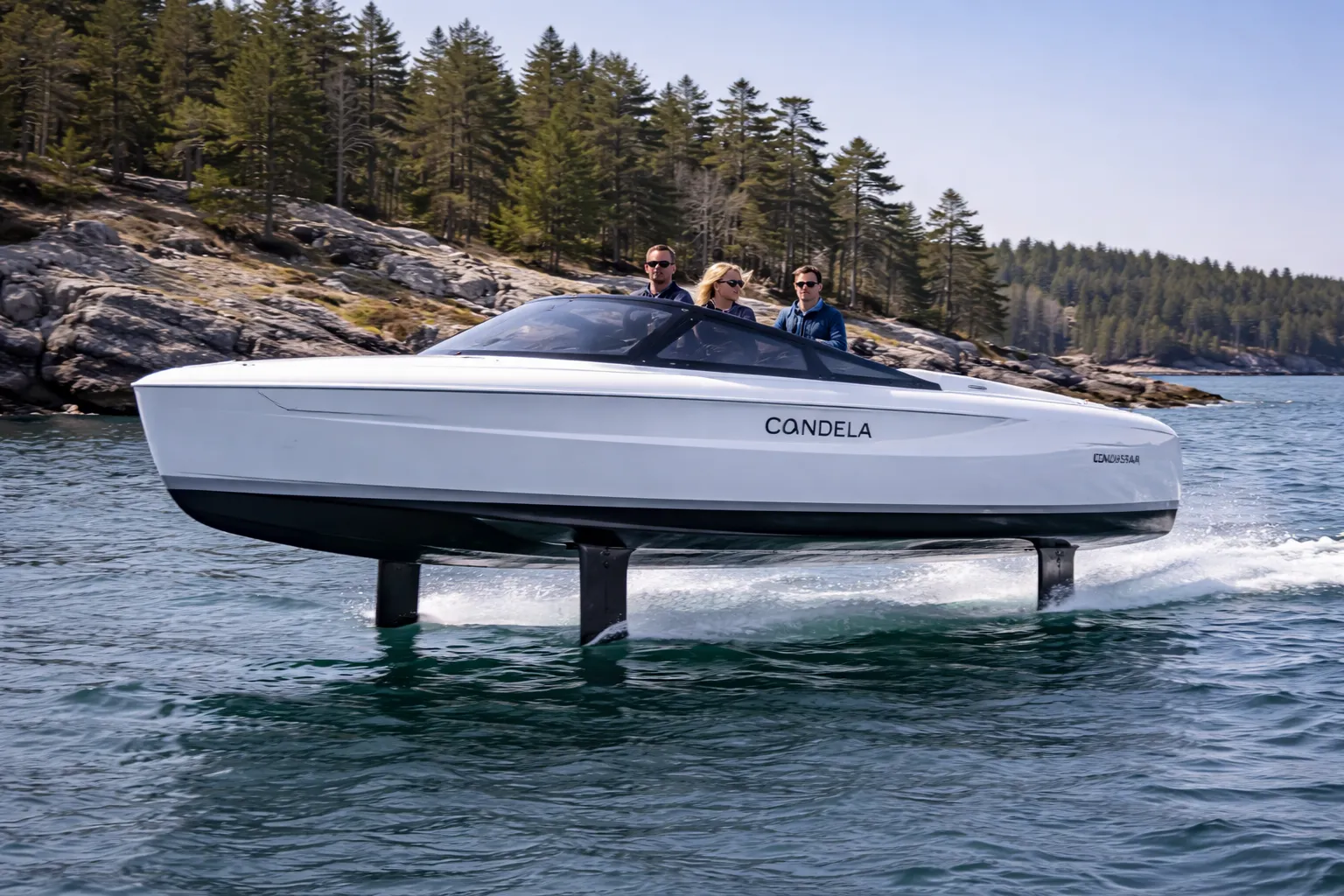
The true legacy of L’Hydroptère lies not in its records, but in its influence. Modern foiling platforms—including America’s Cup AC75 yachts, IMOCA foilers, high-performance trimarans, and electric hydrofoil boats—all trace conceptual lineage back to the pioneering work done on L’Hydroptère. What was once experimental is now becoming mainstream.
Why L’Hydroptère Is a Defining Emerging Watercraft
L’Hydroptère belongs squarely in emerging watercraft and experimental concepts because it represents a fundamental shift in how vessels interact with water. It marks the transition from displacement to flight and the merging of aeronautical and marine engineering. It provided proof that radical ideas can become reality; it was not a refinement—it was a rupture with tradition.
Broader Implications for Marine Technology
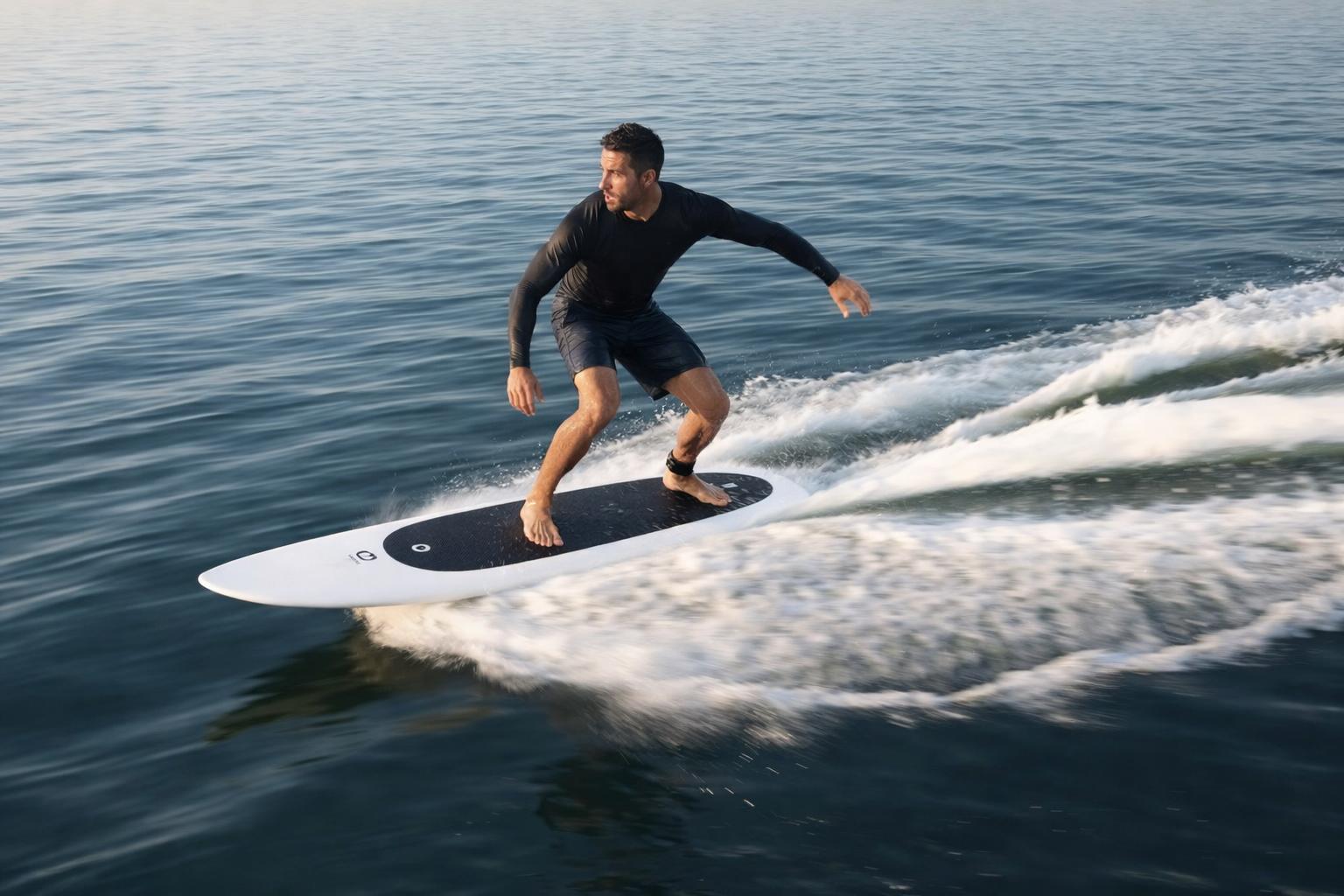
Beyond sailing, L’Hydroptère’s lessons extend to electric foiling craft, autonomous surface vehicles, high-speed maritime transport, and energy-efficient marine mobility. Its work demonstrated that lifting clear of water is the most powerful efficiency tool available.
Conclusion
L’Hydroptère was never intended to be practical, comfortable, or commercially viable. Its purpose was more important: to prove what was possible. By daring to lift a large sailing vessel into sustained flight over open ocean, it expanded the boundaries of marine engineering and permanently changed the trajectory of watercraft design. Few experimental watercraft can claim such lasting impact. L’Hydroptère is one of them.
See more at vectorwatercraft.com.au