
The Rise of Integrated Electric Jet Propulsion
For decades, designers of kayaks, paddlecraft, and compact personal watercraft have faced a stubborn engineering compromise. Human-powered craft excel at simplicity, light weight, and shallow-water access—but struggle badly against wind, tide, and current. Electric assistance has helped, yet most solutions introduce their own problems: excessive weight, external motors, weed fouling, noise, mechanical complexity, and reduced reliability in harsh marine environments.
A new propulsion architecture emerging from California suggests that this long-standing compromise may finally be breaking down.
The FluxJet system—developed by FluxJet Marine, a subsidiary of Kymera—represents a radical rethink of how electric propulsion can be integrated into small watercraft. Rather than adapting legacy motor-and-shaft designs, FluxJet re-engineers the entire jet drive concept from first principles, with implications that extend far beyond kayaks alone.
This article examines why FluxJet matters, how its design differs fundamentally from traditional electric propulsion, and what it signals for the future of compact watercraft across recreational, commercial, and rescue applications.
The Problem With Conventional Electric Assist Systems
Electric motors have become commonplace in kayaks and small boats, but their limitations are well understood by experienced users. Traditional trolling motors and bolt-on electric assists typically rely on exposed propellers or externally mounted shafts. These systems are heavy relative to their output, prone to snagging weeds or debris, and vulnerable in shallow water. Their mechanical layouts—motor, shaft, seals, bearings, gearbox, propeller—introduce multiple failure points and demand regular maintenance.
Even electric jet drives, while avoiding exposed props, often inherit much of this mechanical baggage. Most still rely on a motor driving a shaft, which then turns an impeller housed inside a stationary ring. This architecture dates back more than half a century and has changed remarkably little. For lightweight craft such as kayaks, these designs impose a penalty that often outweighs their benefits. Added mass affects stability and handling. Noise and vibration diminish the experience. And complex assemblies undermine reliability in sand- and silt-rich environments where kayaks are most often used. FluxJet approaches the problem from a completely different angle.
A Clean-Sheet Approach to Electric Jet Propulsion
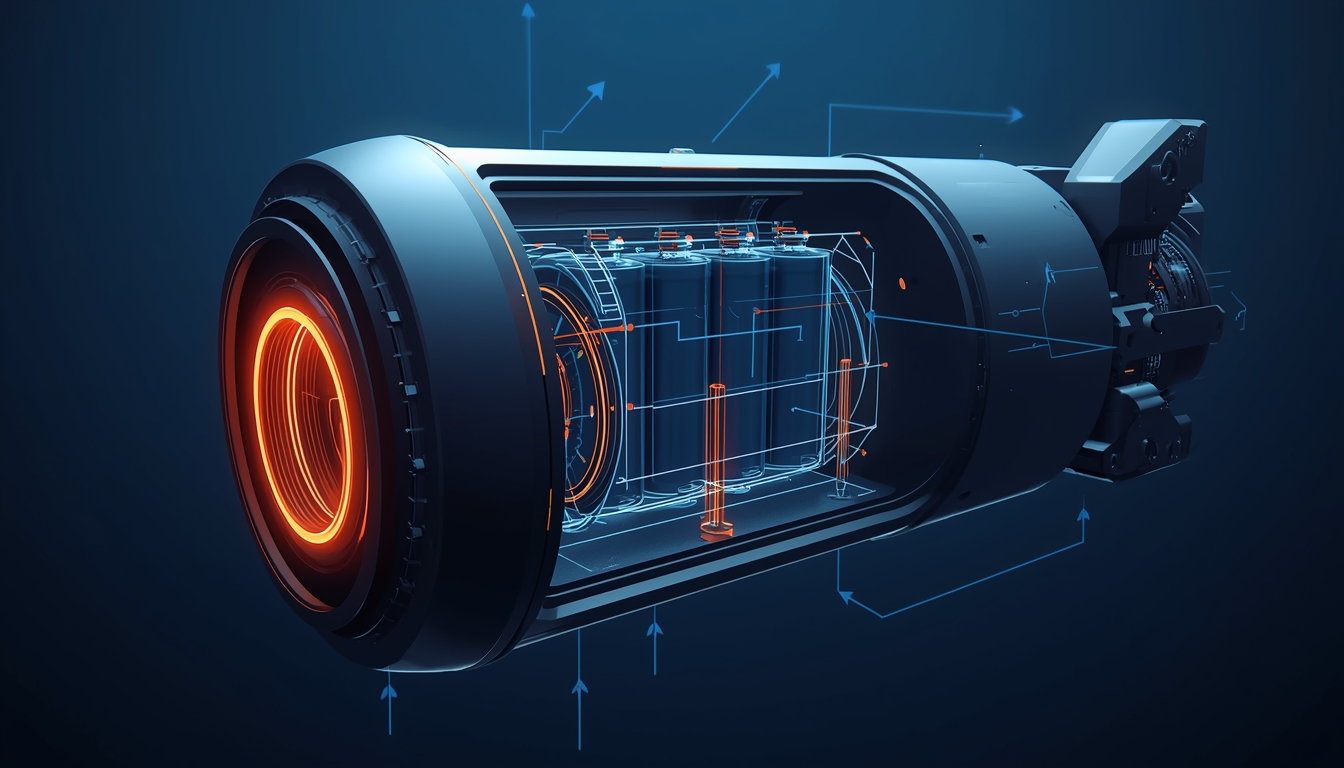
At the heart of the FluxJet concept is a deceptively simple idea: eliminate as many components as possible. Rather than using a motor to spin a shaft that spins an impeller, FluxJet surrounds the impeller itself with a ring-shaped electromagnetic motor. The motor and impeller effectively become a single integrated unit, removing the need for driveshafts, seals, and many bearings entirely.
This “best component is no component” philosophy leads to a propulsion module that is radically smaller, lighter, and mechanically simpler than anything currently common in the market. The entire drive unit weighs under five pounds in its smallest functional form, yet is capable of delivering several kilowatts of continuous power. Even higher-output versions—producing between 15 and 25 kilowatts—remain astonishingly compact relative to their performance, weighing only around six kilograms.
Fully Submerged Operation: More Than a Packaging Choice
One of the most important—and least appreciated—features of the FluxJet design is that it operates fully submerged, without internal air cavities. This has several critical advantages:
- Direct Cooling: Water provides exceptionally effective cooling. By eliminating trapped air pockets, the system allows heat to be transferred directly into the surrounding water.
- Acoustic Dampening: Vibration and acoustic noise are dramatically reduced. A fully submerged, integrated motor dampens resonance naturally.
- Efficient Torque: With the motor acting directly on the impeller assembly, losses associated with intermediate components are minimized.
Rethinking the Impeller Ring: Solving a Hidden Weakness
Conventional jet pumps suffer from a subtle but serious vulnerability: the small clearance between the impeller blades and the surrounding stationary ring. Sand, grit, or organic debris can lodge in this gap, causing jamming or gradual erosion. FluxJet eliminates this issue entirely by attaching the impeller blades directly to the rotating ring itself. Because the ring spins with the blades, there is no static gap where debris can become trapped.
This design change yields multiple benefits:
- Improved durability in sandy or silty environments
- Higher efficiency due to reduced leakage losses
- Greater structural rigidity of the blades
- Additional thrust contribution from the moving ring surface itself
Performance Density and Integrated Steering
Perhaps the most disruptive aspect of FluxJet is its sheer power-to-weight ratio. Early test units demonstrated the ability to deliver 5 kW continuously from a module weighing less than two kilograms. Larger variants have proven capable of pushing small boats beyond 30 km/h—performance previously unthinkable without significantly heavier systems.
In its current fishing-kayak configuration, FluxJet uses vectored thrust for steering. Foot pedals actuate the jet nozzle directly, eliminating the need for external rudders or skegs. This approach offers several advantages:
- No exposed appendages to snag weeds
- Improved shallow-water capability
- Reduced drag when coasting or paddling
- Simpler hull geometry
Commercialisation: From Prototype to Production
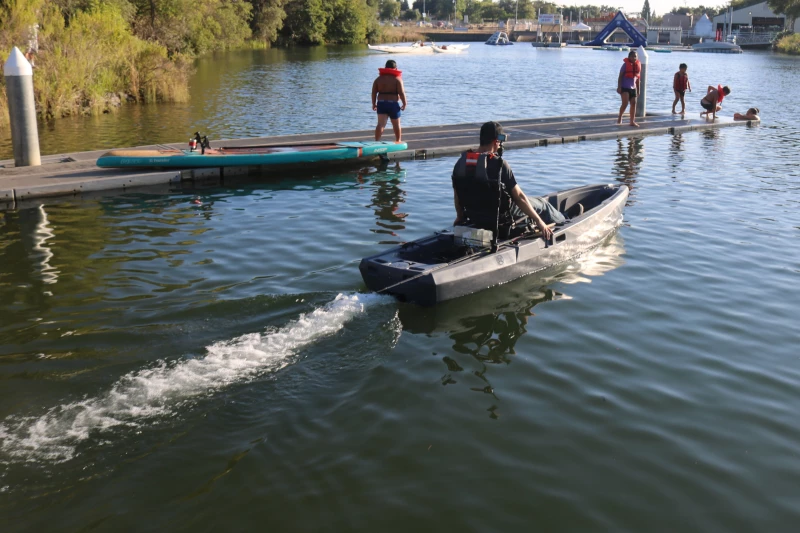
FluxJet’s technology moved decisively from experimental to commercial territory with its public unveiling at iCast 2025, where it earned a Best in Show award. The first production application will be a purpose-built fishing kayak designed specifically around the FluxJet system. Rather than retrofitting propulsion onto an existing hull, the kayak integrates the drive from inception.
The production model measures approximately 3.35 metres long and weighs around 40 kilograms fully equipped. Powered by a 1 kW FluxJet unit, it achieves speeds exceeding 10 km/h and offers runtime measured in many hours, depending on battery configuration.
Beyond Kayaks: Broader Industry Implications
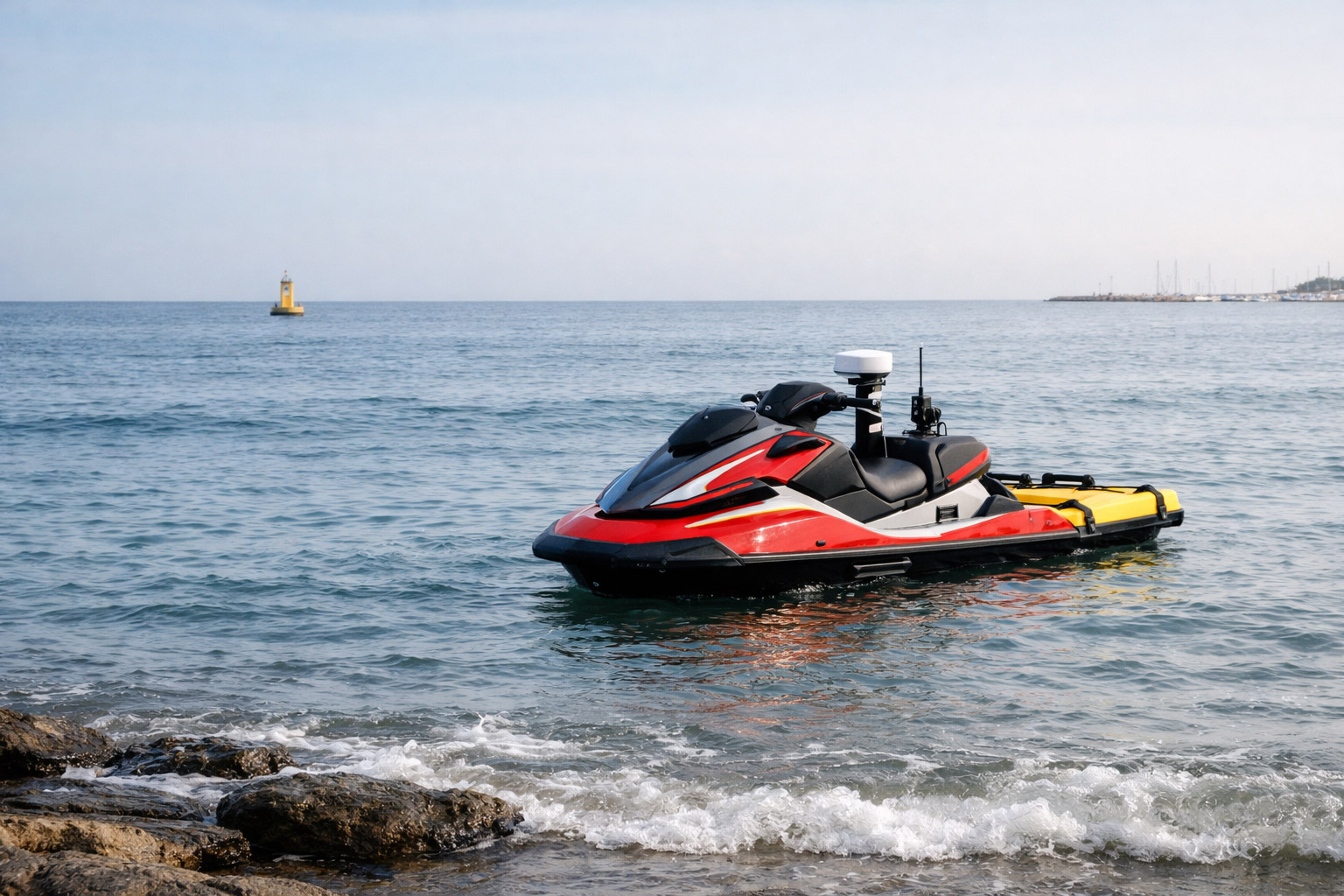
While kayaks are the most immediate beneficiary, FluxJet’s architecture could be scaled for electric bodyboards, rescue platforms, compact tenders, and personal mobility watercraft. For rescue operations in particular, the absence of exposed props and the system’s ability to operate safely near swimmers could prove transformative.
FluxJet demonstrates what becomes possible when designers abandon legacy assumptions and start from first principles. This mirrors trends seen in other sectors, from automotive in-wheel motors to aerospace distributed propulsion concepts. Integration, simplification, and efficiency are becoming the dominant design values.
Conclusion: A Quiet Revolution Beneath the Waterline
FluxJet’s true achievement is not any single specification, but the way it reframes the problem of electric propulsion altogether. By eliminating unnecessary components, integrating motor and impeller, and designing specifically for submerged operation, it delivers performance, efficiency, and reliability in a form factor previously thought unattainable.
Whether FluxJet itself becomes the dominant standard remains to be seen. But the principles it embodies—simplicity, integration, and purpose-built design—are almost certain to shape the next generation of electric watercraft. In that sense, this is not merely a new kayak drive system. It is a glimpse of where the entire sector is heading.
See More at www.vectorwatercraft.com.au