
Introduction: The End of the Jet Ski Monopoly
For more than four decades, the Jet Ski and its close derivatives have dominated the personal watercraft landscape. Whether branded as Jet Ski, WaveRunner, or Sea-Doo, the underlying concept has remained largely unchanged: a compact hull, an internal combustion engine, a water-jet pump, and a rider positioned above the hull controlling speed and direction. Incremental improvements in horsepower, hull shaping, and electronics have kept the category commercially alive, yet the fundamental design philosophy has been static.
Electric propulsion has changed that equation permanently. What began as an attempt to replicate petrol-powered Jet Skis using electric motors has evolved into something far more disruptive. Engineers, designers, and innovators are no longer asking how to electrify the Jet Ski. They are asking whether the Jet Ski, as a category, still makes sense at all.
This article examines how electric jet propulsion is moving decisively beyond Jet Skis, what technologies are driving that shift, and what is coming next in the future of water sports propulsion.
Why Jet Skis Reached a Design Plateau
Jet Skis reached mass adoption because they were powerful, relatively compact, and thrilling to ride. However, their design was always constrained by internal combustion engines. Engines required airflow, exhaust routing, fuel storage, vibration isolation, cooling systems, and significant structural reinforcement. Hulls were designed around engines, not hydrodynamics.
As power increased, so did weight. To compensate, manufacturers widened hulls, thickened laminates, and increased buoyancy. The result was diminishing returns. More power delivered marginal gains in speed at the cost of efficiency, noise, fuel consumption, and environmental impact.
By the late 2010s, Jet Skis had effectively peaked. Regulatory pressure, noise restrictions, emissions standards, and public resistance in shared waterways began limiting where and how they could be used. Innovation slowed because the platform itself had become the constraint.
Electric propulsion removed that constraint.
Electric Motors Change the Rules of Propulsion
Electric motors behave fundamentally differently from combustion engines. They deliver maximum torque from zero revolutions, operate efficiently across a wide RPM range, and require no multi-speed transmissions. They are compact, quiet, and mechanically simple.
When applied to watercraft, these characteristics produce immediate consequences. Acceleration becomes smoother and more predictable. Thrust can be precisely modulated digitally rather than mechanically. Response times shrink to milliseconds. Vibration nearly disappears.
Most importantly, electric motors do not dictate hull design. They can be placed centrally, split across multiple units, or integrated inline with jet pumps or axial propulsion systems. Designers are no longer forced to wrap hulls around engines. Instead, propulsion systems adapt to hydrodynamic optimisation.
This single change is why electric propulsion does not merely replace Jet Skis—it renders them obsolete as a reference point.
The Evolution of Jet Propulsion Itself
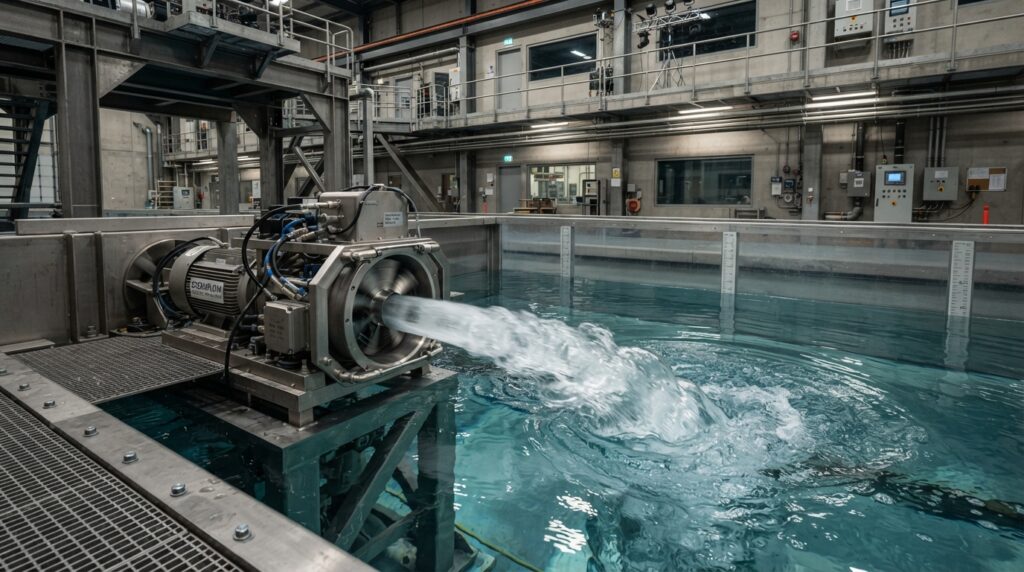
Traditional jet propulsion relies on a fixed-geometry impeller housed in a pump tunnel. Water is drawn in from beneath the hull, accelerated, and expelled through a steering nozzle. While effective, this system was optimised for combustion engines with narrow power bands.
Electric propulsion enables new jet architectures. Variable-pitch impellers, electronically controlled stators, and multi-stage pumps are now viable. Because electric motors can instantly adjust torque, jet systems can be optimised for efficiency at low speed, thrust at mid-range, and stability at high speed without mechanical compromise.
Some emerging designs abandon conventional jet tunnels altogether, using ducted axial jets positioned to reduce cavitation and improve laminar flow. Others integrate thrust-vectoring nozzles capable of micro-adjustments hundreds of times per second, delivering stability previously impossible on small craft.
Jet propulsion is no longer a single solution. It has become a configurable system.
Moving Beyond the “Sit-On” Riding Model
Jet Skis imposed a specific riding posture because balance, intake position, and pump geometry required it. Electric platforms are not bound by those requirements.
We now see stand-up electric craft with stability systems that compensate dynamically. Seated craft with ultra-low profiles. Prone and kneeling configurations optimised for visibility and control. Hybrid platforms that transition between riding modes depending on speed and water conditions.
This diversification is critical. The future of electric watercraft is not one shape, one posture, or one experience. It is a spectrum of craft tailored to different uses—recreation, exploration, safety, training, and performance riding.
Electric propulsion enables that spectrum.
Integration with Hydrofoils and Lift Systems
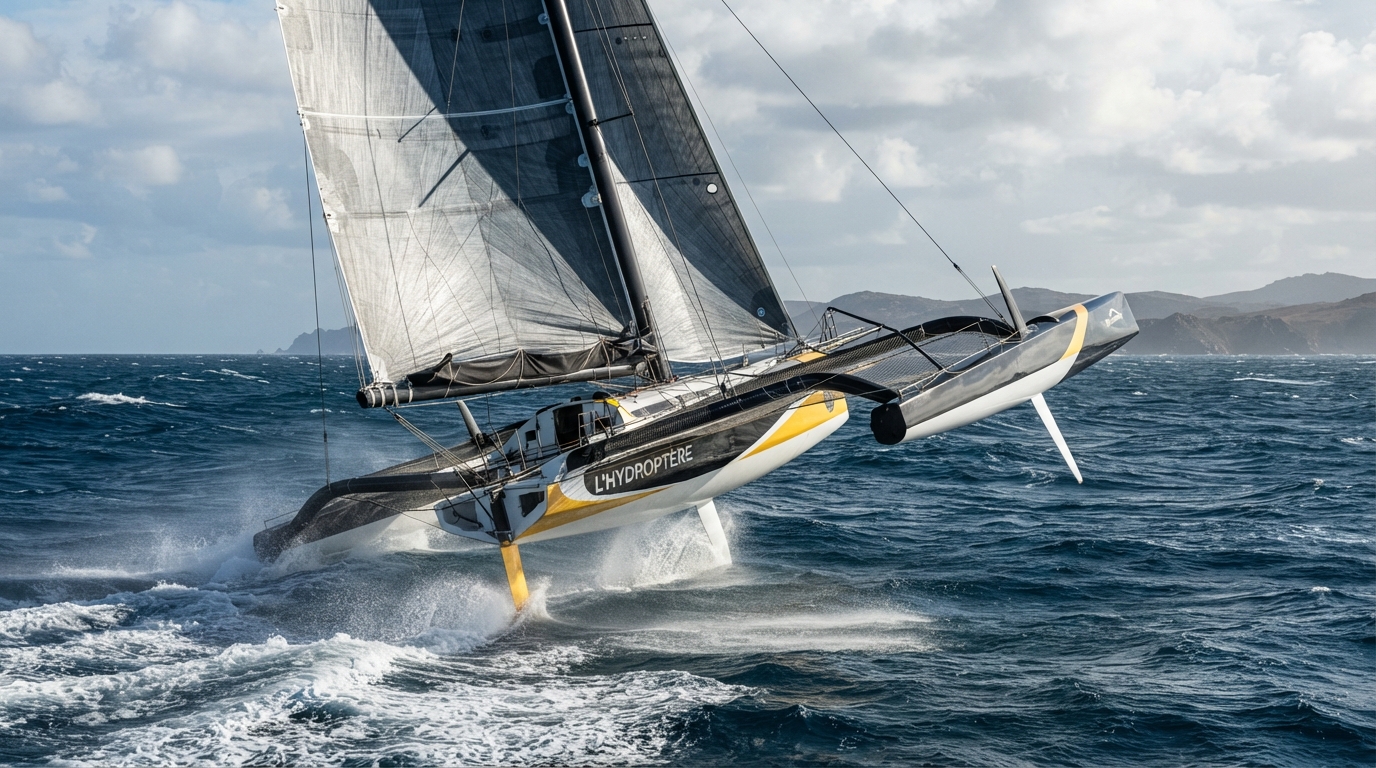
Perhaps the most profound departure from Jet Ski thinking is the integration of hydrofoils. Foils lift the hull out of the water, reducing drag by up to 90 percent. Historically, foils were complex, unstable, and difficult to control at small scales.
Electric propulsion changed that. Instant torque and digital control allow precise management of lift, pitch, and roll. Sensors feed data to onboard controllers that adjust thrust and foil angle continuously. What once required elite skill now becomes accessible to everyday riders.
Foil-assisted electric craft consume dramatically less energy at cruising speed, extend range, and operate quietly with minimal wake. This combination makes them suitable for waterways where Jet Skis are increasingly restricted.
Foiling is not a niche feature. It is becoming a core design philosophy.
Modular Electric Propulsion Architectures
Jet Skis were monolithic machines. Engine, pump, hull, and controls formed a single inseparable unit. Electric propulsion favours modularity.
Modern electric watercraft increasingly use modular propulsion units comprising motor, controller, and pump as a single sealed module. Battery packs become swappable energy units rather than permanently fixed components. Control systems are software-defined and updateable.
This modularity allows rapid innovation. Craft can be upgraded without replacement. Fleets can standardise components across multiple platforms. Maintenance becomes simpler and more predictable.
In effect, electric propulsion moves watercraft closer to the architecture of modern electric vehicles and aircraft drones rather than legacy marine equipment.
Thermal Management as a Design Enabler
High-output electric systems generate heat, but they do so predictably. Unlike combustion engines, which experience wide thermal fluctuations, electric motors and batteries operate within controlled ranges.
Advanced liquid cooling systems now use surrounding water as a thermal sink. Intelligent thermal management algorithms adjust power output to maintain optimal temperatures without rider intervention.
This enables sustained high performance without the overheating risks associated with petrol engines. It also increases system longevity and safety, critical for future adoption in both recreational and professional contexts.
Energy Storage and the Decline of Range Anxiety
Battery energy density has improved steadily, but equally important is how energy is used. Electric propulsion systems waste far less energy than combustion engines. Combined with foiling and hydrodynamic optimisation, real-world range is increasing faster than battery specifications alone suggest.
Fast-charge marine-grade batteries, dockside charging infrastructure, and emerging battery swap systems are reducing downtime. Riders no longer evaluate craft solely on top speed. They evaluate usable time, controllability, and reliability.
Range anxiety, once a major barrier, is rapidly diminishing.
Environmental and Regulatory Drivers
Electric propulsion aligns with tightening environmental regulations worldwide. Noise limits, emissions controls, and access restrictions increasingly favour electric craft.
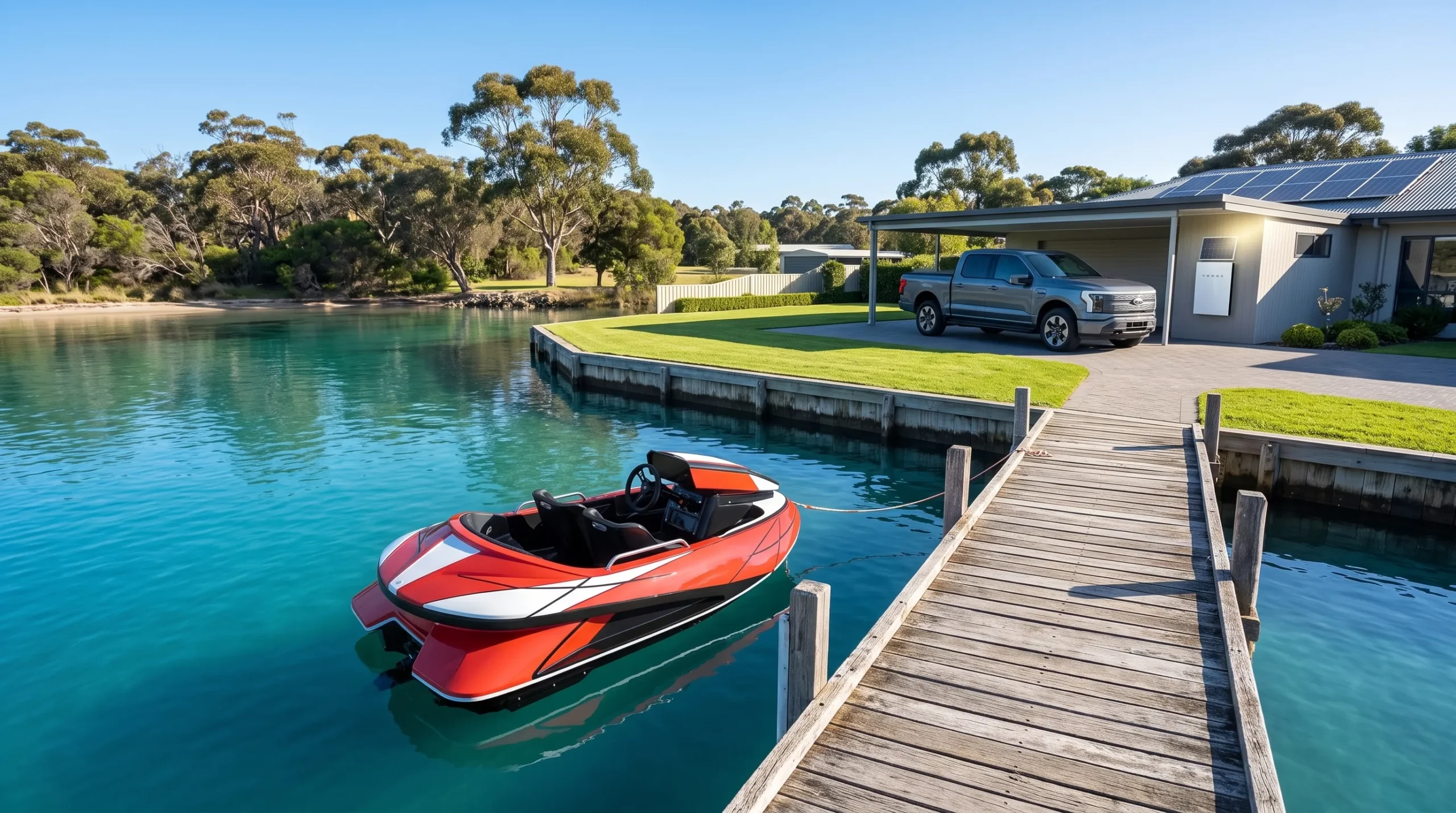
In Australia, this is particularly relevant. Many waterways are shared with swimmers, paddlers, and wildlife. Quiet, low-wake electric craft integrate more harmoniously into these environments.
This regulatory alignment is not temporary. It represents a structural shift in how water sports coexist with public and ecological interests.
What Is Coming Next
The next phase of electric jet propulsion will include fully integrated digital ecosystems. Craft will communicate with riders via apps, adapt performance profiles automatically, and integrate GPS-based safety zones. Autonomous stabilisation, assisted docking, and self-diagnostics will become standard.
The Jet Ski will not disappear overnight, but it will no longer define the future.
Conclusion: Beyond Replacement, Toward Reinvention
Electric jet propulsion is not about creating cleaner Jet Skis. It is about abandoning the assumptions that shaped Jet Skis in the first place. Freed from combustion engines, designers are reimagining propulsion, hulls, riding styles, and use cases from first principles.
What is coming next is not a faster Jet Ski. It is an entirely new generation of watercraft—quieter, smarter, more efficient, and more adaptable than anything before it.
The future of water sports propulsion has already moved beyond Jet Skis. The industry is simply catching up.
See More at www.vectorwatercraft.com.au.