
Introduction: More Art Than Boat, but Unquestionably Unique
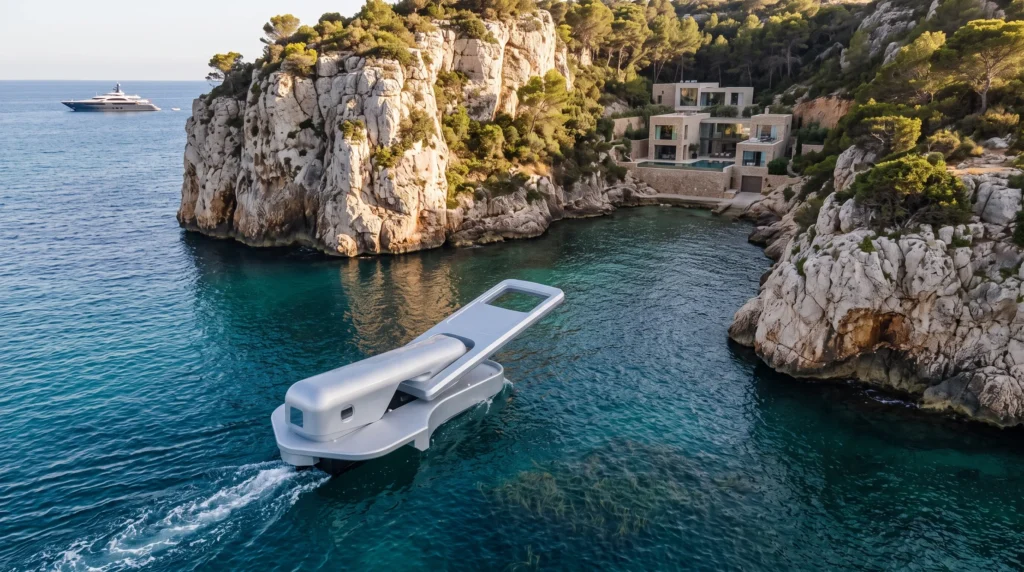
The Zipper Boat — more accurately known as the Zip-Fastener Ship — is one of the most unconventional watercraft ever conceived. Created by Japanese artist and designer Yasuhiro Suzuki, this vessel transforms the mundane image of a zipper into a surreal waterborne experience. As it glides through the river, its wake gives the illusion that it is literally unzipping the water’s surface, blending visual art with functional marine craft.
Unlike conventional experimental vessels that focus on technological advancement or performance breakthroughs, the Zipper Boat occupies a rare space where design, narrative and marine engineering intersect. It may not be built for speed, utility, or efficiency, but its artistic statement has reverberated worldwide, earning it a place among the most unusual and thought-provoking emerging watercraft.
Origins and Inspiration
Japanese designer Yasuhiro Suzuki conceived the idea for the Zipper Boat in the early 2000s after observing the wake patterns of boats from an airplane window. He noticed how the wake planes appeared to split the water, visually suggesting the action of a zipper being pulled open. This inspired him to prioritise testing whether that metaphor could be turned into reality through a purpose-built watercraft.
The vessel first appeared as a scale model and later in full form, most notably during Tokyo’s DESIGNART Tokyo festival. Though primarily an art installation, the Zipper Boat functions as a small motorised vessel capable of being piloted on waterways — physically real yet conceptually symbolic.
Design and Aesthetic
While its silhouette may appear whimsical at first glance, the Zipper Boat is meticulously designed to reflect the mechanics of a zipper pull fastener:
- Its elongated, metallic body evokes the main bar of a zipper.
- A rectangular “pull tab” extends forward or to one side, enhancing the visual metaphor.
- Smooth, reflective surfaces reinforce the visual continuity and draw attention to the wake it generates.
Unlike most experimental watercraft, where performance metrics dominate the narrative, the Zipper Boat’s primary function is visual expression — the wake patterns themselves are part of the design concept.
How It Works: Splitting the Water
The real magic of this craft lies not in speed or propulsion, but in the wake it produces. As the boat moves through the water, its hull displaces water evenly along the sides, creating a central, narrow wake that fans outward at the edges — much like the teeth of an unzipping zipper separating fabric.
This wake pattern is not engineered with advanced hydrofoils or articulated foils; rather, it results from the unique hull shape and displacement pattern designed to maximise that “zipper effect.” Observers watching from bridges or riverbanks describe the experience as surreal — as though the vessel is literally unzipping the surface of the river.
Function vs. Symbolism
It’s important to be clear: the Zipper Boat is not designed for speed, commercial use, or practical utility. Instead, it exists at the intersection of sculpture and marine design.
Its key attributes include:
- Aesthetic impact more than functional capability.
- Symbolic engagement with water and movement.
- Serving as a cultural artefact within larger urban and artistic events.
Viewed in this way, it can be understood as a vessel intended to be experienced visually, not merely navigated.
The Zipper Boat as a Statement in Design
Marine design has long been dominated by questions of hydrodynamics, efficiency, and stability. The Zipper Boat challenges that tradition by asking a different question:
What happens when watercraft becomes a moving metaphor?
By embracing visual storytelling — literally splitting the surface as it moves — Suzuki’s creation expands the definition of what a boat can be. In design circles, it’s celebrated as a piece of kinetic art that uses water as its medium rather than a mere platform.
Cultural and Public Impact
The boat’s debut in Tokyo’s urban waterways brought renewed attention to the Sumida River, an integral part of the city’s landscape. Its appearances during design festivals attracted local spectators and global media alike, turning an ordinary river into a stage for artistic dialogue.
In broader terms, the Zipper Boat has become part of a growing movement where art and engineering merge — prompting discussions about how we perceive movement, behaviour, form, and environment in watercraft design.
Limitations and Future Potential
As an artistic experiment, the Zipper Boat carries certain limitations:
- Not intended for regular marine use beyond design showcases.
- Not optimised for performance or long-distance travel.
- Exists primarily as a one-off concept rather than a production design.
However, its influence should not be understated. It broadens the horizon of watercraft design into domains usually reserved for pure art, inviting designers to think outside the conventional constraints of utility.
Why the Zipper Boat Belongs in Emerging Watercraft And Experimental Concepts
This vessel belongs in the Emerging Watercraft And Experimental Concepts category because it:
- Challenges traditional definitions of marine craft.
- Combines artistic expression with functional displacement on water.
- Introduces a new perspective on how water, movement, and form can interact.
Most importantly, it shows that innovation isn’t only about performance — sometimes it is about perception.
Conclusion: A Watercraft That Opens Minds, Not Just Water
The Zipper Boat may not set speed records or win design awards for efficiency, but it does something perhaps even more valuable: it rewires expectations about what a watercraft can represent.
By turning a familiar everyday object into a vessel — and transforming its wake into a moving artistic expression — the Zip-Fastener Ship remains one of the most memorable experimental concepts in the marine world.