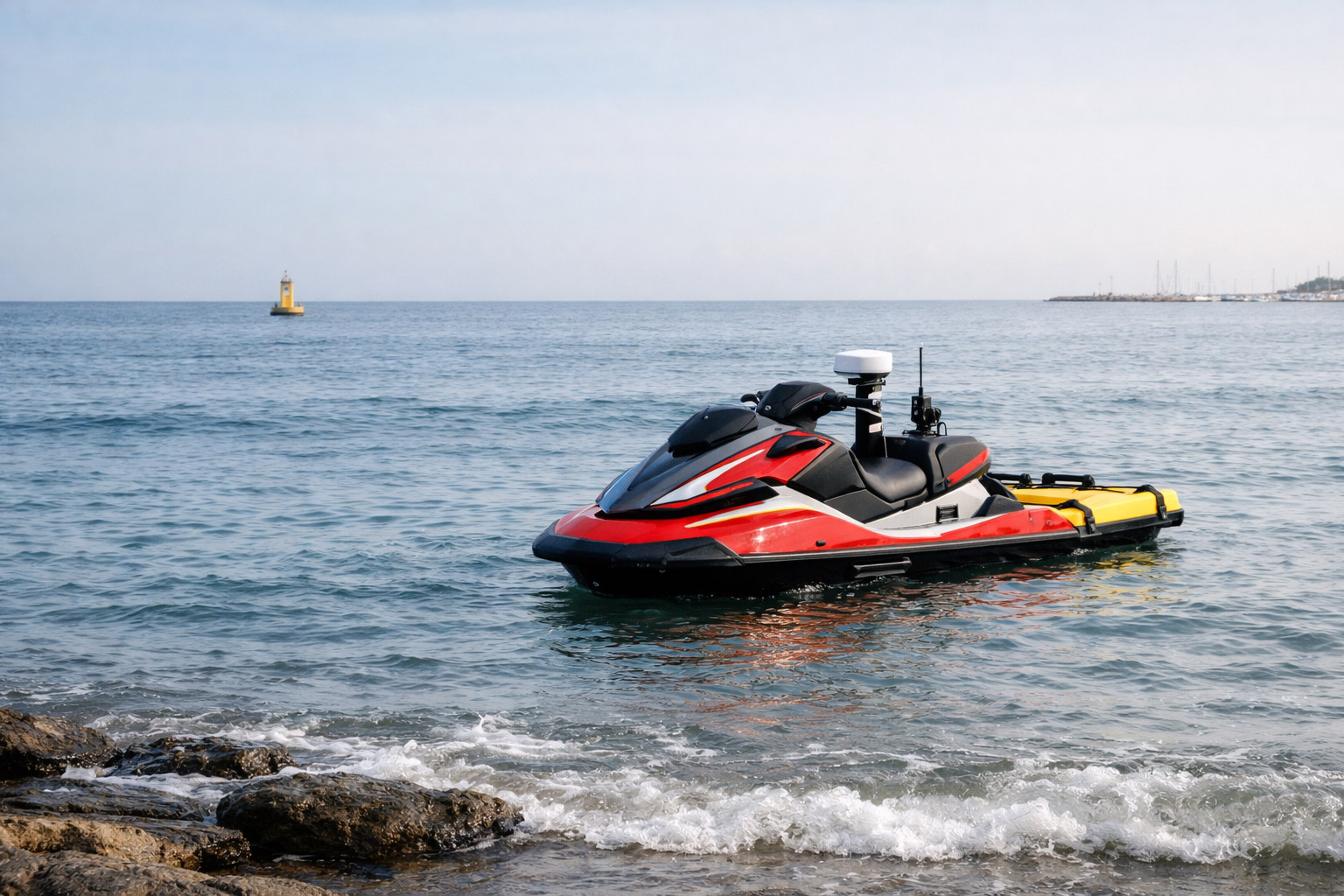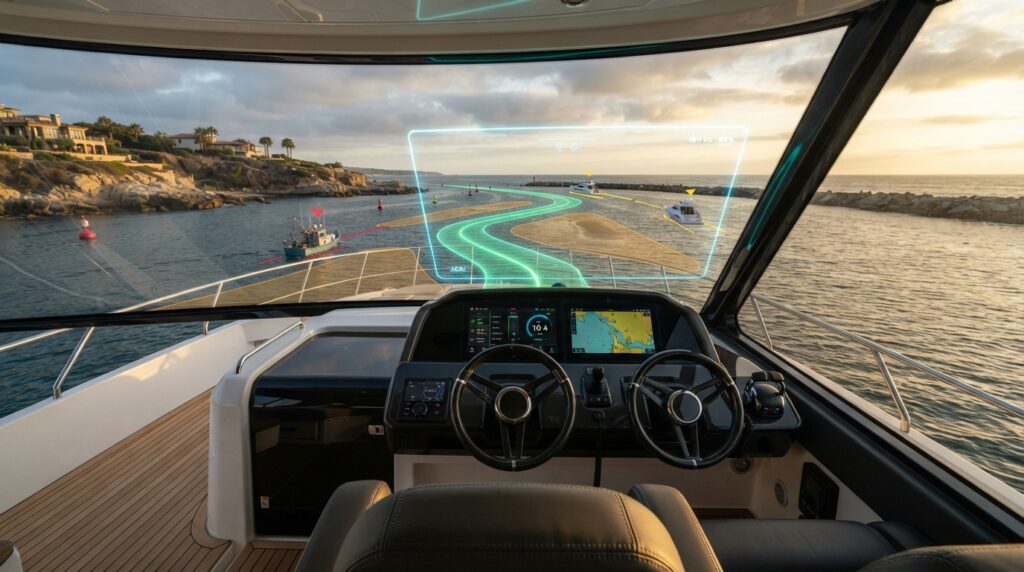

Autonomy in watercraft is often misunderstood. It is frequently imagined as fully self-driving boats roaming waterways without human involvement. While that vision may emerge in limited, regulated contexts, it is not the most important or immediate transformation underway.
The real shift is subtler — and far more impactful.
The future of water sports will be shaped by autonomous assistance, not full autonomy. Systems that support, correct, stabilise, warn, limit, and intervene — quietly and intelligently — will redefine how recreational craft are designed, regulated, and experienced.
Autonomous assistance does not replace the rider. It augments human capability, reduces risk, and expands who can safely and confidently enjoy water sports.
From Manual Skill to Assisted Capability
Historically, water sports rewarded experience and punished inexperience. Skill gaps were bridged through practice, physical ability, and sometimes risk-taking. Mistakes could be costly, and learning curves were steep.
This created natural barriers:
- beginners were intimidated
- older users opted out
- families hesitated
- councils and organisations limited access
Autonomous assistance systems are dismantling those barriers.
By embedding intelligence into the craft itself, designers can support users in real time — smoothing inputs, correcting errors, and preventing dangerous scenarios before they escalate.
This is not about removing excitement. It is about removing unnecessary risk.
What “Autonomous Assistance” Really Means
Autonomous assistance refers to systems that:
- sense conditions and user inputs
- interpret risk or instability
- intervene subtly and proportionally
- return control fully to the user when safe
These systems operate in the background. They do not dominate the experience. In many cases, the rider may not even be aware they are active — only that the craft feels stable, predictable, and forgiving.
Examples include:
- throttle smoothing during abrupt inputs
- automatic power reduction when instability is detected
- low-speed station keeping or drift control
- return-to-neutral behaviour if the rider releases controls
- geofenced speed or access limits
Each feature may seem small. Together, they fundamentally change usability.
Why Electrification Makes Autonomous Assistance Possible
Electric propulsion is a prerequisite for effective autonomous assistance.
Electric systems provide:
- instant, precise power modulation
- predictable response curves
- digital control layers
- integrated sensor compatibility
Combustion engines cannot respond with the same immediacy or finesse. Mechanical lag, vibration, and coarse throttle response limit what assistance systems can safely achieve.
With electric propulsion, power becomes a controllable variable rather than a blunt force. This allows software-driven intervention that feels natural rather than intrusive.
Stability Assistance: The Foundation Layer
Stability is the most common entry point for autonomous assistance.
Modern systems can monitor:
- pitch, roll, and yaw
- acceleration and deceleration rates
- steering input vs craft response
- load distribution and movement
When instability is detected, the system can:
- adjust power delivery
- limit sudden torque spikes
- smooth directional changes
- prevent overcorrection
For recreational users, this means fewer sudden losses of control and a greater sense of confidence — especially in chop, wind, or crowded environments.
Low-Speed Autonomy: Where Assistance Matters Most
High-speed autonomy attracts attention, but low-speed assistance delivers the greatest real-world benefit.
Most incidents occur at:
- launch and retrieval
- near swimmers or other craft
- during docking or shoreline manoeuvres
- when users are distracted or fatigued
Autonomous assistance at low speeds can:
- limit maximum output automatically
- stabilise heading
- prevent accidental acceleration
- hold position briefly while the rider adjusts
These capabilities make craft safer and less stressful to use, particularly for families and less experienced operators.
Assisted Learning and Skill Development
One of the most powerful outcomes of autonomous assistance is its role in learning.
Assisted systems allow beginners to:
- experience correct control responses
- build muscle memory safely
- progress gradually without fear
- learn by feel rather than instruction alone
Over time, assistance can be reduced or reconfigured, allowing users to grow into full control.
This approach mirrors how modern vehicles, aircraft, and even industrial equipment train operators — through guided capability rather than trial-and-error risk.
Expanding the User Demographic
Autonomous assistance dramatically expands who can participate in water sports.
It benefits:
- older riders with reduced reaction time
- users with limited strength or mobility
- families introducing children safely
- organisations training new staff
- councils supervising public-access craft
By lowering physical and cognitive barriers, assistance systems increase participation without diluting the experience for skilled users.
This expansion is critical to long-term market growth.
Safety Intervention Without Loss of Enjoyment
A common fear is that autonomous systems will make water sports sterile or overregulated.
In practice, well-designed assistance enhances enjoyment by:
- reducing fatigue
- increasing confidence
- minimising stress
- preventing near-miss incidents
The key is proportional intervention. Systems should assist only when needed and remain invisible when conditions are normal.
When done correctly, users feel more in control — not less.
Rescue Logic Crossing Into Recreation
Many autonomous assistance concepts originate in rescue and professional applications, where predictability and safety are paramount.
These include:
- automatic neutralisation if the operator is incapacitated
- return-to-point behaviour
- remote monitoring or override capability
- system health checks before deployment
As costs fall and systems mature, these features are migrating into recreational craft — not as emergency tools, but as reassurance layers.
This convergence raises baseline safety expectations across all water sports.
Regulatory Acceptance and Assistance Systems
Regulators are far more receptive to assisted craft than fully autonomous ones.
Why?
- the human remains in control
- systems act as safety nets, not decision-makers
- intervention logic can be audited and limited
- misuse risk is reduced, not increased
Autonomous assistance aligns with regulatory goals rather than challenging them. This makes approval pathways smoother and access more likely.
In many cases, assisted craft may gain preferential treatment over uncontrolled high-power alternatives.
Infrastructure-Free Supervision
Autonomous assistance reduces reliance on external supervision.
Instead of:
- large patrol craft
- constant human oversight
- heavy infrastructure
Assisted recreational craft can self-regulate speed, behaviour, and boundaries.
This is particularly valuable for:
- councils managing public waterways
- private developments
- training environments
- shared-use zones
Autonomous assistance becomes a form of embedded governance — quiet, consistent, and reliable.
The Ethical Dimension: Preventing Predictable Harm
As technology advances, expectations shift.
Once it becomes technically feasible to prevent certain types of accidents, not doing so begins to look negligent.
Autonomous assistance addresses:
- foreseeable misuse
- common human error
- fatigue-related mistakes
- inexperience-driven incidents
In this sense, assistance is not just a feature — it is an ethical response to known risks.
Manufacturers that ignore this trajectory may face reputational and legal pressure in the future.
Why Full Autonomy Is Not the Goal (Yet)
It is important to be clear: recreational water sports are not ready — socially, legally, or culturally — for full autonomy.
What they are ready for is:
- smarter craft
- safer experiences
- broader access
- reduced harm
Autonomous assistance delivers all of these without undermining the joy, agency, and engagement that define water sports.
It is the correct evolutionary step.
The Competitive Advantage of Assisted Platforms
Craft equipped with autonomous assistance will:
- appeal to wider demographics
- gain regulatory goodwill
- reduce incident rates
- build stronger brand trust
- remain relevant longer
As with modularity and electrification, assistance systems compound value over time rather than becoming obsolete.
Conclusion: Assistance Is the Future Interface
Autonomous assistance will define the human–machine interface of future water sports.
Not by taking control away — but by making control safer, smoother, and more inclusive.
The most successful recreational craft of the next decade will not boast full autonomy. They will boast confidence, predictability, and intelligent restraint.
Autonomous assistance is how water sports grow without losing their soul.
See More at www.vectorwatercraft.com.au.