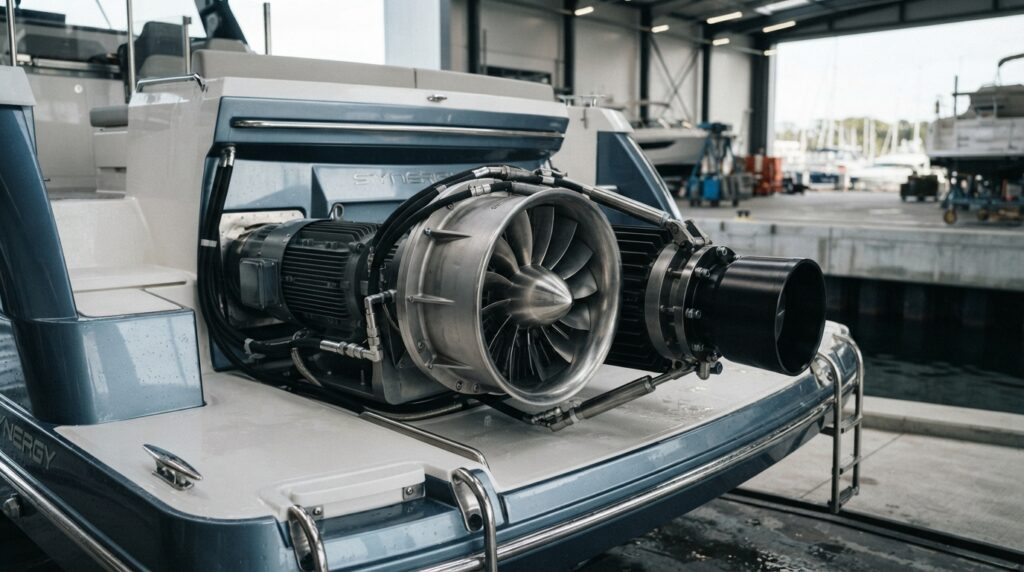

For many buyers entering the market for mini jet boats Australia, the focus is often on appearance, price, or headline performance figures. While these are important, they do not provide a complete picture.
To make a truly informed decision, buyers must understand how these boats actually work.
This is not about engineering complexity—it is about clarity. When you understand the technology behind electric mini jet boats, you can:
- Identify quality versus poor design
- Evaluate real performance
- Avoid marketing-driven mistakes
- Choose a boat that delivers long-term value
Mini jet boats represent a significant shift in propulsion technology. They combine jet propulsion with electric power systems to create a more efficient, compact, and practical watercraft.
This article explains that technology in clear, practical terms.
The Core Difference: Jet Propulsion vs Propeller Systems
Traditional boats rely on a propeller.
How Propellers Work
- A rotating blade beneath the hull
- Pushes water backward
- Generates forward movement
Limitations of Propellers
- Exposed and vulnerable
- Less effective in shallow water
- Potential safety risk
Jet Propulsion – A Different Approach
Mini jet boats use jet propulsion.
How It Works
- Water is drawn into an intake beneath the hull
- An internal impeller accelerates the water
- Water is expelled through a nozzle at high speed
Result
- Forward thrust
- Enclosed system
- Compact design
Why Jet Propulsion Is Important
This system provides several advantages:
- 1. No Exposed Propeller
- Safer
- Reduced risk
- Less damage potential
- 2. Better Shallow Water Performance
- Suitable for rivers
- Handles variable depth
- Expands usable locations
- 3. Compact Design
- Supports portability
- Reduces overall size
The Jet Intake – Starting the Process
The intake sits beneath the boat.
Its Role
- Draw water into the system
- Maintain consistent flow
Why It Matters
A poorly designed intake leads to:
- Reduced performance
- Lower efficiency
- Turbulence
The Impeller – The Core Component
The impeller is the heart of the system.
Function
- Spins at high speed
- Pulls water in
- Accelerates it
Quality Impact
A high-quality impeller:
- Improves thrust
- Enhances efficiency
- Increases performance
The Pump Housing – Controlling Flow
The housing surrounds the impeller.
Purpose
- Maintain pressure
- Direct water flow
- Reduce energy loss
Why It Matters
Efficient housing design results in:
- Better performance
- Lower energy waste
The Nozzle – Turning Power Into Motion
The nozzle directs the water.
Function
- Controls thrust direction
- Enables steering
Impact
- Speed
- Handling
- Control
Steering – A Key Difference
Mini jet boats steer by:
Compared to Traditional Boats
- No rudder
- Faster response
- Greater precision
Electric Motor – The Game Changer
Electric propulsion is what makes modern mini jet boats so effective.
Instant Torque
Electric motors deliver:
- Immediate power
- Smooth acceleration
- Precise control
Advantages Over Petrol
- No lag
- More efficient
- Less complex
Battery System – The Power Source
The battery determines:
- Runtime
- Performance
- Practical usability
What Buyers Should Focus On
- Real-world runtime
- Charging practicality
- Consistency
Balance Is Critical
A good system balances:
- Power
- Weight
- Efficiency
Cooling Systems – Maintaining Performance
Electric systems generate heat.
Cooling Methods
- Water cooling
- Passive systems
Importance
- Prevents overheating
- Ensures reliability
Why This Technology Works in Australia
Australia’s waterways require:
- Flexibility
- Shallow water capability
- Durability
Mini Jet Boats Deliver
- Safe propulsion
- Strong manoeuvrability
- Portable design
Real Performance vs Marketing Claims
Buyers often focus on speed.
What Actually Matters
- Acceleration
- Control
- Efficiency
- Usability
Common Buyer Mistakes
- Ignoring system quality
- Focusing on appearance
- Overvaluing speed
Positioning vs Alternatives
Traditional Boats
- Less efficient
- More complex
- Higher maintenance
Jet Skis
- Less versatile
- Require trailers
- Fuel dependent
Buyer Guidance
Focus on:
- Motor quality
- Battery reliability
- Jet system design
- Overall build quality