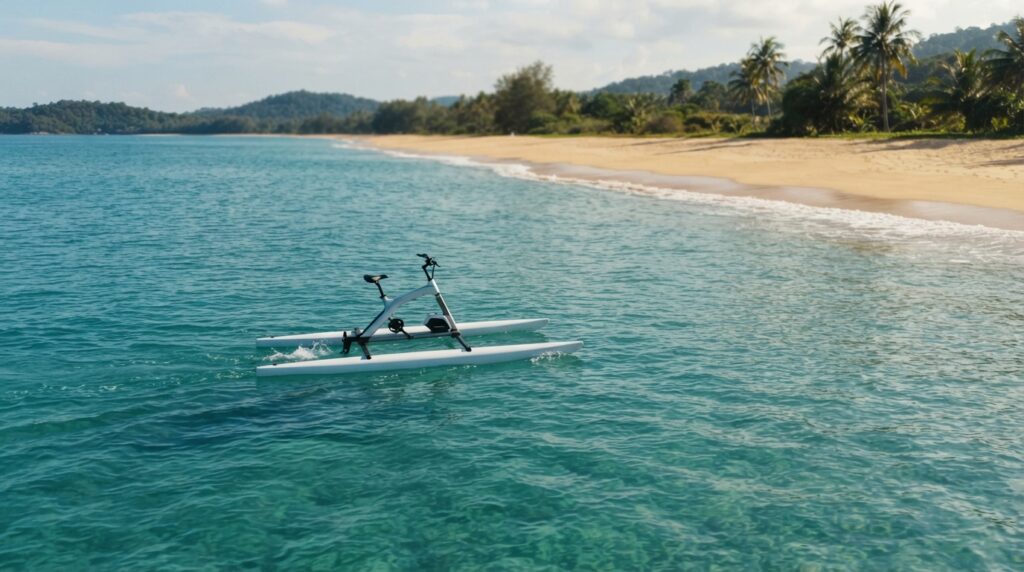
Water bikes represent a relatively new and rapidly emerging category within recreational watercraft. Combining elements of cycling and boating, these devices allow users to travel across water surfaces using either pedal power or electric assistance. While the concept may appear simple, modern water bikes incorporate a range of engineering innovations designed to improve stability, efficiency, and usability.
In Australia, where outdoor recreation is deeply embedded in lifestyle and geography, water bikes are gaining attention as an accessible, low-impact way to engage with waterways. They offer a unique combination of exercise, exploration, and leisure, making them appealing to a wide range of users.
This article provides a comprehensive introduction to water bikes, explaining how they work, their different types, and where they fit within the broader landscape of water-based activities.
Understanding the Concept of Water Bikes
Water bikes are designed to:
- float on the water surface
- be propelled by pedalling or electric assistance
- provide stable, controlled movement
Core Components
- flotation system (pontoons or hulls)
- pedal or motor drive system
- steering mechanism
- frame structure
Types of Water Bikes
Pedal-Powered Water Bikes
- driven by human effort
- low maintenance
- environmentally friendly
Electric Water Bikes
- motor-assisted
- higher speed
- reduced physical effort
How They Work
Pedal Systems
- convert pedalling motion into propulsion
- similar to cycling
Electric Systems
- powered by battery
- controlled via throttle
Performance Characteristics
Speed
- moderate for pedal systems
- higher for electric models
Stability
- high stability due to wide base
Ease of Use
- simple operation
- accessible to beginners
Applications
Recreation
- leisure activity
- exploration
Fitness
- low-impact exercise
Tourism
- guided experiences
- rental operations
Australian Context
Australia provides:
- suitable waterways
- strong outdoor culture
Conclusion
Water bikes offer a unique and accessible way to enjoy waterways, combining elements of cycling and boating into a practical and engaging activity. As interest in low-impact recreation grows, they are likely to become an increasingly visible part of the Australian water sports landscape.