
A Complete, Practical Guide for Jet Foil Boards, E-Foils, and Modern Foil Craft
Foil-based riding has moved from a fringe curiosity to a defining pillar of modern water sports. Whether it is electric foil boards, jet-assisted foil craft, or hybrid designs that blur the line between surfing, aviation, and marine engineering, the core principles remain unchanged. Every foil rider—regardless of skill level or craft—relies on the same three forces: lift, drag, and efficiency.
Understanding these forces is not academic theory. It directly affects stability, learning curve, safety, battery life, ride comfort, speed control, and long-term ownership satisfaction. Riders who grasp how lift and drag interact gain better control, ride longer on a single charge, and progress faster. Designers who respect these fundamentals build craft that feel predictable rather than nervous, efficient rather than wasteful, and refined rather than crude.
This guide explains lift, drag, and efficiency in foil-based riding in clear, real-world terms, grounded in physics but focused on practical outcomes for Australian conditions.
What Lift Really Means in Foil-Based Riding
Lift is the upward force that raises the board and rider out of the water. Once sufficient lift is generated, the hull disengages from surface drag and the craft transitions into true foil flight. At that moment, everything changes: resistance drops dramatically, motion smooths, and efficiency increases.
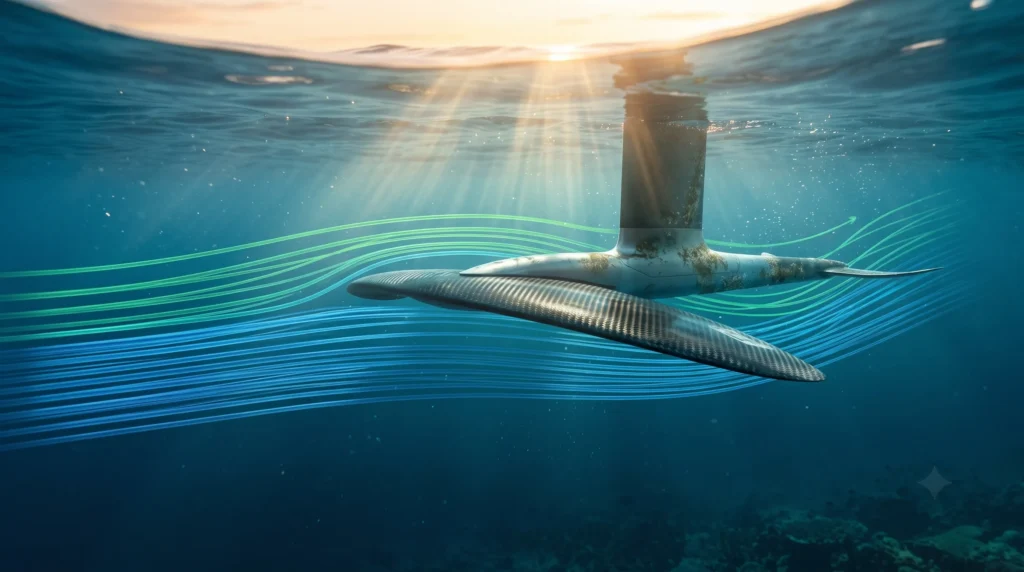
Lift is generated when water flows over a foil wing at speed. The wing is shaped so water travels faster over one surface than the other, creating a pressure differential. The result is upward force.
In foil riding, lift must overcome three things:
- The combined weight of rider and board
- The downward force of gravity
- The dynamic instability created by rider movement and water conditions
Only when lift exceeds these forces does the board rise cleanly onto foil.
Speed and Lift: Why Take-Off Matters More Than Top Speed
Lift increases with speed. At very low speeds, even large wings cannot generate enough lift to raise the board. As speed increases, lift grows exponentially.
This is why take-off speed is the most important performance threshold in foil riding. A foil that lifts cleanly at low speed is easier to learn, safer, and more energy-efficient.
High take-off speed:
- Increases battery drain
- Reduces margin for error
- Makes balance corrections harder
- Penalises heavier riders
Low take-off speed:
- Shortens learning curve
- Reduces falls
- Improves battery efficiency
- Allows relaxed riding posture
Well-designed foil systems prioritise early, predictable lift rather than chasing headline top-speed figures.
Wing Area and Aspect Ratio Explained Simply
Two key foil design variables determine how lift is generated.
Wing area refers to the total surface area of the foil. Larger wings generate more lift at lower speeds. Smaller wings require more speed but feel more agile once flying.
Aspect ratio describes the shape of the wing—long and narrow versus short and wide.
Low aspect ratio wings:
- Lift early
- Are more forgiving
- Turn smoothly
- Suit beginners and recreational riders
High aspect ratio wings:
- Glide efficiently once flying
- Maintain speed between turns
- Require precise balance
- Suit experienced riders and performance use
Efficiency comes from matching wing design to rider weight, skill, and intended use—not from maximising any single metric.
Drag: The Silent Enemy of Foil Efficiency
Drag is the resistance that opposes motion through water. In foil-based riding, drag appears in several forms, and understanding them explains why some boards feel effortless while others feel sluggish.
Surface Drag
Surface drag exists when the board hull is still in contact with the water. This phase dominates before take-off and is the most energy-intensive part of riding.
Boards that struggle to break free of surface drag:
- Drain batteries quickly
- Feel unstable
- Require aggressive throttle input
Efficient foil systems minimise time spent in this phase.
Induced Drag
Induced drag is created as a by-product of lift. As a foil generates lift, water spills off the wingtips, forming vortices. These vortices consume energy.
Higher lift always increases induced drag. The goal is not eliminating it—this is impossible—but managing it through wing shape, tip design, and riding technique.
Profile Drag
Profile drag comes from the foil moving through water. Thicker foils create more drag but are structurally stronger and more forgiving. Thinner foils cut cleanly but can feel twitchy.
Designers balance strength, safety, and efficiency here. Riders feel the result as either smooth confidence or nervous sensitivity.
Parasitic Drag
Every exposed component adds drag:
- Mast thickness
- Motor housings
- Battery enclosures
- Cable routing
High-quality foil systems obsess over reducing parasitic drag because small improvements here translate into noticeable gains in ride time and range.
Why Efficiency Is the True Performance Metric
Efficiency is the relationship between lift generated and energy consumed. In practical terms, it determines:
- Ride time per charge
- Range
- Heat build-up in motors and batteries
- Long-term component stress
A highly efficient foil does not need excess power to stay flying. It glides naturally, responds gently to throttle changes, and rewards smooth riding.
This is why experienced riders often reduce motor power once airborne. The foil does the work; the motor merely sustains speed.
Foil Efficiency and Battery Consumption
Electric foil craft highlight efficiency more clearly than any other category. Every inefficiency shows up immediately as reduced runtime.
Inefficient systems:
- Require constant high power
- Generate unnecessary heat
- Reduce battery lifespan
Efficient systems:
- Cruise at lower wattage
- Maintain lift through glide
- Allow longer sessions with smaller batteries
This is particularly important in Australian conditions, where long coastal runs, bays, and inland waterways favour sustained efficiency over short bursts of speed.
Rider Technique: The Human Factor in Efficiency
No foil system operates independently of the rider. Body position, stance, and control inputs directly affect lift and drag.
Efficient riders:
- Keep movements smooth and deliberate
- Avoid sudden pitch changes
- Let the foil fly rather than forcing it
Over-controlling increases drag by constantly disrupting water flow over the foil. The best riders appear relaxed because they are working with physics, not against it.
Mast Length and Efficiency Trade-Offs
Mast length affects both efficiency and usability.
Shorter masts:
- Reduce leverage
- Lower fall height
- Improve beginner confidence
Longer masts:
- Allow cleaner water flow
- Reduce ventilation
- Improve glide and carving
Longer masts generally increase efficiency once skills improve, but they demand better balance. There is no universal “best” length—only the best match for rider experience.
Ventilation and Cavitation: Efficiency Killers
Ventilation occurs when air is drawn down from the surface onto the foil, disrupting lift. Cavitation occurs when pressure drops enough to form vapour bubbles, collapsing violently against the foil.
Both phenomena:
- Destroy lift
- Increase drag
- Cause sudden loss of control
Proper foil depth, smooth throttle application, and quality foil profiles minimise these risks.
Why Foil Riding Feels So Smooth When Done Right
Once fully airborne and operating efficiently, foil systems enter a unique performance zone. The rider is no longer fighting chop, wake, or hull slap. Energy that once went into overcoming drag now sustains effortless glide.
This is why foil riders often describe the sensation as floating or flying rather than riding.
That feeling is not magic. It is physics, applied correctly.
Efficiency Over Speed: A Long-Term Perspective
Chasing top speed is tempting, but in real-world riding it delivers diminishing returns. Higher speeds dramatically increase drag and power consumption while reducing safety margins.
Most experienced riders settle into efficient cruising speeds where:
- Lift is stable
- Control is intuitive
- Battery usage is predictable
This mindset mirrors aviation and marine engineering traditions that value endurance, reliability, and control over headline numbers.
The Future of Foil Efficiency
Advances in materials, computational fluid dynamics, and electric propulsion are steadily improving foil efficiency. Better wing profiles, cleaner motor integration, and smarter power management systems are pushing performance forward without sacrificing rideability.
The best developments respect fundamental physics rather than trying to bypass it.
Final Perspective
Lift, drag, and efficiency are not abstract concepts reserved for engineers. They define every moment of foil-based riding, from first take-off to final glide back to shore.
Understanding them:
- Accelerates learning
- Improves safety
- Extends ride time
- Protects equipment
- Enhances enjoyment
Foil riding rewards those who respect fundamentals. When lift is balanced, drag is managed, and efficiency is prioritised, the experience becomes smooth, predictable, and deeply satisfying—exactly as modern foil craft were always meant to be.
Further reading and specialist resources: www.velocitywatercraft.com.au