Introduction: A New Take on Stability, Portability, and Sustainable Enjoyment
The Portless Catamaran is not just another boat—it is an entirely different approach to the idea of a catamaran. Rather than relying on fixed hull structures requiring trailers, marinas, or slipways, this innovative design brings portability, electric propulsion, inflatable convenience, and social water experiences together in one package. Its creators reimagined the recreational catamaran not as something you store near water, but something you can carry to it, deploy easily, and enjoy with friends and family—all without the hassles traditionally associated with boating.
In the realm of emerging experimental watercraft, the Portless Catamaran straddles the line between practical engineering and joyful experience. It is not a racing machine nor a deep-sea explorer—but it is a fresh concept in watercraft that emphasises social space, sustainable propulsion, and accessibility.
Throughout this article we’ll explore:
- The origins of the Portless Catamaran concept
- Structural design and inflatable technology
- Electric propulsion and sustainability
- Practical applications and use cases
- Limitations
- Broader significance in watercraft evolution
The Portless Concept: From Trunk to Water in Minutes
At its heart, the Portless Catamaran is an inflatable dual-hull watercraft that fits into a vehicle and can be assembled and launched in a matter of minutes. Designed by the Hungarian firm DDD Manufaktúra, it is intended to democratise access to water—especially for people who do not want to deal with boat trailers, storage, or marina logistics.
Traditional catamarans require docks, trailers, and crane lifts at launch. The Portless Catamaran deliberately removes these prerequisites. When deflated, the whole structure can be transported to a beach, lake, or calm inlet by car. Once on site, its drop-stitch inflatable construction allows a rigid, stable platform to be inflated quickly—a principle borrowed from high-pressure inflatable paddleboards and other modern portable watercraft.
The term “Portless” itself reflects this ethos: you don’t need a port to enjoy it.
Design and Construction: Stability Through Simplicity
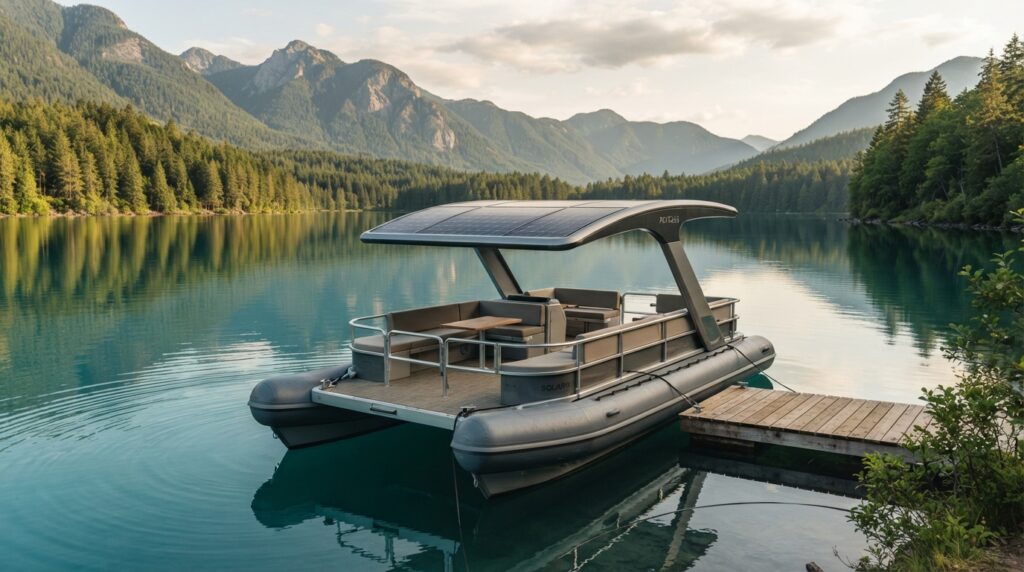
The Portless Catamaran’s design is straightforward yet clever. It utilises dual inflatable hulls connected by a stable deck platform. Rather than traditional rigid hulls, this inflatable mould allows:
- Light overall weight (approx. 120 kg for the standard version)
- Compact storage and transportation
- Rapid deployment with minimal setup equipment
- A comfortable, broad deck for social activities
The inflatable structure is divided into sections that zip together, allowing a single person to carry and set up each part. When fully inflated, the vessel resembles a catamaran with both a main deck and, in many models, a raised upper deck.
One of the clever features of this design is that the upper deck doubles as a multifunctional space. Riders can use it for sunbathing, as a shaded lounge area, or even as a small jump platform for diving—an aspect that emphasises fun and community over simply moving through water.
Electric Propulsion and Low-Impact Operation
The Portless Catamaran is primarily driven by electric propulsion—a small electric outboard that is designed for quiet, efficient motion rather than speed. Most models use a 1 kW Epropulsion Spirit 1.0 Plus electric motor paired with a lithium-polymer battery pack. This setup is capable of propelling the craft for up to about 16 nautical miles on a single charge under conservative operating conditions.
However, one of the standout attributes of the Portless platform is its integration with solar charging. Flexible solar panels are positioned on the upper deck, allowing the vessel to generate energy while at rest or even under gentle movement—potentially supporting continuous all-day operation when sunshine conditions are favourable.
This quiet, electric approach aligns with broader trends in sustainable marine technology, positioning the Portless Catamaran as not only fun, but eco-friendly.
Two Decks, Social Space, and Flexibility
A unique aspect of the Portless Catamaran is its dual-deck layout. Unlike most catamarans, which prioritise internal cabin space or deck utility, this vessel emphasises open social space on both levels.
On the main deck, riders can:
- Sit and relax
- Enjoy shade provided by the upper deck
- Set up coolers and picnic gear
- Lounge amid panoramic water views
On the upper deck, activities include:
- Sunbathing or observing the surroundings
- Jumping or diving into water
- Operating solar panels at optimum angle
- Finding private space above the main activity area
This layout is unusual for such a lightweight vessel and frames the Portless Catamaran as a floating social platform—ideal for gatherings on calm waters.
Portable Design: A Gateway to Water Without Infrastructure
One of the strongest arguments in favour of the Portless Catamaran is its portability. For many people who enjoy lakes, calm bays, and slow rivers, traditional boats represent barriers:
- Cost of marina slip rights
- Storage fees
- Trailer ownership and maintenance
- Need for towing vehicles
Portless designs effectively remove all of these barriers. Owners can keep the catamaran at home, inflate it when desired, and be on the water with minimal setup time. This convenience opens access to water recreation in ways that traditional watercraft simply cannot match, particularly for casual users, families, and rental operators.
Versions and Configurations
Portless Catamaran comes in multiple variants, each tailored to different user needs:
- Standard model — A 4.5-metre platform designed for ease of transport and rapid inflation. Ideal for up to six people with a broad main deck and a small upper deck.
- Four-piece modular version — Breaks down into smaller sections with each weighing around 30 kg, making it even easier to carry and set up.
- Deluxe model — A larger ~6-metre craft with expanded deck space, higher load capacity (up to eight adults), and enhanced comfort features.
These options extend Portless’s appeal from compact portability to party-friendly social platforms.
Practical Use Cases
The Portless Catamaran’s adaptability makes it suitable for a variety of real-world use cases:
Family Recreation — With plenty of deck space and a stable platform, families can enjoy picnics, swimming stops, and relaxed cruises in sheltered waters.
Social Gatherings and Parties — The dual-deck design makes the vessel a floating social hub where people can mingle, sunbathe, and enjoy water activities together.
Eco-Tourism and Rentals — Low entry barriers, easy control, and quiet electric power make the Portless Catamaran a popular choice in rental fleets at resorts and lakeside destinations.
Sunset Cruising and Relaxation — Solar energy and electric propulsion combine to deliver quiet, low-impact exploration of calm coastal waters throughout the day.
Safety, Limitations, and Considerations
The Portless Catamaran excels in calm water and recreational settings, but like all innovative designs, it also has limitations:
- Not a high-speed platform: Designed for leisure, not racing.
- Limited to protected waters: Best used on lakes, bays, and gentle rivers.
- Inflatable vulnerability: Requires proper care to avoid sharp objects and punctures, though high-quality materials help mitigate this.
- Power limitations: Electric drive and solar charging prioritise sustainability, which may reduce range and top speed compared to petrol boats.
Despite these constraints, the Portless Catamaran’s design remains compelling because it focuses on accessibility, simplicity, and enjoyment rather than extreme performance.
Why the Portless Catamaran Belongs in Emerging Watercraft and Experimental Concepts
The Portless Catamaran is experimental not because it is unsafe or unfinished, but because it challenges foundational assumptions about boating:
- Watercraft must be stored in marinas
- Boats require rigid hulls and heavy infrastructure
- Social water experiences require large powerboats
Instead, the Portless model puts portability, electric sustainability, and social design first—qualities that reflect changing attitudes toward leisure, transport, and environmental responsibility.
Broader Significance: A Shift Toward Accessible Water Experiences
As boating cultures evolve, there is growing demand for:
- Lower cost of ownership
- Reduced ecological impact
- Greater inclusivity for casual water users
- Seamless integration with outdoor lifestyles
The Portless Catamaran responds to all of these trends simultaneously. In doing so, it demonstrates that watercraft design can be fun, lightweight, sustainable, and socially oriented without compromising safety or performance within its intended use case.
Conclusion: Portless as the Future of Recreational Watercraft
The Portless Catamaran is an example of how rethinking traditional categories can unlock new possibilities. Instead of heavy hulls and complicated logistics, it offers:
- Portability
- Quiet electric propulsion
- Social, multi-deck space
- Easy access for beginners
For families, social groups, eco-tourism operators, and adventurous spirits alike, the Portless Catamaran represents a new category of watercraft—one that emphasises experience over exclusivity.
Its place in Emerging Watercraft And Experimental Concepts is well earned: not by chasing extremes, but by redefining what enjoying the water can mean for a broader audience.