
A Problem That Sits Beneath the Surface
In the rapidly evolving world of compact watercraft, mini jet boats have carved out a distinct and growing position. Their size, agility, and accessibility make them appealing to a broad range of users—from first-time boat owners through to experienced operators seeking a more versatile alternative to larger vessels.
However, beneath this growth lies a largely misunderstood and often overlooked issue: the engineering relationship between a boat’s hull and its propulsion system. When these two elements are not correctly matched, the result is not merely reduced performance—it is a fundamental safety risk.
This issue is particularly prevalent in the segment of the market involving engine-less or partially assembled boats, where the responsibility for selecting and integrating a propulsion system falls to the end user. Without a deep understanding of marine engineering principles, this process introduces a level of uncertainty that can compromise stability, control, and overall safety.
This article examines why matching the correct engine to a mini jet boat hull is not optional, why it is far more complex than many assume, and why professionally engineered, integrated systems are the only reliable path to safe operation.
The Hull: More Than Just a Shell
A mini jet boat hull is not simply a structure that floats—it is a precisely engineered form designed to interact with water at varying speeds, loads, and conditions.
Key aspects of hull design include:
- Hydrodynamic shape – Determines how the boat moves through water
- Weight distribution – Influences balance and stability
- Lift characteristics – Affects planing and efficiency
- Structural strength – Dictates how much stress the hull can safely handle
Every hull is designed with a specific performance envelope in mind. This includes assumptions about:
- The weight of the propulsion system
- The power output of the engine
- The torque characteristics delivered to the jet unit
When these assumptions are violated—by installing an incompatible engine—the entire system moves outside its intended operating range.
Understanding Power Is Not Enough
One of the most common mistakes made when selecting an engine is focusing solely on horsepower or kilowatt output. While power is important, it is only one part of a much more complex equation.
Torque Delivery
Electric motors, in particular, deliver instant torque. This is fundamentally different from petrol engines, which build torque progressively.
If a hull is not designed to handle:
- Immediate torque spikes
- Rapid acceleration forces
the result can be:
- Sudden instability
- Loss of traction in the water
- Unexpected handling behaviour
Power Curve Compatibility
It is not just how much power is produced, but how it is delivered over time. A mismatch between the hull’s design and the engine’s power curve can lead to:
- Poor planing characteristics
- Inefficient propulsion
- Increased strain on structural components
Weight and Centre of Gravity
Engines and battery systems contribute significantly to total vessel weight. Incorrect placement or excessive weight can shift the centre of gravity, resulting in:
- Bow rise or stern squat
- Reduced steering control
- Increased rollover risk in turns
In a professionally engineered mini jet boat, these variables are calculated and tested extensively. In a user-assembled system, they are often guessed.
The Overpowering Trap
A particularly dangerous scenario arises when a hull is fitted with an engine that exceeds its design limits.
This is often done with good intentions—buyers assume that more power will deliver better performance. In reality, overpowering a mini jet boat can produce:
- Excessive speed beyond safe handling limits
- Reduced reaction time for the operator
- Increased likelihood of cavitation or loss of jet efficiency
- Structural fatigue or failure over time
In extreme cases, overpowering can cause:
- Sudden loss of control
- Violent directional instability
- Hull deformation or cracking
Unlike larger vessels, mini jet boats have limited mass and length to stabilise high-speed movement. This makes them particularly sensitive to excessive power.
The Underpowering Problem
While less dramatic, underpowering a mini jet boat also introduces risks.
An underpowered vessel may struggle with:
- Maintaining speed in currents
- Manoeuvring in tight situations
- Responding quickly in emergencies
This can place the operator in vulnerable situations, particularly in:
- Rivers with changing flow conditions
- Coastal environments with wind and tide influences
- Areas requiring rapid directional changes
A well-matched propulsion system ensures that the boat has sufficient power for safe operation without exceeding its design limits.
Jet Propulsion Integration: Precision Required
Mini jet boats rely on jet propulsion systems, which are highly sensitive to alignment, flow dynamics, and intake design.
Improper engine matching can disrupt this delicate balance:
- Incorrect power delivery can reduce jet efficiency
- Poor alignment can cause vibration and wear
- Inadequate intake flow can lead to cavitation
Cavitation, in particular, is a serious concern. It occurs when water flow into the jet is disrupted, causing air bubbles to form and collapse within the system. This results in:
- Loss of thrust
- Increased noise and vibration
- Long-term damage to the jet unit
Factory-built mini jet boats are designed to optimise the relationship between engine output and jet propulsion performance. This level of precision is extremely difficult to replicate in a custom build.
Structural Stress and Fatigue
Every hull is designed to withstand a specific range of forces. These include:
- Acceleration forces
- Impact forces from waves or wakes
- Torsional forces during turns
When an engine delivers forces beyond what the hull was designed to handle, the result is cumulative stress.
Over time, this can lead to:
- Micro-fractures in the hull structure
- Weakening of mounting points
- Increased risk of sudden failure
These issues are rarely visible in the early stages, making them particularly dangerous. A boat may appear to perform well initially, only to develop serious structural problems later.
Electrical System Integration in Electric Builds
Electric mini jet boats introduce additional complexity due to their reliance on battery systems, controllers, and wiring.
Matching the wrong motor to a hull often goes hand-in-hand with poorly designed electrical systems.
Risks include:
- Overloading of battery systems
- Inadequate cooling of controllers
- Incorrect wiring leading to inefficiencies or hazards
- Exposure of electrical components to water ingress
In a professionally engineered system, these factors are addressed through:
- Proper component selection
- Integrated cooling solutions
- Sealed and protected electrical architecture
- Rigorous testing under load
Testing: The Missing Link in Kit-Based Builds
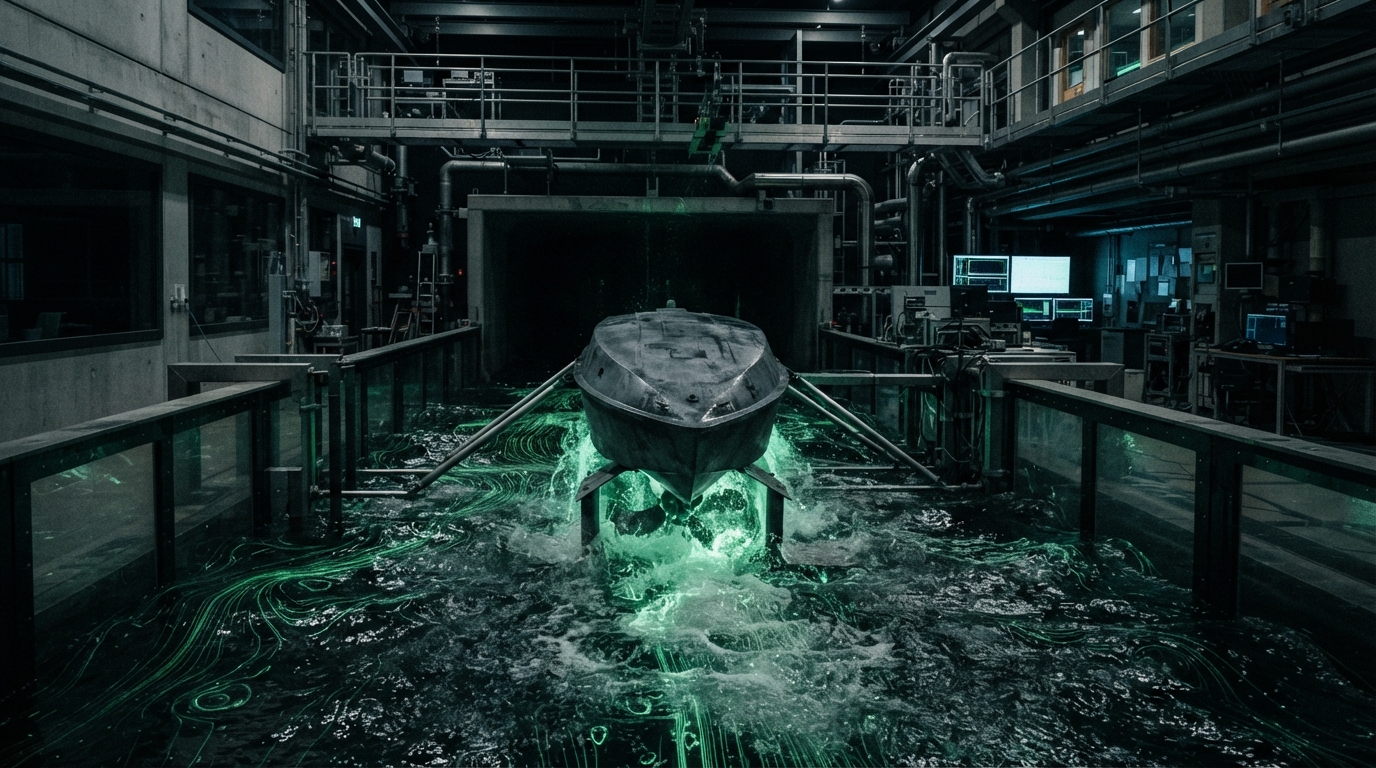
Perhaps the most critical difference between integrated systems and user-assembled setups is testing.
A professionally manufactured mini jet boat undergoes:
- Controlled performance testing
- Load variation testing
- Safety validation under real-world conditions
This ensures that:
- The engine and hull work together harmoniously
- The boat behaves predictably across its operating range
- Potential issues are identified and resolved before delivery
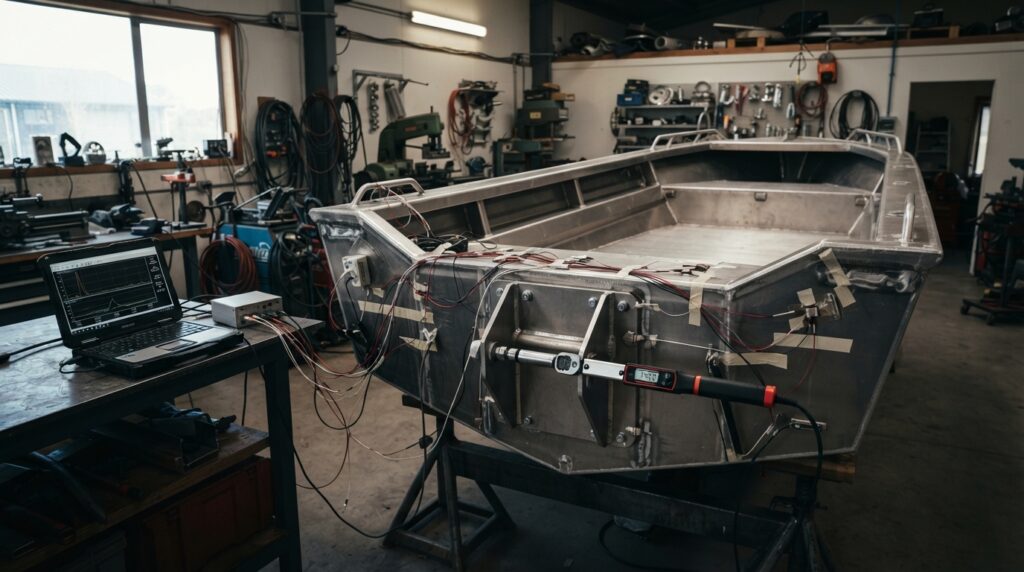
In contrast, a kit-based build often reaches the water without any comprehensive system-level testing. The first real test occurs during actual use—placing the operator at risk.
The Human Factor: Experience Versus Assumption
Selecting and integrating a propulsion system requires expertise in:
- Marine engineering principles
- Hydrodynamics
- Electrical systems (for electric builds)
- Structural design
Most buyers do not possess this level of knowledge, yet kit-based models assume that they do.
This gap between assumption and reality is where risk is introduced.
Professionally engineered mini jet boats remove this burden from the user, allowing them to focus on operation rather than construction.
Australian Conditions: Why Precision Matters Even More
Australian waterways present unique challenges, including:
- Shallow rivers with variable depths
- Coastal conditions with changing tides and winds
- Remote locations where support may be limited
In these environments, reliability and predictability are essential.
A mismatched engine-hull combination increases the likelihood of:
- Mechanical issues far from assistance
- Loss of control in challenging conditions
- Reduced confidence in the vessel
A properly engineered system, by contrast, is designed to handle these conditions safely.
Long-Term Ownership Considerations
The risks associated with mismatched systems extend beyond initial use.
Over time, owners may face:
- Increased maintenance requirements
- Difficulty sourcing compatible replacement parts
- Reduced resale value
- Ongoing safety concerns
A fully integrated mini jet boat provides:
- Consistent performance over time
- Clear maintenance pathways
- Stronger long-term value
The Industry Perspective
As the mini jet boat category continues to grow, the distinction between professionally engineered systems and ad-hoc builds will become increasingly important.
Manufacturers who prioritise:
- System integration
- Engineering precision
- Safety testing
are setting the standard for the industry.
Buyers who understand these differences will make more informed decisions, contributing to a safer and more reputable market overall.
Conclusion: Engineering Compatibility Is Non-Negotiable
Matching the correct engine to a mini jet boat hull is not a simple task—it is a complex engineering process that requires careful consideration of multiple interdependent factors.
When done correctly, the result is a vessel that is:
- Safe
- Predictable
- Efficient
- Reliable
When done incorrectly, the consequences can range from poor performance to serious safety risks.
Fully assembled, professionally engineered mini jet boats eliminate these uncertainties by ensuring that every component is designed to work together from the outset.
For buyers, the message is clear: the relationship between engine and hull is not something to be improvised. It is the foundation upon which safe and enjoyable boating is built.
See More at www.vectorwatercraft.com.au