
A Safety Advantage That Should Never Be Overlooked
In recreational boating, safety is often discussed in terms of speed, stability, and operator skill. While these factors are important, one of the most significant safety considerations—particularly in shared water environments—is the type of propulsion system used.
Traditional boats rely on exposed propellers. These rotating blades sit beneath or behind the vessel and operate at high speed. While effective for propulsion, they present a clear and well-documented risk when operating near people, shallow areas, or confined spaces.
Mini jet boats take a fundamentally different approach. By using enclosed jet propulsion systems with no exposed propeller, they remove one of the most common sources of injury in recreational boating.
This article explores why no-propeller jet propulsion is so important in environments involving swimmers, children, and shorelines, and why this design represents a significant advancement in safety.
Understanding the Difference in Propulsion Systems
Traditional Propeller-Based Systems
In a conventional boat:
- A propeller rotates externally beneath the hull
- The blades generate thrust by pushing water backward
- The system remains exposed during operation
This means that any contact with the propeller—whether accidental or otherwise—can result in serious injury.
Jet Propulsion Systems
In a mini jet boat:
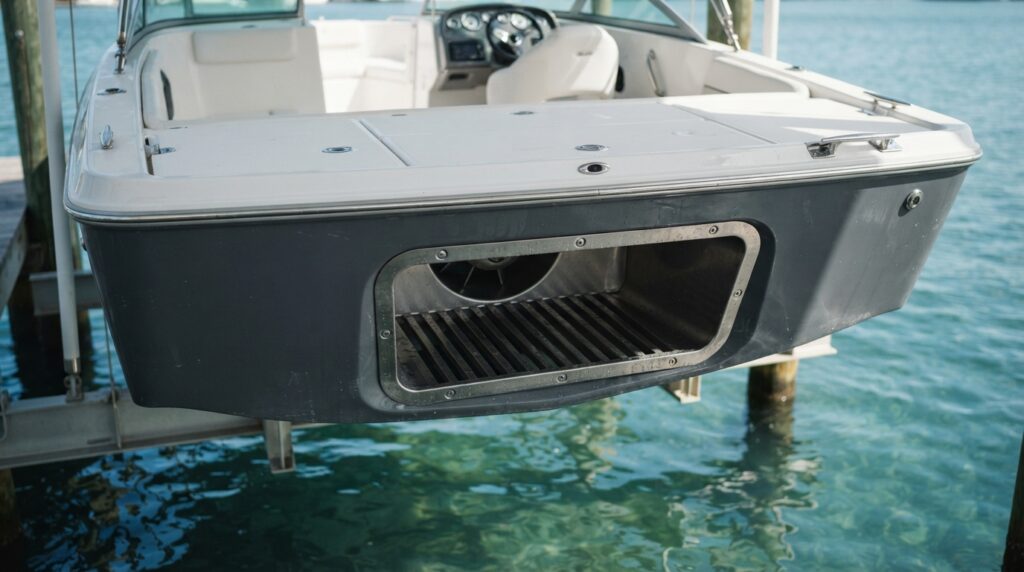
- Water is drawn into an intake within the hull
- An internal impeller accelerates the water
- Thrust is generated by expelling water through a nozzle
Crucially:
- There is no exposed rotating blade
- The propulsion mechanism is enclosed within the boat
This design eliminates direct contact between people and moving propulsion components.
The Risk Environment: Where Propellers Become Dangerous
Swimming Areas
In many recreational settings, boats share space with swimmers. This includes:
- Lakes and dams
- Riverbanks
- Coastal swimming areas
In these environments, an exposed propeller creates a constant risk, particularly when:
- Swimmers are not visible beneath the surface
- Distances are misjudged
- Sudden movements occur
Family Use and Children
Children are naturally curious and less predictable in their movements.
Risks include:
- Approaching the rear of a boat
- Entering the water unexpectedly
- Limited awareness of danger zones
An exposed propeller in these situations introduces a level of risk that is difficult to manage completely.
Shoreline and Shallow Water Operation
Operating near shorelines involves:
- Reduced space
- Increased likelihood of people in the water
- Limited manoeuvring room
In these conditions, even a minor error can bring a propeller into contact with:
- Swimmers
- Waders
- Objects just below the surface
How Jet Propulsion Reduces These Risks
No External Rotating Blade
The most obvious advantage is the absence of an exposed propeller.
This means:
- No direct contact with spinning blades
- Reduced risk of severe injury
- Greater margin for safety in close proximity to people
Safer Operation in Shared Environments
Jet propulsion allows boats to operate more safely in areas where:
- People are present in the water
- Space is limited
- Conditions require careful manoeuvring
While caution is always necessary, the inherent design reduces the severity of potential incidents.
Reduced Entanglement Risk
Propellers can become entangled with:
- Clothing
- Tow lines
- Debris
This can lead to:
- Sudden stops
- Loss of control
- Dangerous situations for occupants and nearby individuals
Jet propulsion systems significantly reduce this risk due to their enclosed design.
Behavioural Benefits of Safer Propulsion
Increased Operator Confidence
Knowing that there is no exposed propeller allows operators to:
- Focus on navigation and control
- Operate more confidently in shared spaces
- Reduce anxiety when others are nearby
Encouraging Responsible Use
Safer propulsion systems promote:
- More considerate operation
- Greater awareness of surroundings
- Reduced reliance on strict separation from other users
Jet Propulsion and Shallow Water Safety
Reduced Risk of Striking Objects
In shallow water, propellers are vulnerable to:
- Rocks
- Sandbars
- Debris
Jet systems reduce this risk by:
- Eliminating protruding components
- Allowing operation in shallower depths
Safer Interaction with the Environment
This design supports:
- Exploration of shallow areas
- Reduced damage to the vessel
- Lower likelihood of sudden impact events
Limitations and Responsible Operation
Not Risk-Free
While jet propulsion significantly reduces certain risks, it does not eliminate all hazards.
Operators must still:
- Maintain safe distances
- Be aware of surroundings
- Operate at appropriate speeds
Water Jet Force
The jet stream itself can produce force, particularly at close range.
Although far less dangerous than a propeller, it still requires:
- Sensible operation
- Avoidance of directing thrust toward people
Australian Context: Shared Waterways
High Usage Environments
Australian waterways are often shared by:
- Swimmers
- Paddlecraft users
- Recreational boaters
This increases the importance of:
- Safe propulsion systems
- Responsible operation
- Awareness of others
Family-Oriented Recreation
Many boating environments in Australia are family-focused, including:
- Picnic areas near water
- Popular swimming locations
- Holiday destinations
In these settings, safety features that reduce risk are particularly valuable.
Long-Term Safety Implications
Reducing Injury Risk
The elimination of exposed propellers has the potential to:
- Reduce the severity of accidents
- Lower the likelihood of serious injury
- Improve overall safety outcomes in recreational boating
Supporting Safer Boating Practices
As more users adopt jet propulsion systems, there may be:
- Increased awareness of safer alternatives
- Greater emphasis on design-based safety
- Improved standards across the industry
The Role of Integrated Design
Proper Installation Matters
For jet propulsion to deliver its safety benefits:
- Systems must be correctly integrated
- Alignment must be precise
- Components must be securely installed
The Advantage of Engineered Systems
Professionally built mini jet boats ensure that:
- The propulsion system is properly designed
- Safety features are fully realised
- Performance remains consistent
This is critical in maintaining both safety and reliability.
Conclusion: A Meaningful Step Forward in Boating Safety
The absence of an exposed propeller in mini jet boats is more than a design difference—it is a meaningful safety advancement.
It reduces risks associated with:
- Swimmers and people in the water
- Children and unpredictable movement
- Shoreline and shallow water operation
While no system can eliminate all risk, jet propulsion provides a safer foundation for recreational boating, particularly in shared and family-oriented environments.
For buyers, this is a factor that should carry significant weight. In a category where design choices directly impact safety, the move away from exposed propellers represents a clear and practical improvement.
In the end, safer propulsion is not just about technology—it is about protecting people.
See More at www.vectorwatercraft.com.au