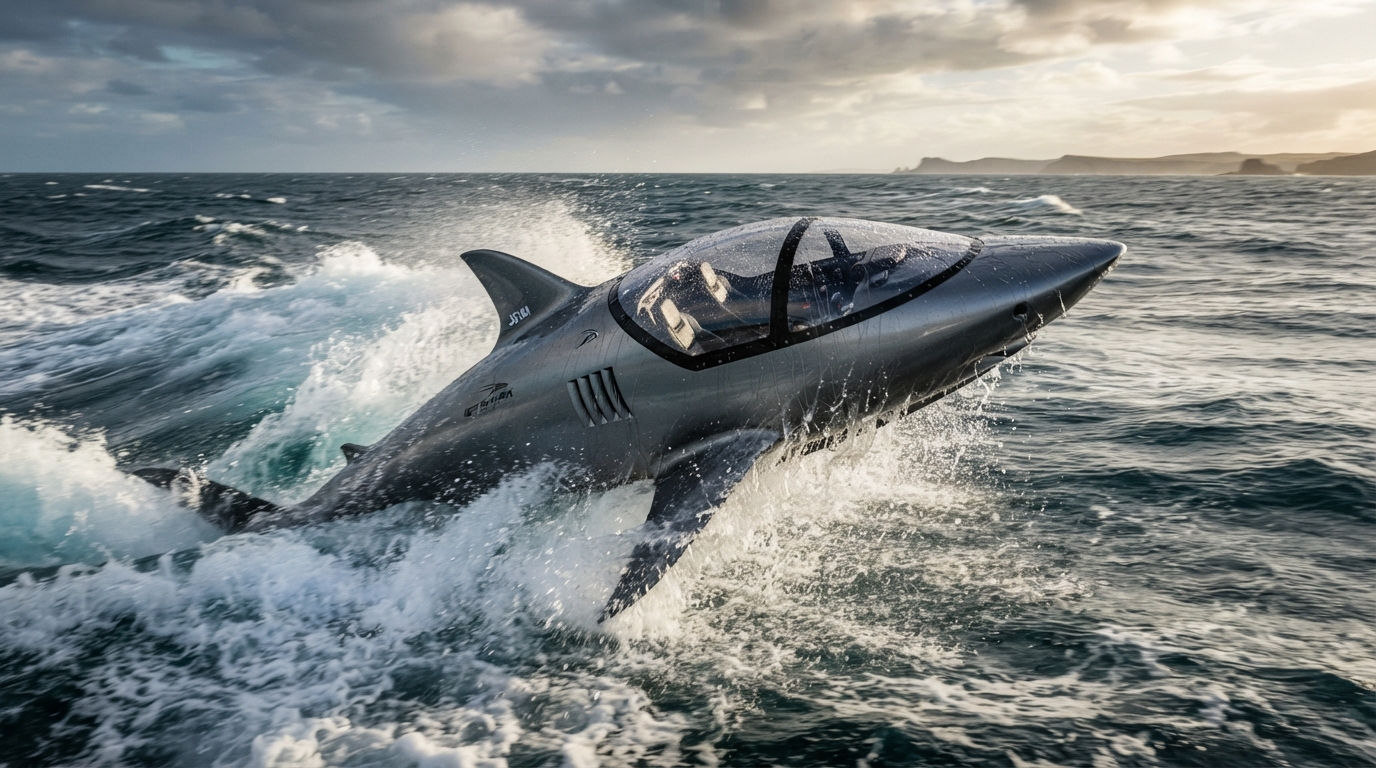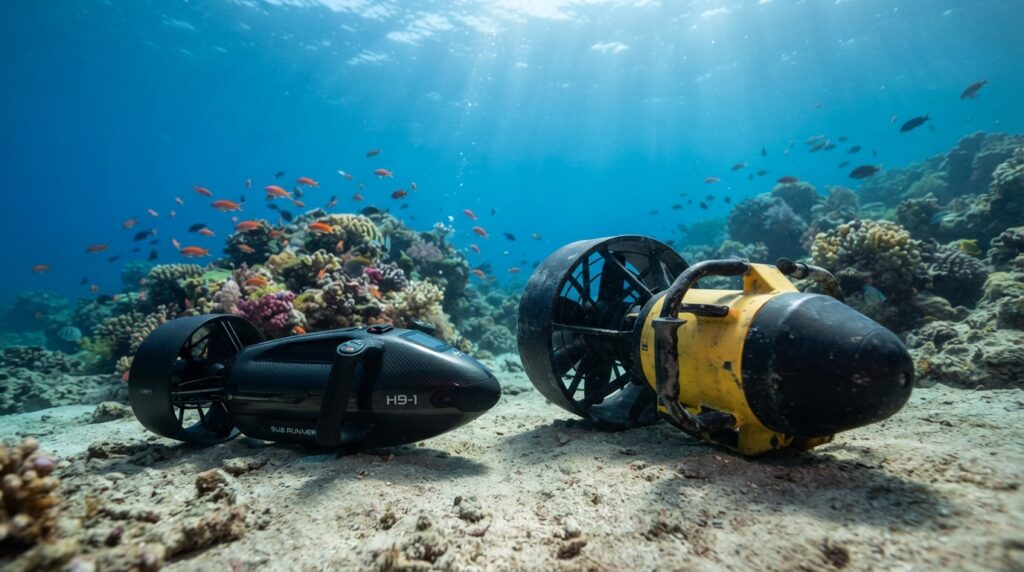

The evolution of underwater mobility has moved well beyond simple propulsion devices. Traditional underwater scooters—long used by divers and snorkellers—have provided assistance in extending range and reducing fatigue. However, newer systems such as the H9-1 Sub Runner introduce a fundamentally different approach to underwater movement.
While both categories serve a similar purpose—enhancing mobility beneath the surface—their design philosophy, performance characteristics, and user experience differ significantly. Understanding these differences is essential for users evaluating which system best suits their needs, particularly in environments such as those found across Australia, where underwater conditions vary from calm reefs to open coastal waters.
This article provides a detailed comparison between the H9-1 Sub Runner and traditional underwater scooters, focusing on real-world use, control dynamics, efficiency, and practical application.
Understanding the Two Categories
Traditional Underwater Scooters
Typically:
- handheld devices
- propelled by electric motors
- used to pull the user through water
They are:
- compact
- relatively simple
- widely used in diving
H9-1 Sub Runner
Represents a different concept:
- more integrated user interaction
- structured control system
- designed for a more immersive experience
Design Philosophy
Scooters – Assistive Tools
Traditional scooters are:
- tools to assist movement
- secondary to the diver’s control
Sub Runner – Integrated Mobility
The H9-1 Sub Runner is:
- central to the experience
- designed to enhance interaction with movement
Practical Difference
Scooters:
- support existing diving
Sub Runner:
- redefines how movement is experienced
Performance Comparison
Speed
Scooters:
- moderate speed
- dependent on model
Sub Runner:
- controlled, consistent propulsion
- designed for smooth operation
Acceleration
Scooters:
- gradual acceleration
Sub Runner:
- more refined control
- smoother power delivery
Efficiency
Scooters:
- effective but dependent on user positioning
Sub Runner:
- optimised for consistent performance
Control and Handling
Scooters
Control is:
- indirect
- influenced by body position
Sub Runner
Control is:
- more intuitive
- integrated into user interaction
Outcome
Sub Runner provides:
- greater precision
- improved stability
User Experience
Scooters
Experience is:
- functional
- focused on movement assistance
Sub Runner
Experience is:
- immersive
- engaging
- more dynamic
Learning Curve
Scooters
- relatively easy to use
- minimal training required
Sub Runner
- requires familiarisation
- more advanced control
Result
Scooters:
- easier entry
Sub Runner:
- more rewarding over time
Applications
Scooters
- diving
- snorkelling
- exploration
Sub Runner
- enhanced exploration
- guided experiences
- recreational use
Australian Context
Australia’s underwater environments include:
- coral reefs
- coastal waters
- marine parks
Implication
Both systems are viable, but:
- Sub Runner enhances experience
- scooters provide simplicity
Safety Considerations
Scooters
- familiar
- widely understood
Sub Runner
- requires awareness
- controlled operation
Commercial Perspective
Scooters
- widely used
- lower entry barrier
Sub Runner
- premium experience
- higher engagement
Cost Considerations
Scooters:
- generally lower cost
Sub Runner:
- higher investment
- enhanced experience
Which Should You Choose?
Choose Scooters If:
- simplicity is priority
- basic mobility required
Choose Sub Runner If:
- experience is priority
- enhanced interaction desired
Conclusion
While traditional underwater scooters remain practical and widely used, the H9-1 Sub Runner introduces a more immersive and refined approach to underwater mobility. The choice between the two depends on whether the priority is simplicity or enhanced experience.