
For many Australians, boating has always carried an unspoken trade-off.
On one hand, it offers freedom, enjoyment, and the ability to experience waterways in a way that few other activities can match. On the other hand, it has traditionally required effort—trailers, fuel, maintenance, storage, and preparation.
For decades, this trade-off was simply accepted.
Today, that is changing.
A growing number of buyers are questioning whether boating really needs to be complicated. They are looking for a way to enjoy the water without the layers of effort that have traditionally been involved.
Electric mini jet boats are emerging as a direct response to that shift.
They remove three of the biggest barriers in boating:
- The need for a trailer
- The dependence on fuel
- The ongoing hassle of complex ownership
This article explores why these changes matter, how they affect real-world ownership, and why more Australians are moving toward this simpler model.
The Traditional Boating Burden
To understand the advantages of electric mini jet boats, it is important to recognise what they are replacing.
The Trailer – More Than Just Transport
For many boat owners, the trailer is seen as a necessity.
In reality, it introduces multiple complications:
- Initial purchase cost
- Registration and compliance
- Maintenance (wheels, bearings, structure)
- Storage space requirements
Practical Challenges
Using a trailer also involves:
- Towing considerations
- Parking limitations
- Manoeuvring difficulty
For many buyers, particularly those without towing experience, this is a significant barrier.
Fuel Dependency – A Constant Cost
Petrol-powered watercraft require:
- Regular refuelling
- Ongoing fuel expenses
- Storage and handling of fuel
The Impact Over Time
Fuel costs are:
- Continuous
- Variable
- Often increasing
Additional Considerations
Fuel-based systems also involve:
- Engine maintenance
- Mechanical wear
- Noise and emissions
Ownership Complexity – The Hidden Issue
Traditional boating involves:
- Preparation time
- Maintenance schedules
- Mechanical knowledge
Result
Boating becomes:
- Time-consuming
- Effort-intensive
- Less spontaneous
Removing the Trailer – A Major Shift
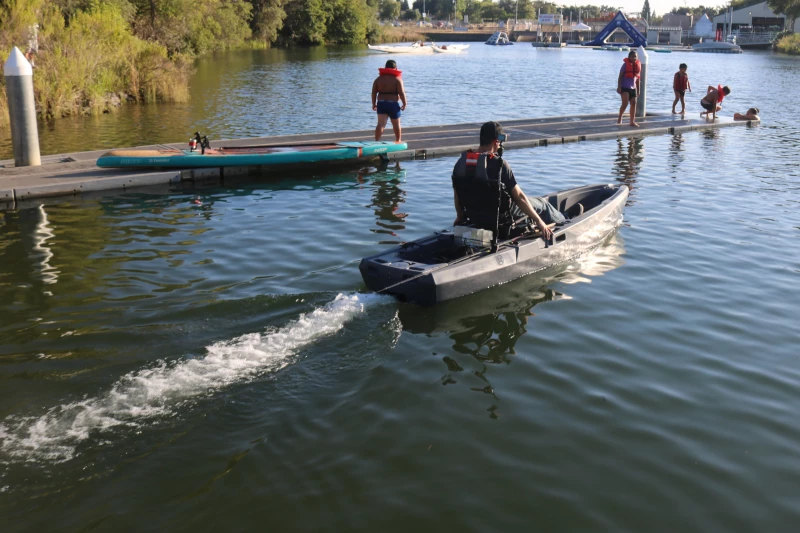
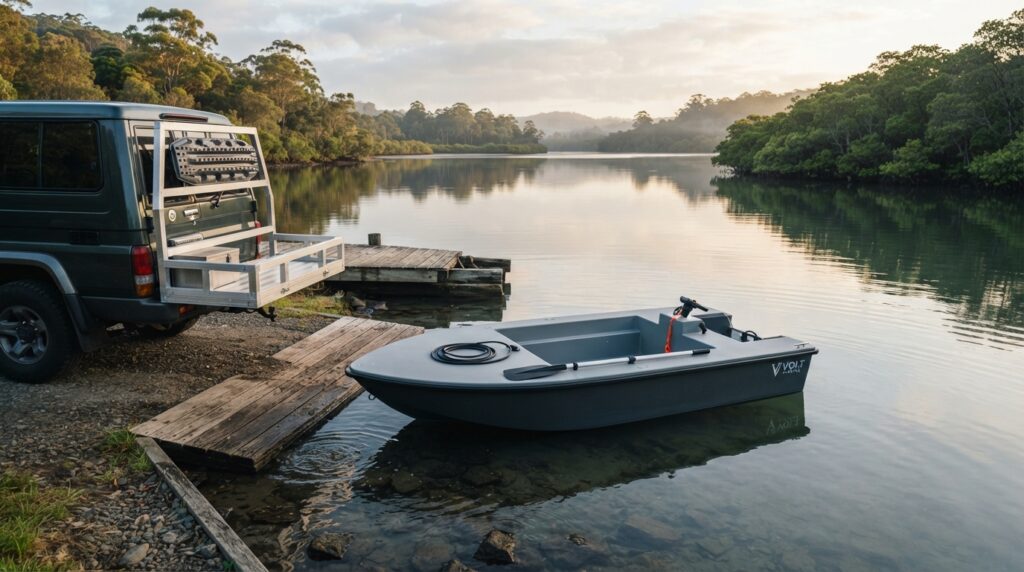
Electric mini jet boats are designed to be portable.
What This Means
Many can be:
- Transported in a ute
- Loaded into an SUV
- Stored easily at home
Benefits
- No trailer purchase
- No registration
- No maintenance
Practical Impact
This simplifies ownership dramatically.
Eliminating Fuel – A Fundamental Advantage
Electric propulsion replaces petrol with battery power.
Key Benefits
- No refuelling
- Lower operating costs
- Simpler ownership
Long-Term Impact
Over time, this results in:
- Cost savings
- Reduced effort
- Greater predictability
Simplifying Ownership
Electric mini jet boats are designed for:
- Ease of use
- Minimal maintenance
- Quick setup
Why This Matters
Owners spend:
- Less time preparing
- More time enjoying
Real-World Benefits
Faster Access to Water
Without trailers and fuel preparation:
- Setup is quicker
- Launch is simpler
Lower Costs
Savings occur across:
- Fuel
- Maintenance
- Transport
Greater Flexibility
Owners can:
- Use the boat more often
- Access more locations
- Enjoy spontaneous outings
Ideal for Modern Lifestyles
Australian lifestyles increasingly favour:
- Convenience
- Efficiency
- Flexibility
Electric Mini Jet Boats Deliver
- Easy transport
- Quick use
- Minimal effort
Who Benefits Most
First-Time Buyers
- Lower barriers
- Easier entry
Families
- Safer
- Simpler
Recreational Users
- More convenient
- Less commitment
Lifestyle Buyers
- Fits modern living
Usage Frequency – The Key Insight
The easier a product is to use:
Result
- Better value
- Greater enjoyment
- Higher satisfaction
Positioning vs Alternatives
Compared to Traditional Boats
- No trailer
- Lower cost
- Simpler ownership
Compared to Jet Skis
- More practical
- Easier transport
- Broader usability
Buyer Guidance
Focus on:
- Build quality
- Ease of use
- Long-term value
Avoid
- Overcomplicated systems
- Poor-quality builds
- Price-only decisions
Common Mistakes
- Underestimating transport benefits
- Ignoring long-term cost
- Overvaluing speed