
For most of the history of watercraft design, products were built as fixed, single-purpose machines. You bought a craft for one job, in one configuration, and that configuration remained unchanged for its entire life. If your needs evolved, you upgraded, replaced, or added another craft altogether.
That model no longer fits the modern world.
Across water sports technology, modularity is emerging as one of the most defining principles of future platforms. Driven by electrification, digital control systems, cost pressure, and changing user behaviour, modularity is transforming watercraft from static products into adaptable systems.
The future belongs to platforms that can evolve, reconfigure, and expand — not those locked into one rigid form.
Why Fixed-Purpose Craft Are Becoming Obsolete
Traditional watercraft were fixed by necessity. Combustion engines dictated layout, weight distribution, cooling, exhaust routing, and structural reinforcement. Once designed, there was little flexibility without compromising reliability or safety.
As a result:
- upgrades were limited
- repairs were complex
- adaptation for new uses was impractical
- ownership costs rose over time
- obsolescence was built into the product
In contrast, modern buyers increasingly expect products that can change with them. They are accustomed to modular technology in vehicles, electronics, tools, and even furniture. Watercraft are now entering that same expectation set.
Electrification Makes Modularity Practical
Electric propulsion removes many of the constraints that previously prevented modular design.
Electric systems are:
- compact
- digitally controlled
- mechanically simple
- scalable in output
- easier to isolate into discrete modules
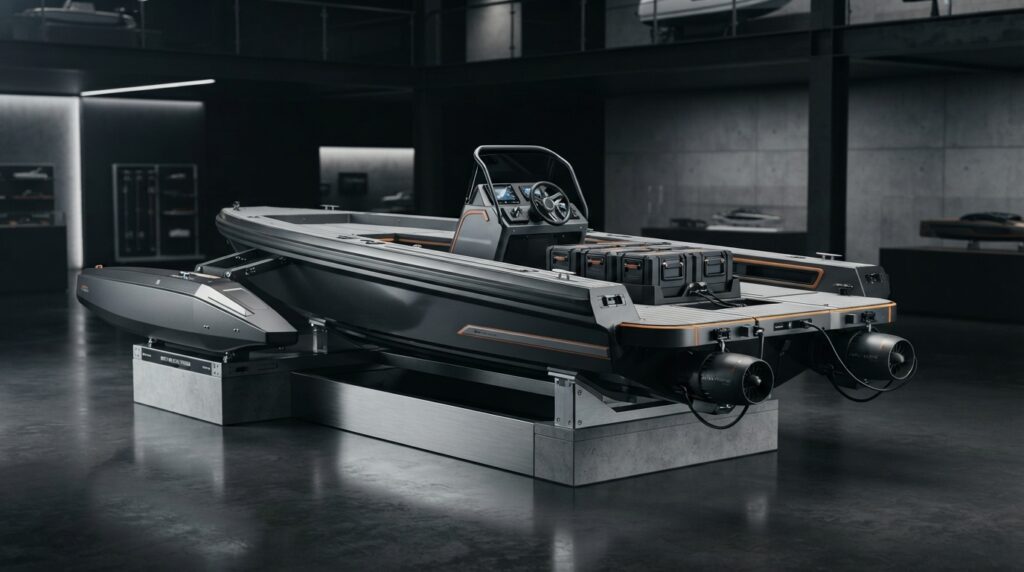
This allows engineers to separate a watercraft into logical building blocks, such as:
- propulsion module
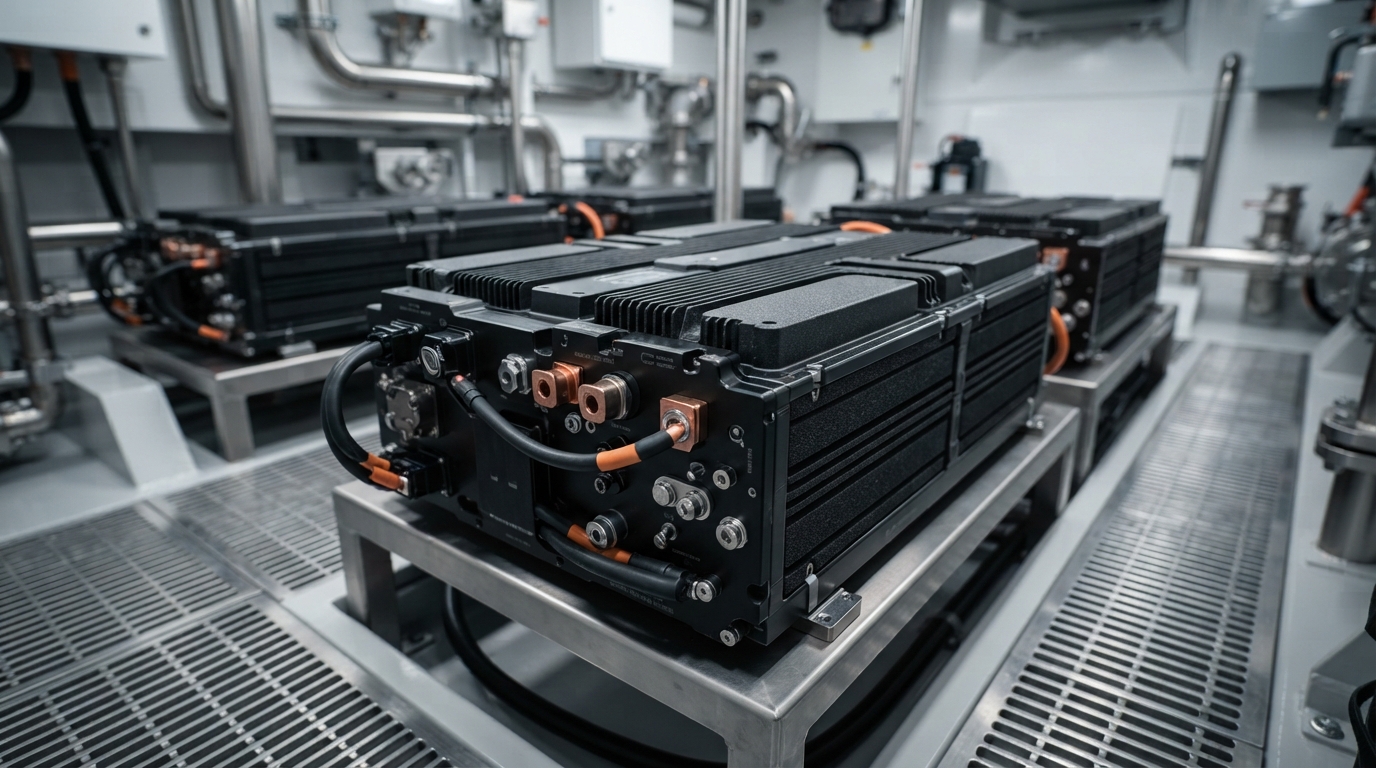
- battery module
- control and software module
- hull or flotation module
- accessory and mission modules
Once separated, each module can be optimised, upgraded, or replaced independently — without redesigning the entire craft.
Battery Modularity as a Cornerstone
Battery systems are one of the clearest examples of why modularity matters.
A fixed battery limits:
- run time flexibility
- weight optimisation
- future upgrades
- maintenance options
Modular battery architecture allows:
- different capacities for different use cases
- swappable packs for extended sessions
- easier servicing and replacement
- future chemistry upgrades without new craft designs
For users, this means the same craft can support:
- short recreational sessions
- longer exploratory use
- professional or training applications
All without changing the platform itself.
Modularity Reduces Total Cost of Ownership
From a commercial and consumer perspective, modularity directly affects value.
Instead of replacing an entire craft, users can:
- upgrade specific components
- replace worn modules
- adapt functionality over time
- extend product lifespan
This lowers long-term cost and reduces waste — an increasingly important consideration in environmentally conscious markets.
For organisations and councils, modularity simplifies asset management by allowing fleets to be reconfigured rather than replaced as requirements change.
Multi-Role Craft Become Viable
Modularity enables something that fixed designs never could: true multi-role capability.
A single base platform can be adapted for:
- recreational use
- training and supervision
- safety monitoring
- light rescue or assistance roles
- different rider skill levels
This flexibility dramatically expands the addressable market for each platform and reduces the need for multiple specialised craft.
The same hardware foundation supports multiple outcomes — a powerful commercial advantage.
Software as the Invisible Module
Not all modules are physical.
Software is increasingly the most powerful modular layer in modern watercraft. Performance limits, throttle behaviour, safety systems, and user profiles can all be changed digitally without altering hardware.
Software modularity allows:
- beginner vs advanced modes
- restricted training operation
- region-specific compliance profiles
- future feature expansion
This approach mirrors how modern vehicles and consumer technology evolve and ensures platforms remain relevant longer.
Faster Innovation Without Full Redesigns
Modular platforms allow manufacturers to innovate continuously without starting from scratch.
Instead of redesigning entire craft, they can:
- improve individual modules
- release incremental upgrades
- test new features safely
- respond faster to market feedback
This accelerates innovation cycles and reduces development risk — benefits that ultimately flow through to users as better products.
Manufacturing and Supply-Chain Advantages
From a production standpoint, modularity improves efficiency.
Shared modules can be used across multiple models, reducing:
- tooling costs
- inventory complexity
- quality-control burden
- supplier dependency
Manufacturers can scale more efficiently while maintaining consistency and reliability — critical advantages in competitive markets.
Modularity Supports Sustainability Goals
Environmental pressure and sustainability expectations align strongly with modular design.
Modular systems:
- reduce unnecessary replacement
- support repair rather than disposal
- extend product lifespans
- lower material consumption over time
As sustainability becomes embedded in procurement decisions, modular platforms gain further momentum.
Consumer Expectations Are Catching Up
Once users experience modular ownership, expectations shift permanently.
They begin to expect:
- upgrade paths
- adaptability
- long-term relevance
- better value retention
Craft that cannot evolve start to feel outdated quickly, regardless of how well they perform on day one.
The Competitive Gap Will Widen
Manufacturers that embrace modular platform thinking will:
- move faster
- respond better to market changes
- offer broader product ecosystems
- build longer-lasting customer relationships
Those that cling to fixed, single-purpose designs will find it increasingly difficult to compete — not because their products are poor, but because they are inflexible.
Conclusion: Platforms, Not Products
The future of water sports technology will be built around platforms, not isolated products.
Modularity allows watercraft to grow with users, adapt to new uses, and remain valuable far beyond their initial configuration. It aligns perfectly with electrification, digital control, sustainability pressure, and modern consumer behaviour.
In the next decade, the most successful watercraft will not be those that do one thing well — but those that can do many things intelligently, simply by changing modules.
See More at www.vectorwatercraft.com.au.