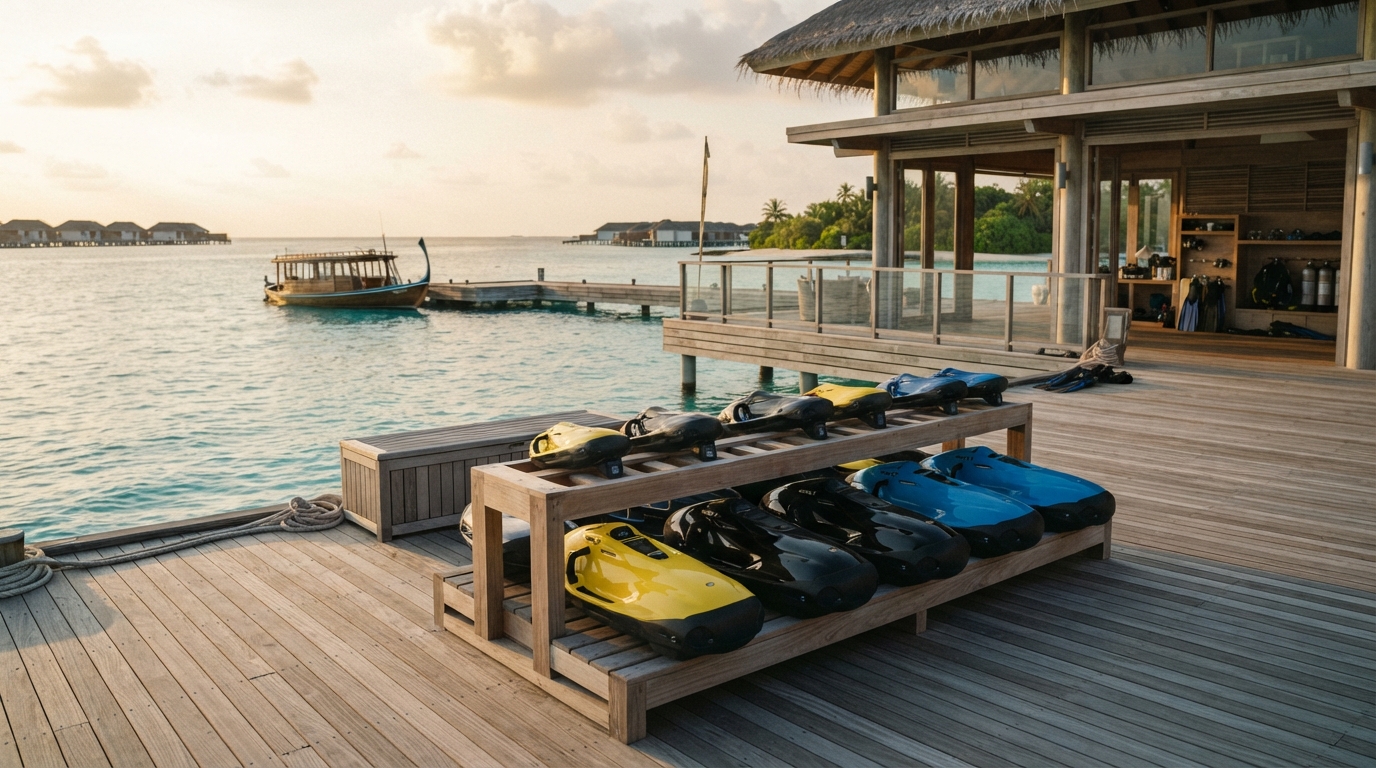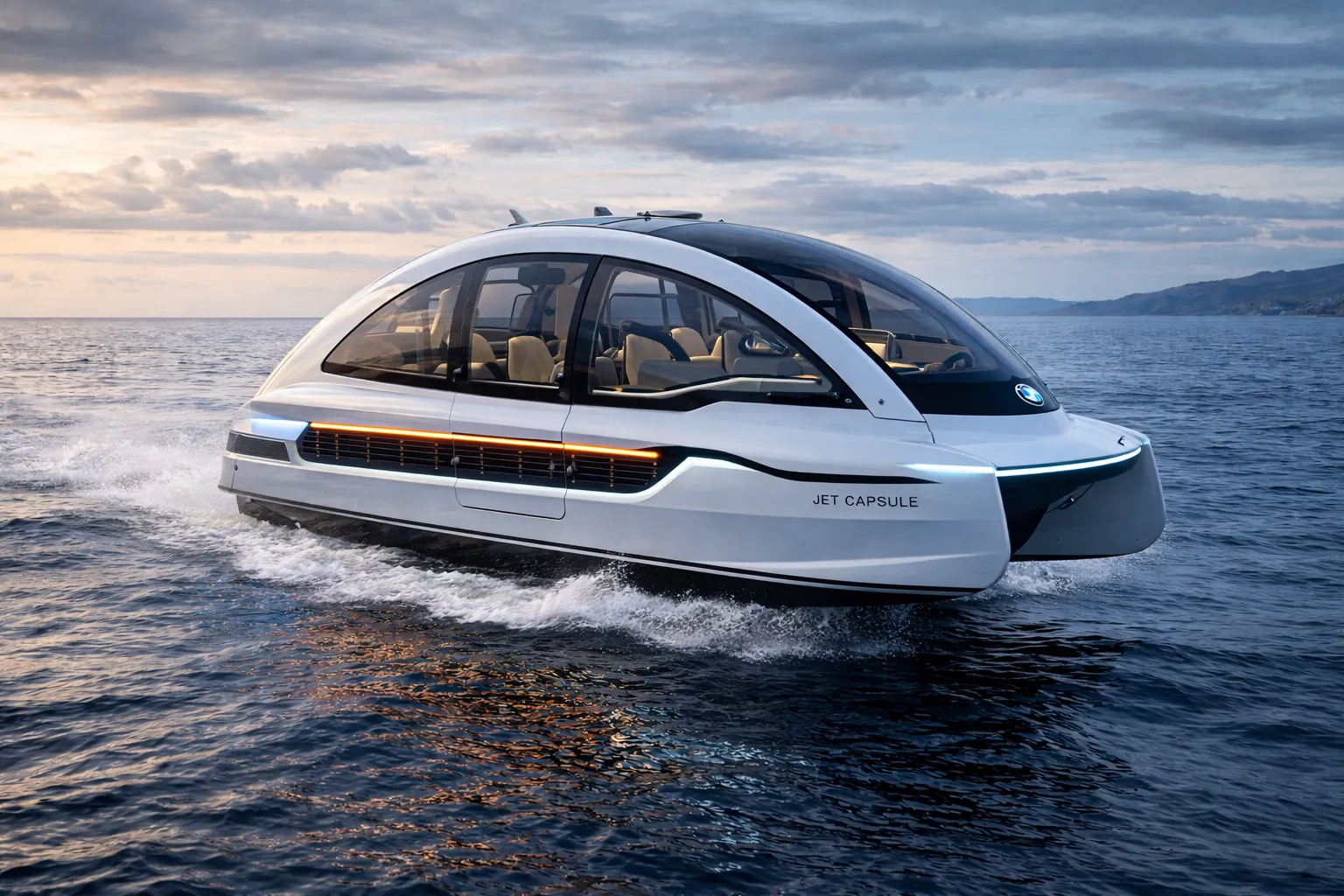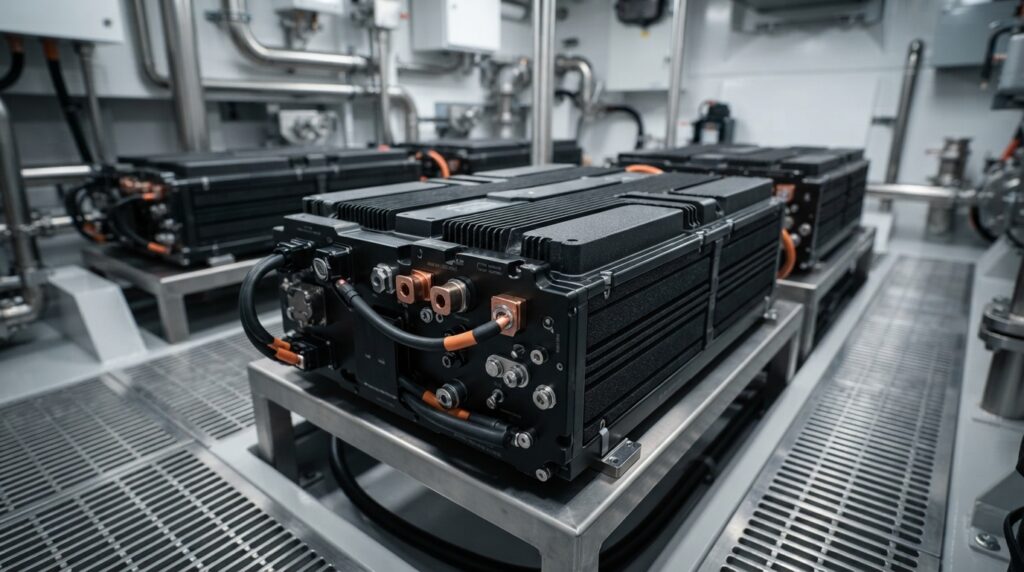

Battery technology is the beating heart of the electric water sports revolution. It is the single component that most directly determines what an electric craft can do, how long it can do it for, how safe it is, how much it costs, and who will buy it.
People often talk about electric watercraft as if the motor is the breakthrough. In reality, electric motors have been excellent for decades—quiet, efficient, responsive, and reliable. What has held back electrification on the water has never been torque. It has been stored energy: the ability to carry enough usable energy onboard, safely, in a form that can deliver high power when demanded, without becoming too heavy, too expensive, or too risky.
That’s why battery innovation is not just one trend among many. It is the master lever. As batteries improve, everything else changes with them: craft design, performance expectations, product categories, safety standards, pricing, resale value, infrastructure needs, and the very shape of future markets.
Over the next ten years, battery innovation will do for water sports what lightweight composite boards did for surfing, what modern materials did for bicycles, and what lithium-ion did for cordless tools. It will make entire categories simpler, lighter, more capable, more accessible, and far more commercially viable than they are today.
Why Water Demands More From Batteries Than Land
Electric mobility on land has a few advantages that water does not. Roads are predictable. Rolling resistance is modest. Regenerative braking helps reclaim energy. Most vehicles can carry large batteries without users needing to lift or launch anything. If range is short, charging stations are everywhere, and worst-case you can pull over.
Water changes the equation.
Hydrodynamic drag rises sharply with speed. Acceleration demands high peak power. Conditions vary unpredictably. Recovery options are limited. Saltwater exposure is harsh. Ventilation and cooling are more difficult. Safety expectations must be higher because failure at sea—or even 500 metres offshore—can quickly become life-threatening.
That means battery systems for watercraft need to be better than “good enough”. They must be robust, sealed, thermally stable, high power capable, and intelligently managed. As battery chemistry, packaging, and management systems advance, watercraft become practical at a scale that today’s buyers only partly understand.
The Four Battery Improvements That Matter Most
When people say “battery innovation,” they often mean “more range.” Range matters, but it is only one piece. For water sports, four improvements are the true game-changers:
Higher energy density
More energy in the same weight and volume. This is the obvious one. Higher energy density means longer runtime or smaller packs. It makes lightweight craft possible without sacrificing performance.
Higher power density
The ability to deliver large bursts of power safely. Watercraft often need immediate thrust for stability, manoeuvring, wave handling, or rescues. Higher power density improves responsiveness and safety.
Faster charging and smarter charging
Fast charging is about more than convenience. It changes how people plan days on the water, how clubs and councils deploy equipment, and how rental operations scale. Smarter charging extends battery life and reduces risk.
Greater thermal stability and safety
This is the most important. Water sports will not reach mass adoption without public confidence. Batteries must be safe in heat, cold, vibration, shock, salt exposure, and misuse. Better safety unlocks regulatory support and mainstream adoption.
These improvements are arriving together, not separately. That is why the pace of change will feel sudden.
Energy Density: The Weight Barrier Collapses
In practical terms, energy density decides whether an electric craft feels like a normal product or a compromised one.
When energy density is low, designers must choose between weight and runtime. That forces ugly compromises: heavier craft that are harder to transport, or shorter runtime that disappoints users. Many early electric water products struggled here—not because they were poorly designed, but because the batteries demanded compromise.
As energy density rises, the craft gets lighter for the same runtime. That cascades through everything:
Smaller hulls become viable because they don’t need to carry excessive battery mass.
Portability improves, expanding the market beyond trailer owners.
Performance becomes more consistent because the craft is not fighting its own weight.
Costs can drop because less raw material is needed for hull reinforcement and structure.
This is how battery progress expands markets: it makes products suitable for ordinary users, not just enthusiasts willing to tolerate inconvenience.
Power Density: Control and Safety Improve Together
Electric water sports are not just about moving forward. They are about control.
A craft that responds instantly to throttle input can avoid hazards, stabilise in chop, hold position near swimmers, and deliver reliable thrust when a user panics. In rescue scenarios, that responsiveness can be the difference between a successful retrieval and a tragic delay.
Power density improvements allow battery packs to deliver higher peak currents safely. This gives designers freedom to tune performance for real-world control instead of limiting output to protect the pack.
The result is craft that feel more confident and safer, not merely faster.
This matters particularly in categories like:
Electric mini jet boats and PWC-style craft, where acceleration helps stability and manoeuvring.
Foil boards and electric surf platforms, where precise power delivery improves balance.
Remote control rescue buoys and assistance craft, where consistent thrust under load is essential.
As power density rises, electric craft will increasingly outperform petrol in responsiveness, because there is no engine lag, no clutch behaviour, and no fuel delivery delay—only instantaneous torque.
Charging: The Shift From “Trips” to “Sessions”
Most water sports users don’t want “one long trip.” They want multiple sessions.
They want to go out, come back in, swap users, recharge or swap packs, and go again. This is especially true for families, clubs, councils, and rental operators.
Faster charging and smarter charging change the commercial model entirely:
Rental fleets become more viable because downtime shrinks.
Clubs can rotate equipment through the day.
Councils can deploy rescue or patrol equipment with predictable readiness.
Individuals stop worrying about “range anxiety” and start treating craft like everyday gear.
Battery innovation will turn electric watercraft from a “planned outing” product into a “grab-and-go” product.
And once something becomes grab-and-go, it sells at scale.
Modular Packs: The End of One-Size-Fits-All Runtime
One of the quiet revolutions coming is modular battery architecture.
Instead of one big pack inside the craft, modular systems allow:
Quick swapping for extended use.
Different pack sizes for different users or missions.
Easier upgrades as technology improves.
Simplified service and replacement.
This matters because water sports has a wide variety of user profiles:
A casual user may only want 20–30 minutes of fun.
A club may need repeated sessions across a full day.
A rescue or patrol application may require guaranteed runtime under load.
A premium buyer may want maximum range regardless of cost.
Modularity allows one platform to serve all these buyers, which reduces manufacturing complexity and increases market reach.
This is exactly what happened in cordless tools: once battery systems became modular and cross-compatible, the market exploded. Water sports is moving the same way.
Battery Management Systems: The “Invisible” Innovation
Most buyers will never see the true intelligence that makes modern battery systems safe and reliable. That intelligence sits in the battery management system (BMS).
A modern BMS does far more than show a percentage meter. It:
Balances cell groups to maintain consistent performance.
Prevents overcharge and over-discharge.
Monitors temperature in multiple zones.
Limits current draw when conditions require it.
Detects faults early and isolates risk.
Logs data for diagnostics and warranty support.
As BMS technology advances, electric watercraft become more trustworthy. And trust is the real barrier to mainstream adoption.
For councils, clubs, and commercial operators, a strong BMS also enables compliance and documentation. It provides audit trails for maintenance, usage patterns, and fault history—critical in professional environments.
Safety Innovation: Why “Stable Chemistry” Wins Markets
In water sports, safety is not optional. It is the basis of public acceptance.
Battery innovation is not only about performance. It is also about chemistry choices that reduce risk.
The market will increasingly favour battery systems that prioritise thermal stability, predictable behaviour, and safe failure modes. Buyers—especially institutional buyers—will value chemistry and design that reduces the risk of thermal runaway, even if it slightly reduces peak performance.
This is where the industry will become more mature and more regulated, much like aviation and marine electronics. The winners will be those who build batteries as safety-critical systems, not as consumer gadgets.
Design choices that will define leadership include:
Robust waterproof enclosures.
Shock-resistant packing and vibration management.
Thermal pathways that dissipate heat.
Isolation protocols for detected faults.
Clear user guidelines and safe charging design.
Certification pathways and documented test standards.
As these become standardised, electric watercraft will move from “interesting new products” to trusted equipment.
Range Becomes a Secondary Advantage
When battery innovation hits certain thresholds, range stops being the headline.
This sounds strange now, because range is still a major limitation in some categories. But it mirrors what happened in smartphones and cordless tools. Once batteries became “good enough,” the consumer focus shifted to usability, design, comfort, and ecosystem.
In water sports, once most craft can deliver:
A reliable session length that matches typical usage, and
Fast or modular recharge that supports repeated sessions,
Then buyers will start choosing based on:
Handling and control
Comfort and safety
Noise levels
Portability and storage
Maintenance requirements
Brand trust and warranty support
Accessory ecosystem
Resale value
Battery innovation enables this shift because it removes the forced compromise.
The Next Wave: Batteries That Redefine Craft Design
Battery innovation will not only improve existing products. It will create entirely new categories.
When batteries become lighter, safer, and more flexible in shape, designers are no longer forced to build around a rectangular heavy brick. They can integrate power into the structure of the craft in smarter ways.
This leads to new possibilities:
Slimmer hull profiles with better hydrodynamics.
Lower centres of gravity for stability.
Distributed battery placement for balance and modularity.
Smaller craft with surprisingly strong performance.
New hybrid formats that blur the line between PWC, board, and small boat.
This is where technology convergence becomes real: battery progress makes it possible for craft categories to merge and evolve.
Ownership Economics: Battery Life and Total Cost of Ownership
In Australia, buyers are practical. They care about long-term ownership reality.
Battery innovation will dramatically improve total cost of ownership in two ways:
Longer cycle life
Better chemistry and smarter charging extend usable life. This means the battery remains strong for years instead of fading quickly. That directly improves resale value and lowers annual cost.
Better warranty confidence
As batteries become more stable and predictable, manufacturers can offer stronger warranties without fear of excessive failures. That increases consumer trust and helps the market mature.
As electric watercraft become more economical over time, the purchase decision shifts from “new technology risk” to “sensible long-term investment.”
This is exactly the transition that helped modern electric transport gain credibility.
Infrastructure-Free Adoption Becomes Easier
One reason electric watercraft are so disruptive is that they can operate with minimal infrastructure—no fuel, no spills, no noisy servicing. But charging has still been a perceived barrier.
Battery innovation reduces this barrier by enabling:
Charging from standard outlets with smarter onboard chargers.
Portable charging options for remote use.
Swappable packs that can be charged at home while the craft is stored.
Better energy efficiency, meaning less power needed per session.
In practical terms, it becomes easier for a normal Australian household to own and enjoy electric watercraft without special equipment. That accessibility expands the market far beyond early adopters.
Battery Innovation and the “Quiet Craft” Revolution
Quiet is one of the most underestimated advantages of electric watercraft.
Battery innovation strengthens the quiet-craft revolution because it enables electric craft to deliver good performance without needing oversized motors or constant high output. Efficient energy storage means craft can operate smoothly, quietly, and respectfully in shared environments.
This matters for:
Canals and rivers with noise sensitivities.
Residential waterfront areas.
Tourist zones and eco-sensitive regions.
Lakes and waterways where petrol restrictions already exist or may tighten.
As Australia continues to balance recreation with environmental management, quiet craft will become the default expectation in many places. Battery innovation accelerates that shift by making quiet electric platforms practical and desirable.
Why the Next Decade Will Feel Like a Step-Change
The most important point is this: battery innovation is not linear in its market impact.
Small improvements can create big category shifts because they cross thresholds of usability.
A 15% improvement in energy density might not sound dramatic, but it can be the difference between:
Needing a trailer or not needing one.
Having a disappointing session or a satisfying one.
A rescue buoy being “limited” or being reliable under load.
A rental business being unworkable or profitable.
Once enough thresholds are crossed across enough product categories, the market moves rapidly. That is why the next decade will not feel like steady change. It will feel like sudden adoption.
What Buyers Should Look For As Batteries Improve
As battery systems evolve, buyers should become more educated. The most informed buyers will make the best long-term decisions.
Key indicators of quality include:
Clear safety standards and certifications where applicable.
Transparent warranty terms, including capacity retention language.
Waterproofing design and saltwater suitability.
Evidence of robust BMS functionality.
Realistic runtime under load, not only “no-load” marketing figures.
Good thermal management and safe charging design.
Serviceability and availability of replacement packs.
This will separate serious brands from opportunistic sellers.
Conclusion: Batteries Don’t Just Power Craft — They Define the Future
Battery innovation will change everything because it changes what is possible.
It allows electric watercraft to be lighter, safer, faster to deploy, easier to own, and more economically sensible. It expands markets by removing infrastructure barriers. It improves safety by supporting control-focused performance. It unlocks entirely new craft categories by freeing designers from old packaging constraints.
In the coming years, the brands and platforms that lead will be those that treat the battery system as the core product—not an accessory. They will build around safety, usability, and long-term ownership value.
The future of water sports will not be decided by who has the loudest engine or the biggest hull. It will be decided by who stores energy best, safest, and smartest.
See More at www.vectorwatercraft.com.au.