
When Assumptions Replace Engineering
In the growing interest surrounding mini jet boats, a parallel trend has emerged—home-built or kit-based vessels assembled without full engineering oversight. While the appeal of building or customising a boat is understandable, the reality is that many of these builds rely heavily on guesswork rather than tested, validated design.
This is not a minor issue. In small, high-performance craft such as mini jet boats, even small errors in calculation or judgement can produce significant consequences. Performance is not just about speed—it is about control, predictability, and safety under varying conditions.
When guesswork replaces engineering, the result is uncertainty. And on the water, uncertainty is risk.
This article examines why guesswork in home-built mini jet boat performance is a serious concern, how it manifests in real-world use, and why properly engineered systems are essential for safe operation.
What “Guesswork” Really Means in This Context
The Absence of System-Level Design
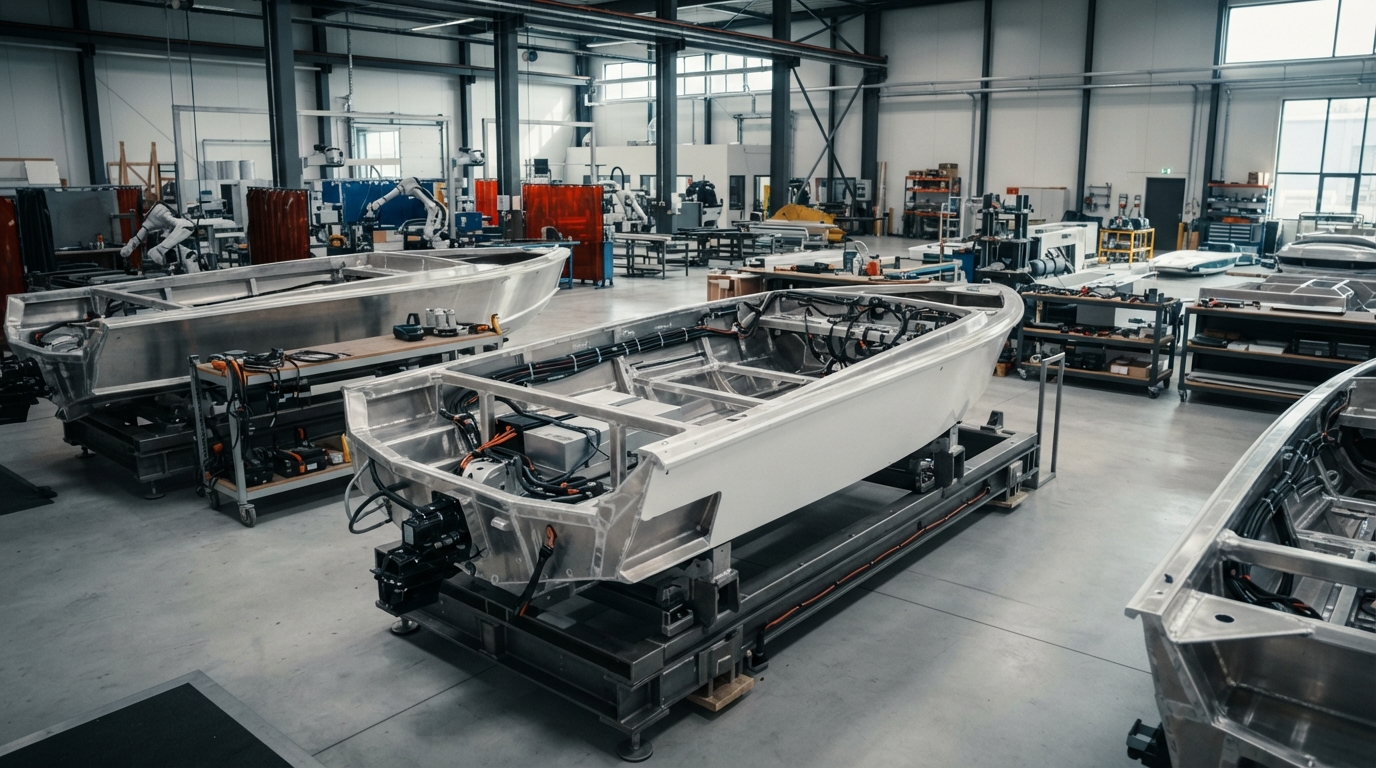
In a professionally engineered mini jet boat, every element is designed to work together:
- Hull geometry
- Motor output
- Battery system (for electric boats)
- Jet propulsion unit
- Weight distribution
These elements are not selected independently—they are integrated into a single system.
In home-built scenarios, however:
- Components are chosen individually
- Compatibility is assumed rather than proven
- Performance expectations are based on estimates
This creates a situation where the overall system has never been properly defined, let alone tested.
Reliance on Generic Specifications
Many builders rely on manufacturer specifications for individual components, such as:
- Motor power ratings
- Battery capacity
- Jet unit performance
While these figures may be accurate in isolation, they do not guarantee compatibility when combined.
Without system-level validation:
- Performance may not match expectations
- Components may operate outside optimal conditions
- Safety margins may be unknown
The Performance Uncertainty Problem
Acceleration and Power Delivery
Mini jet boats, particularly electric models, are highly sensitive to how power is delivered.
In a guesswork-based build:
- Acceleration may be abrupt or inconsistent
- Power delivery may not align with hull design
- The boat may behave differently under varying loads
This unpredictability makes it difficult for the operator to maintain control.
Planing and Efficiency
A key aspect of performance is the ability to transition smoothly onto plane.
In an improperly matched system:
- The boat may struggle to plane
- Excessive power may be required to achieve lift
- Efficiency may be significantly reduced
This not only affects performance but also increases wear on components.
Handling and Stability Risks
Unpredictable Behaviour
Handling characteristics depend on a precise balance between:
- Hull design
- Weight distribution
- Propulsion force
When these elements are not aligned:
- Turning behaviour may be inconsistent
- The boat may feel unstable at speed
- Steering response may vary unpredictably
Reduced Margin for Error
In a well-engineered boat, there is a margin for error that allows operators to recover from minor mistakes.
In a guesswork-based build:
- This margin may be significantly reduced
- Small errors can lead to large consequences
- Recovery from instability becomes more difficult
Structural Implications
Unknown Load Conditions
Every hull is designed to withstand specific forces. In a home-built scenario:
- Actual loads may exceed design assumptions
- Reinforcement may be inadequate
- Stress distribution may be uneven
Progressive Damage
Structural issues often develop over time:
- Micro-fractures may form in high-stress areas
- Mounting points may weaken
- The integrity of the hull may degrade
Because these issues are not immediately visible, they can go unnoticed until a failure occurs.
Jet Propulsion Performance Issues
Alignment and Integration
Jet propulsion systems require precise alignment and integration with the hull.
In guesswork-based builds:
- Alignment may be imperfect
- Water flow into the intake may be disrupted
- Thrust may be inconsistent
Cavitation and Efficiency Loss
Improper integration can lead to cavitation, where air enters the jet system.
This results in:
- Reduced thrust
- Increased vibration
- Potential damage to components
Without testing, these issues may only become apparent during use.
Electrical System Risks in Electric Builds
Complexity of Marine Electrical Systems
Electric mini jet boats rely on sophisticated electrical systems, including:
- High-capacity batteries
- Motor controllers
- Wiring and insulation
Risks of Improvised Installation
Without proper design and testing:
- Wiring may be inadequate or exposed
- Cooling systems may be insufficient
- Components may operate outside safe limits
This introduces risks such as:
- Overheating
- Power loss
- Electrical faults in a marine environment
The Absence of Testing
No Validation of Performance
Perhaps the most significant issue with guesswork-based builds is the lack of comprehensive testing.
In professionally engineered boats:
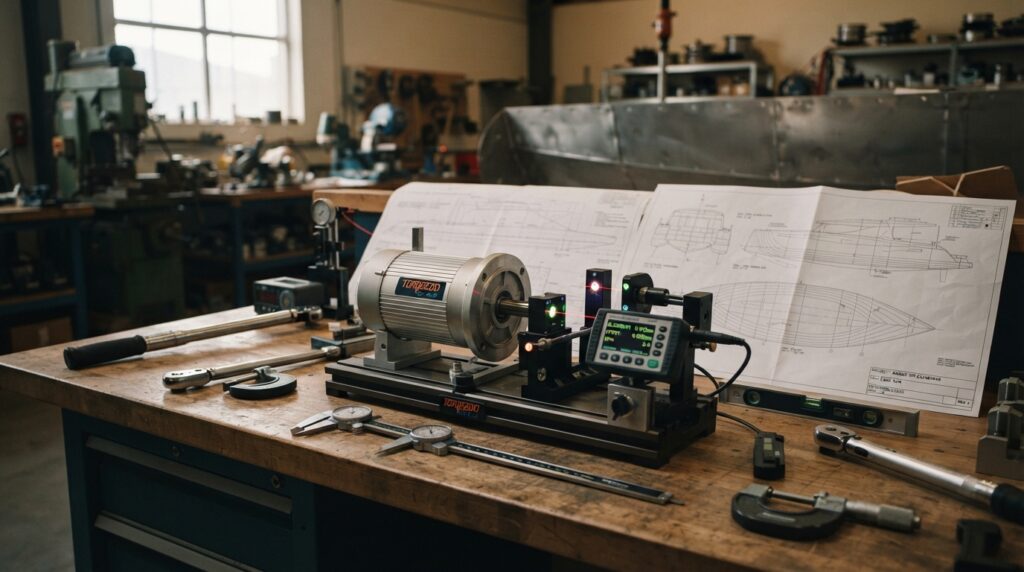
- Systems are tested under load
- Performance is validated across conditions
- Safety margins are defined
Real-World Use as the First Test
In many home-built boats, the first true test occurs on the water.
This means:
- Performance limits are unknown
- Potential faults are untested
- The operator is effectively part of the testing process
This is an unacceptable level of risk in a recreational environment.
The Human Factor
Overestimation of Capability
Builders may:
- Overestimate their understanding of marine systems
- Assume that similar components will work together
- Rely on trial and error
Impact on Operators
For those using the boat—whether the builder or others—the result is:
- Reduced confidence
- Increased need for caution
- Higher likelihood of unexpected behaviour
This is particularly problematic in shared or family use scenarios.
Australian Conditions: Amplifying the Risks
Australia’s waterways are diverse and often unpredictable:
- Shallow rivers with changing depths
- Coastal areas with variable conditions
- Remote locations with limited support
In these environments, reliability and predictability are essential.
A guesswork-based system may:
- Fail under stress
- Perform inconsistently
- Create unsafe situations far from assistance
Long-Term Ownership Challenges
Maintenance Complexity
Improvised systems can be difficult to maintain:
- Components may not be standardised
- Replacement parts may be hard to source
- Diagnosing issues may be complex
Reduced Resale Value
Buyers are increasingly cautious about:
- Non-standard builds
- Unknown engineering quality
- Lack of documentation or testing
This can significantly reduce resale appeal.
The Value of Engineered Systems
Designed, Not Assembled
Professionally engineered mini jet boats are:
- Designed as complete systems
- Tested under real-world conditions
- Built to operate within defined parameters
Predictable Performance
This results in:
- Consistent behaviour
- Reliable operation
- Clear safety margins
These are the qualities that define a safe and enjoyable boating experience.
Conclusion: Guesswork Has No Place in Performance Boating
Mini jet boats are dynamic, high-performance craft that demand precision in design and execution. Guesswork—whether in component selection, installation, or performance expectations—introduces uncertainty that can compromise safety.
While the idea of building or customising a boat may be appealing, the risks associated with untested, unvalidated systems cannot be ignored.
For those seeking:
- Reliable performance
- Predictable handling
- Safe operation across conditions
the only viable approach is a fully engineered and tested system.
In the end, performance is not about experimentation—it is about certainty. And certainty comes from engineering, not guesswork.
See More at www.vectorwatercraft.com.au