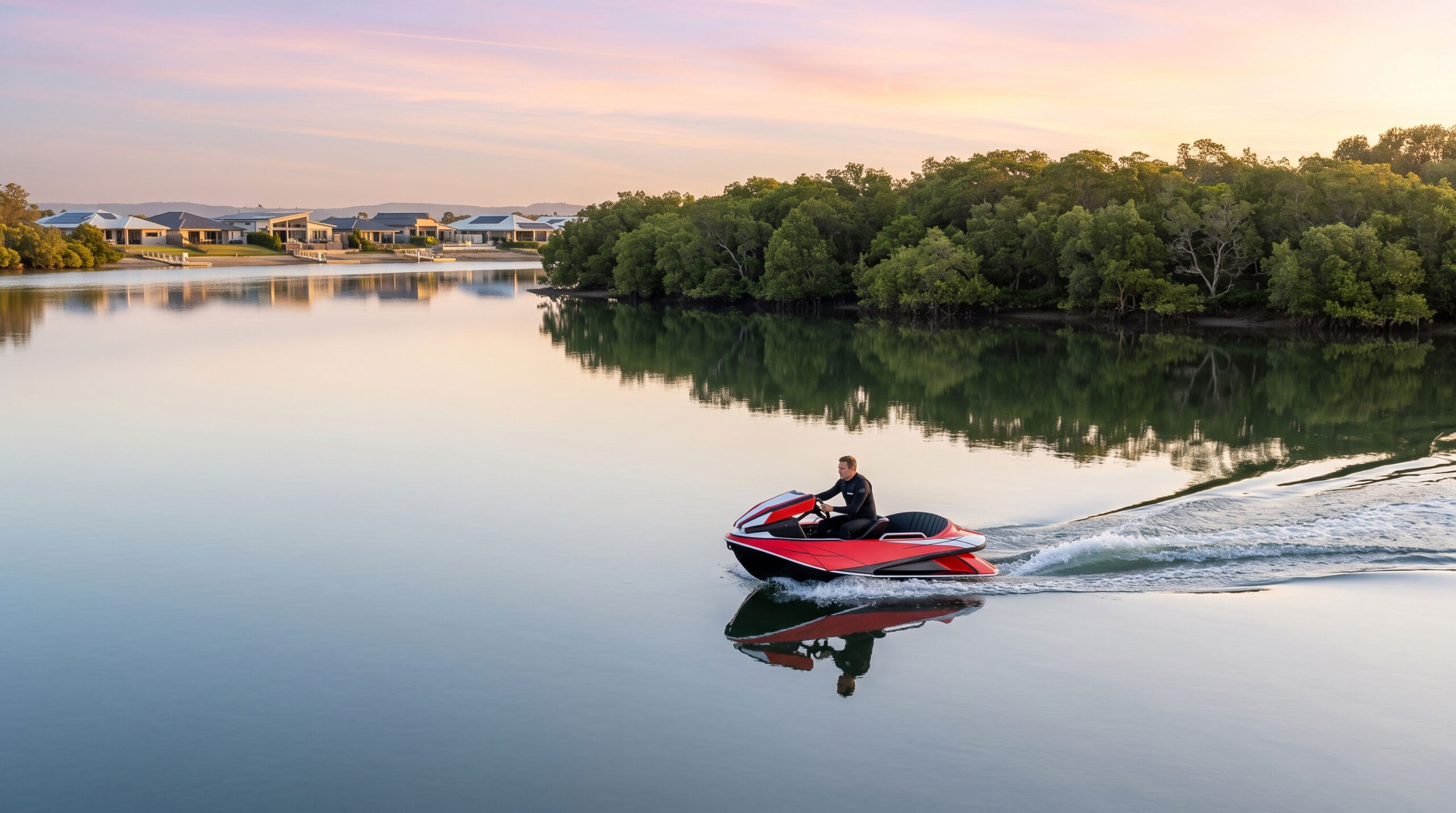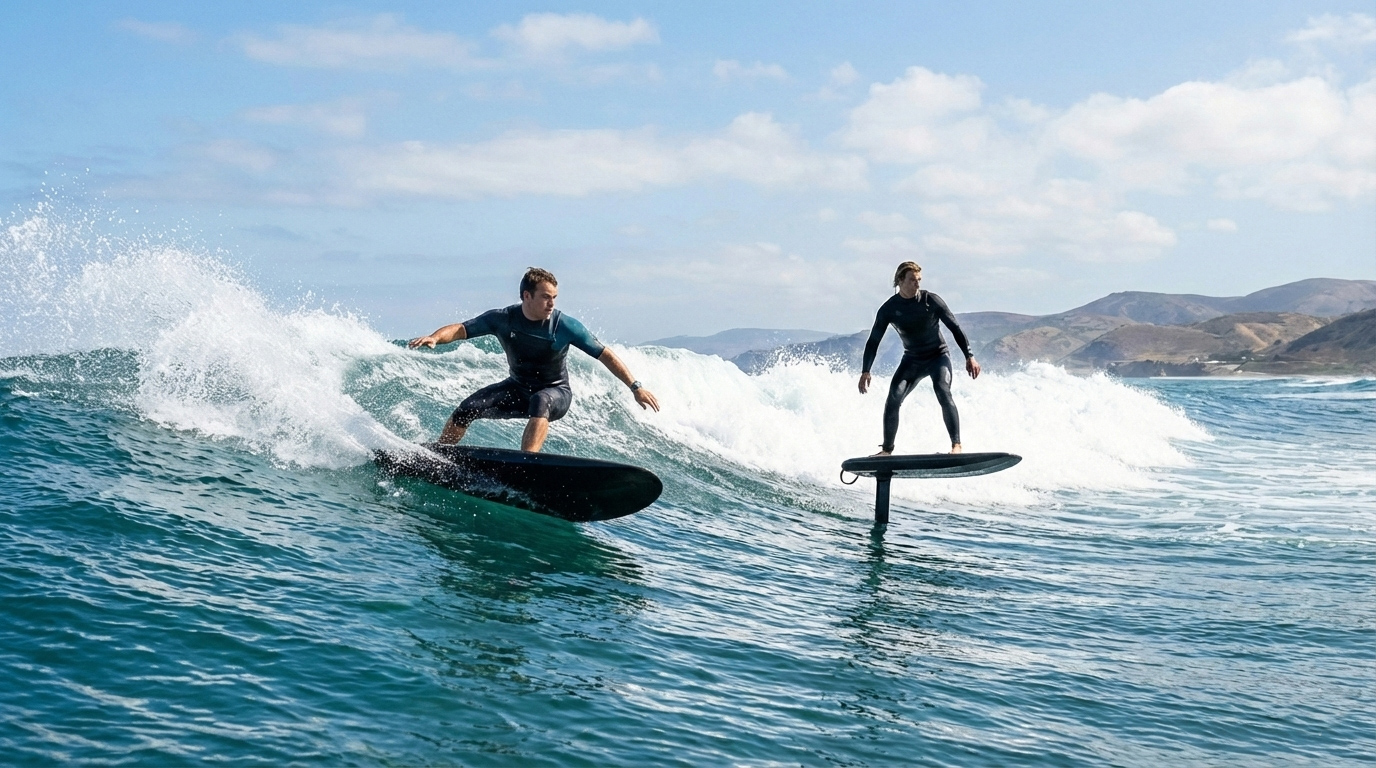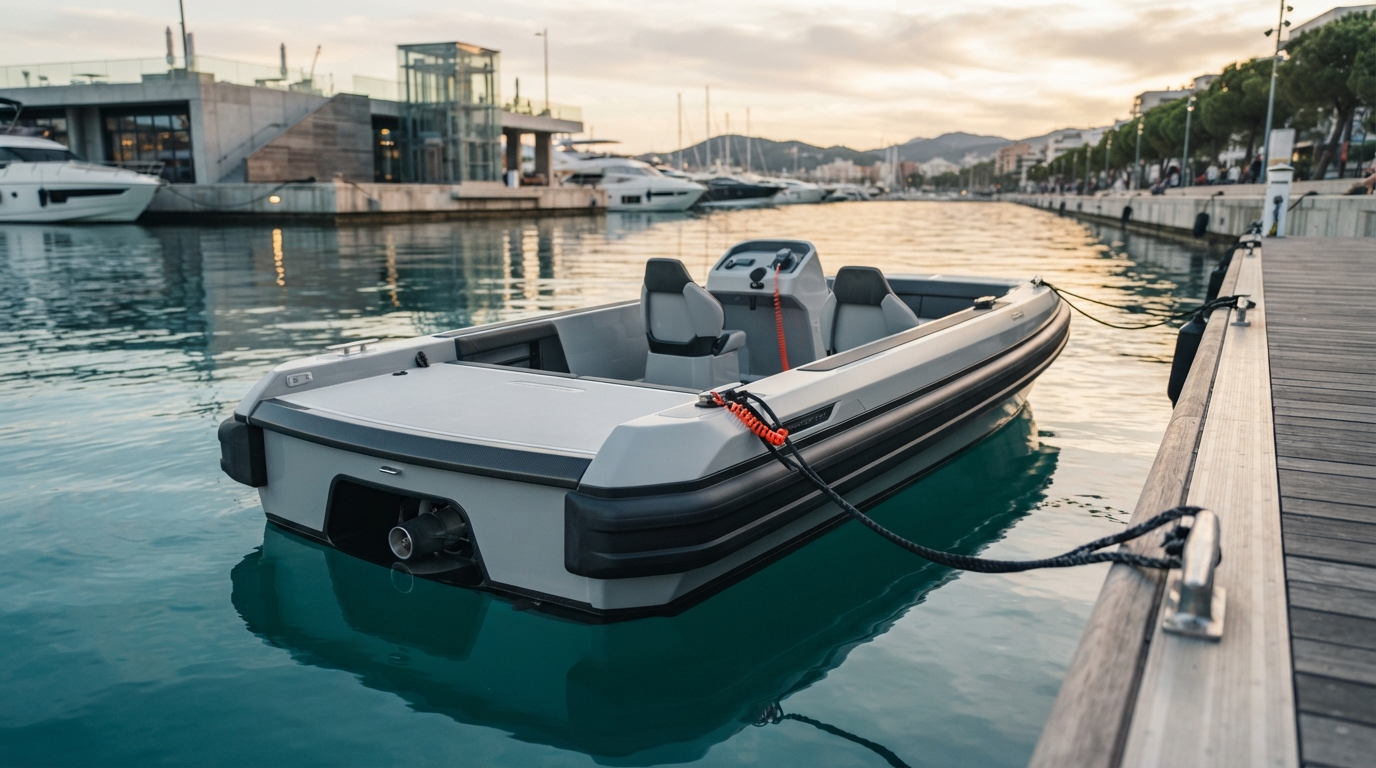

Water sports are heading into a new era where the winners won’t be the biggest, heaviest, or most overpowered machines. They’ll be the craft that are easiest to own, easiest to use, easiest to move, and easiest to enjoy. In other words, lightweight watercraft.
This isn’t a fashionable prediction — it’s a practical inevitability. As electrification spreads across water sports, the design priorities change. Batteries have weight. Motors are compact. Range is finite. Efficiency becomes king. And once efficiency matters, weight becomes the first battleground.
At the same time, consumer behaviour is shifting. People want less hassle, less storage drama, less towing, fewer mechanical failures, and more “grab-and-go” fun. Councils and organisations want deployable equipment that staff can handle safely and repeatedly. Families want craft that don’t require a trailer, a workshop, and a mechanical mindset to keep running.
Lightweight craft answer all of those needs — and that’s why they will dominate future markets.
The Old World: Heavy Craft as a Necessary Compromise
Historically, many watercraft became heavy for reasons that were hard to avoid.
Internal combustion required:
- large engines with cooling and exhaust systems
- fuel tanks and lines
- strong structural mounts to handle vibration
- drivetrains with multiple moving parts
- heavy hull reinforcement to manage power and impact loads
Then there was the “bigger is safer” thinking — not always true, but widely believed. Many designs gained weight through overbuilding, added features, and the expectation that buyers equated mass with quality.
The result was an ownership model that suited a narrow band of users: people with space, towing capacity, time, and mechanical confidence.
That world is fading.
The New Constraint: Batteries Make Weight the Enemy
Electrification changes the design maths immediately. Energy storage is the limitation. When your energy source is a battery rather than a fuel tank, every kilogram matters.
A heavier craft requires:
- more power to accelerate
- more energy to maintain speed
- a larger battery to reach acceptable range
- stronger structure to support the battery
- more reinforcement to handle the weight in chop
This becomes a compounding spiral.
By contrast, a lighter craft:
- requires less battery capacity for the same usable run time
- delivers sharper acceleration with modest power
- reduces structural stress and material demand
- improves handling, especially at low to medium speeds
- lowers transport and launch effort dramatically
In an electric future, lightweight design isn’t “nice to have”. It’s the most direct route to real-world performance.
Portability Is Becoming a Major Selling Point
One of the biggest changes in water sports is not on the water — it’s on land.
Transport and handling are huge barriers to ownership. Many people love the idea of being on the water but don’t want:
- a trailer
- a dedicated storage area
- complicated launch procedures
- heavy retrieval tasks
- extra registration and towing logistics
Lightweight craft reduce those barriers.
When a craft can be:
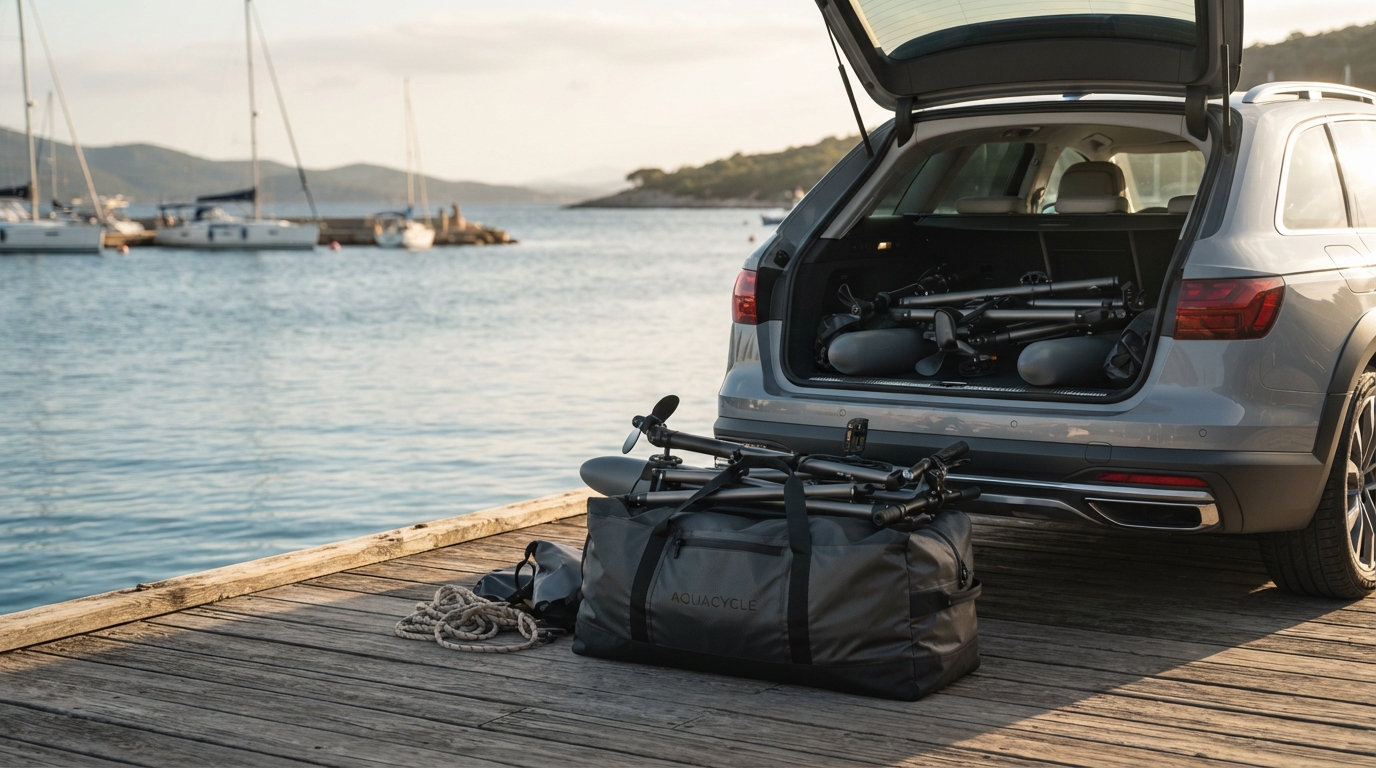
- loaded by two adults (or even one capable adult)
- launched without a ramp in many cases
- stored in a garage or side yard
- transported in a ute or suitable vehicle without drama
… the potential market expands sharply.
This is where future growth comes from: not convincing existing boat owners to “upgrade”, but enabling people who previously didn’t buy anything because the hassle factor was too high.
The Reality of Modern Leisure: Less Time, Less Patience
Today’s buyer is often time-poor and convenience-driven. They want experiences that fit into modern routines.
A heavyweight craft tends to demand planning:
- hitching and towing
- ramp time
- parking issues
- longer setup and pack-down
- more clean-up and maintenance
A lightweight craft makes spontaneous use possible:
- quick load, quick launch, quick retrieval
- less waterline mess
- easier cleaning and storage
- reduced mechanical fuss
This is not a small advantage. It changes usage frequency. And usage frequency determines long-term satisfaction, word-of-mouth growth, and brand loyalty.
People don’t rave about what they rarely use. They rave about what they use all the time.
Lightweight Doesn’t Mean “Cheap” or “Flimsy”
This is where many traditional buyers get it wrong. In the old world, lightweight often signalled compromise — thin materials, weak fittings, short lifespan.
In the new world, lightweight is increasingly a mark of good engineering.
Modern lightweight craft rely on:
- high-strength composites
- advanced polymers
- reinforced inflatable structures
- smart internal framing
- optimised hull shapes and load paths
- modular designs that remove unnecessary mass
The goal isn’t “light at any cost”. The goal is strength-to-weight efficiency.
The best future craft will feel solid, stable, and premium — yet still be manageable, portable, and efficient.
Control Improves When Weight Drops
Control-focused design is the new performance benchmark, and weight plays a central role.
A lighter craft typically offers:
- more responsive steering inputs
- less inertia in turns
- faster stabilisation after disturbances
- better low-speed manoeuvring
- easier correction when conditions change
In choppy conditions, heavy craft can punch through waves — but that does not automatically mean better control. Often, extra mass creates momentum that is difficult for inexperienced riders to manage.
Lightweight craft, paired with well-designed hull forms and smart control systems, can deliver a feeling of agility and confidence that heavy craft struggle to match.
Lightweight Enables Modularity and Multi-Use Platforms
The future of water sports technology is moving toward platforms that do more than one job.
A lightweight base craft can support:
- interchangeable battery modules
- accessory mounts (storage, tow points, rescue gear)
- optional seating configurations
- training modes vs performance modes
- add-on buoyancy or stabilisation modules
This modular approach becomes far harder when the base unit is heavy. Every added module requires stronger structure, bigger batteries, and heavier transport demands.
Lightweight craft make modularity practical — and modularity makes product ranges scalable without redesigning everything from scratch.
Why Organisations Will Prefer Lightweight Systems
Councils, surf life saving groups, aquatic centres, and government authorities don’t buy watercraft for bragging rights. They buy for deployment, reliability, and safety.
Lightweight craft offer:
- faster deployment by fewer staff
- reduced injury risk during handling
- less wear on vehicles and trailers
- simpler training for operators
- easier storage and asset management
This is especially important for rescue-related equipment, where the time between “decision to deploy” and “craft in the water” matters.
In practice, lightweight is often the difference between a craft that gets used and a craft that sits in storage because it’s too cumbersome.
Efficiency Wins Markets When Prices Tighten
As markets mature, price sensitivity rises — not just purchase price, but total cost of ownership.
Lightweight craft typically require:
- smaller battery capacity for the same usable session
- less structural material
- fewer heavy-duty transport accessories
- less maintenance strain over time
These factors can reduce overall cost without reducing capability.
In an electric market, battery cost remains a major component of pricing. If a manufacturer can deliver satisfying run time with a smaller battery because the craft is lighter and more efficient, they can price more competitively — or maintain margin while offering better value.
Either way, lightweight craft become commercially advantaged.
The “Infrastructure-Free” Advantage
A heavy craft usually assumes infrastructure:
- boat ramps
- trailers
- winches
- storage facilities
- dedicated towing vehicles
Lightweight craft can often operate with minimal infrastructure — sometimes simply:
- a shoreline launch point
- a small vehicle or ute
- a storage corner in a garage
This matters enormously in Australia, where many people live close enough to water to use it regularly, but not close enough to justify heavy infrastructure and complicated logistics.
Infrastructure-free access expands the market beyond traditional boating.
Lightweight Craft Will Shape New Buyer Expectations
Once buyers experience the ease of lightweight ownership, they become less tolerant of old-world complexity.
Expectations shift to:
- quick launch and retrieval
- simple charging instead of refuelling
- minimal maintenance
- quiet operation
- portable storage
- intuitive controls
This is the same pattern seen in other sectors: when a simpler, more convenient technology becomes viable, the market rarely returns to the old way.
Lightweight craft will not just succeed — they will redefine the baseline for what people consider normal.
The Premium Market Will Also Move Toward Lightweight
It’s easy to assume lightweight is a mass-market trend only. In reality, premium markets often lead the shift.
Premium buyers increasingly want:
- refined, quiet performance
- high design intelligence
- clean aesthetics and minimal clutter
- ease of use (even if they can afford complexity)
- technology-forward products
Lightweight craft align beautifully with premium preferences because they allow:
- sleek design language
- fewer bulky components
- better integration of batteries and controls
- more elegant proportions
- improved ride feel at typical speeds
The premium market will not abandon performance — it will redefine it as a mix of control, refinement, usability, and engineering elegance.
The Competitive Landscape Will Favour Those Who Engineer Light Properly
Not all lightweight craft will win. The winners will be those built by manufacturers who understand:
- structural engineering under dynamic loads
- battery placement for balance and stability
- materials that resist UV, salt, and impact
- waterproofing, sealing, and corrosion prevention
- maintainability and modular service design
This is where experience matters. The future belongs to brands that build light without building weak, and that design for long-term real-world conditions rather than showroom impressions.
In many ways, lightweight craft will separate true engineering from mere styling.
Why This Dominance Will Accelerate (Not Slow Down)
Technology trends don’t usually move in straight lines. They accelerate once they hit a tipping point.
Lightweight watercraft will accelerate in dominance because:
- batteries keep improving, rewarding efficient platforms
- environmental regulation favours low-impact systems
- consumers increasingly value convenience and low hassle
- digital control systems reduce the need for “mass for stability”
- modularity and platform strategies require manageable base weights
Each year, lightweight becomes more practical, more desirable, and more commercially powerful.
The Bottom Line: The Market Will Choose the Craft That Gets Used
When all the marketing is stripped away, markets choose what people actually use.
Heavy craft often become “projects”.Lightweight craft become “habits”.
The craft that gets used every weekend — or deployed quickly when needed — will define the future. And that craft will almost always be the one that is easy to transport, easy to launch, easy to store, and easy to control.
That is why lightweight watercraft will dominate future markets — not as a trend, but as the logical endpoint of electrification, modern consumer behaviour, and the real-world economics of ownership.
See More at www.vectorwatercraft.com.au.