
For much of water sports history, safety was treated as a secondary consideration—important, but ultimately subordinate to performance, speed, and visual appeal. Protective features were added after the fact, often as accessories or optional extras, rather than embedded into the core design of the craft itself.
That philosophy is now obsolete.
A fundamental shift is underway across the entire water sports industry. Safety is no longer a constraint on innovation. It has become the organising principle around which modern watercraft are designed. This evolution is driven by electrification, digital control systems, advanced materials, regulatory pressure, and a deeper understanding of how real people actually interact with watercraft in real conditions.
Safety-first design is not about limiting capability. It is about enabling confident, repeatable, and responsible use across a far wider range of users and environments.
Why traditional safety thinking fell short
Historically, safety in watercraft design relied heavily on user responsibility and mechanical robustness.
Hull stability, flotation, kill switches, and personal protective equipment were expected to compensate for risk. If something went wrong, the assumption was that operator skill—or external rescue—would resolve the situation.
This approach worked tolerably well when users were experienced, conditions predictable, and craft mechanically forgiving. It failed when any of those assumptions broke down.
As watercraft became faster, lighter, and more powerful, the margin for error narrowed. Accidents increasingly resulted from sudden loss of control, over-throttling, environmental surprise, or fatigue—factors that traditional safety measures could not address.
Modern design philosophy recognises that safety must be proactive rather than reactive.
Electrification changes the safety equation
Electric propulsion fundamentally alters the risk profile of watercraft.
On one hand, electric systems eliminate fuel handling, exhaust gases, fire risk associated with petrol, and many mechanical failure modes. On the other hand, they introduce instant torque, silent operation, and new user expectations.
A safety-first design philosophy does not resist these changes. It integrates them intelligently.
Electric drivetrains allow precise control of power delivery, speed limits, and response characteristics. This enables safety features that were simply not possible with internal combustion systems.
Rather than assuming the operator will always manage risk perfectly, the craft itself can now assist.
From passive safety to active safety systems
Traditional watercraft relied almost entirely on passive safety—design features that do not change behaviour in real time.
Modern watercraft increasingly incorporate active safety systems that monitor conditions and intervene when necessary.
These systems include:
- Torque moderation to prevent loss of control
- Stability assistance during abrupt manoeuvres
- Speed governance in sensitive or restricted areas
- Automatic power reduction under unsafe conditions
- Intelligent shutdown protocols in fault scenarios
Active safety does not remove control from the operator. It supports them when conditions exceed human reaction time.
This mirrors the evolution seen in automotive safety, where stability control and braking assistance have dramatically reduced accidents without diminishing driving enjoyment.
Designing for human variability
One of the most important insights driving safety-first design is the recognition that users are not uniform.
Operators vary in age, strength, balance, reaction time, experience, and fatigue levels. They also vary from day to day.
A safety-first philosophy designs around this variability rather than ignoring it.
Modern platforms allow performance to be tailored to the user. Beginners can operate within conservative limits. Experienced users can access higher performance envelopes. The same craft adapts rather than forcing a one-size-fits-all behaviour.
This adaptability reduces the likelihood of user-craft mismatch, one of the leading contributors to accidents.
Predictive safety through data and sensors
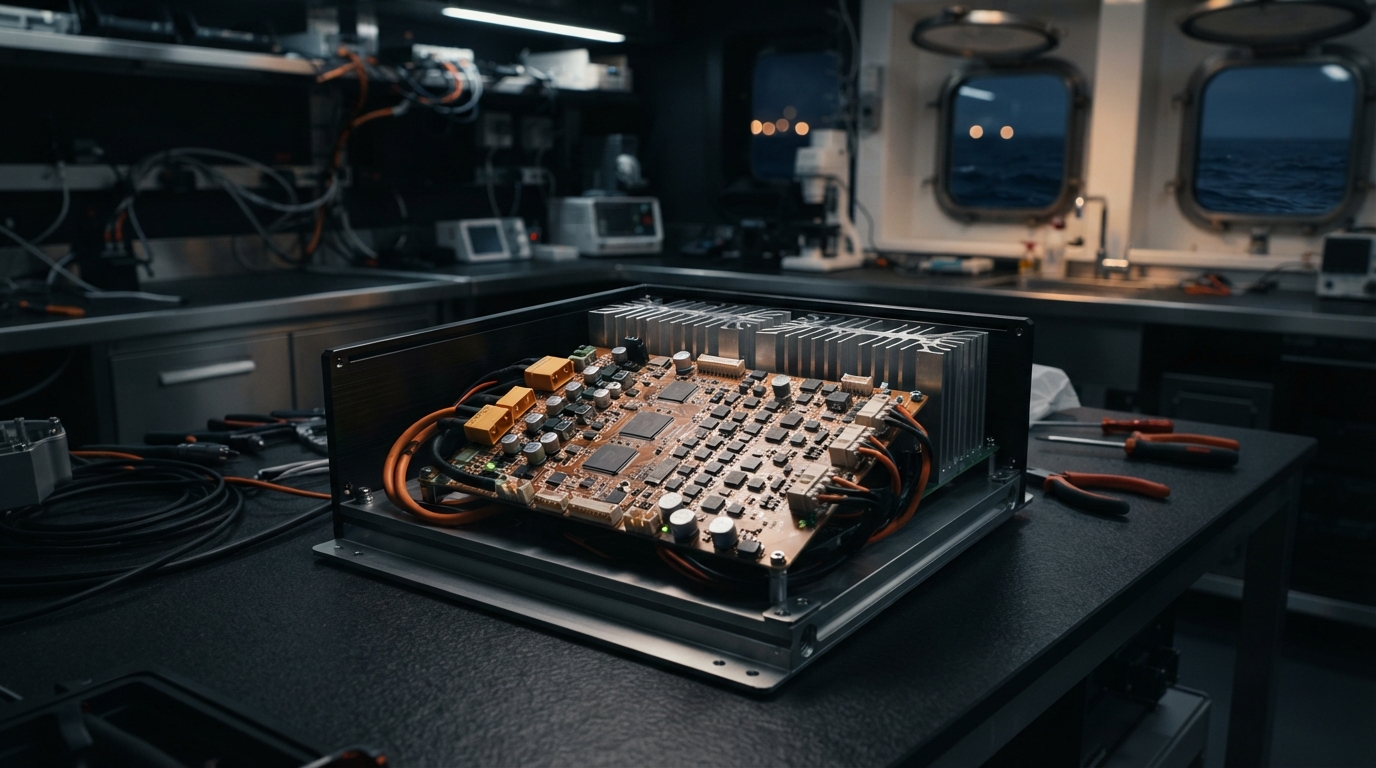
Accelerometers, gyroscopes, GPS, battery monitors, thermal sensors, and environmental inputs provide continuous data about the craft’s state and surroundings.
Safety-first design uses this data predictively rather than reactively.
The system can detect instability developing before it becomes critical. It can recognise unsafe combinations of speed, angle, and torque. It can anticipate thermal or electrical stress before failure occurs.
By acting early, the system prevents incidents rather than responding after they occur.
Stability as a core design objective
Stability has always mattered in watercraft, but it was traditionally achieved through hull geometry alone.
Modern safety-first design treats stability as a system-level objective.
Hull form, weight distribution, propulsion control, and software logic all work together to maintain predictable behaviour.
In electric craft, torque delivery can be adjusted dynamically to stabilise the craft during turns, acceleration, or recovery operations. This is particularly valuable in rough water, low-speed manoeuvring, and confined environments.
The result is a craft that feels inherently safer because it behaves consistently, even when conditions change.
Safety in low-speed and high-risk environments
Many watercraft incidents occur not at high speed, but during launching, docking, beach operations, or close-quarters manoeuvring.
Safety-first design addresses these scenarios explicitly.
Low-speed modes, soft-start acceleration, controlled reverse thrust, and automatic power limitation near shorelines reduce risk in exactly the situations where human error is most likely.
These features expand safe use to a wider range of environments and users, including training contexts and public-facing operations.
Professional and rescue influence on safety philosophy
Professional and rescue organisations have played a major role in accelerating safety-first design.
Emergency services, surf life saving clubs, councils, and environmental agencies operate under conditions where failure is unacceptable.
Their requirements include:
- Predictable behaviour under stress
- Redundancy in critical systems
- Clear feedback to operators
- Fail-safe responses to faults
- Reduced reliance on operator perfection
Manufacturers serving these markets have been forced to integrate safety deeply into their designs rather than treating it as an add-on.
As these technologies mature, they migrate into premium recreational craft, raising the safety baseline for the entire industry.
Quiet craft demand smarter safety systems
Electric watercraft are quiet, which brings both benefits and challenges.
Reduced noise improves environmental compatibility, but it also reduces audible warning to swimmers, paddlers, and other water users.
Safety-first design compensates for this through visibility, predictability, and intelligent behaviour rather than noise alone.
Controlled acceleration, predictable trajectories, and optional alert systems reduce collision risk without reverting to disruptive noise levels.
Safety becomes a function of behaviour rather than volume.
Battery safety as a design priority
Battery systems represent one of the most critical safety considerations in electric watercraft.
Safety-first design addresses this at multiple levels.
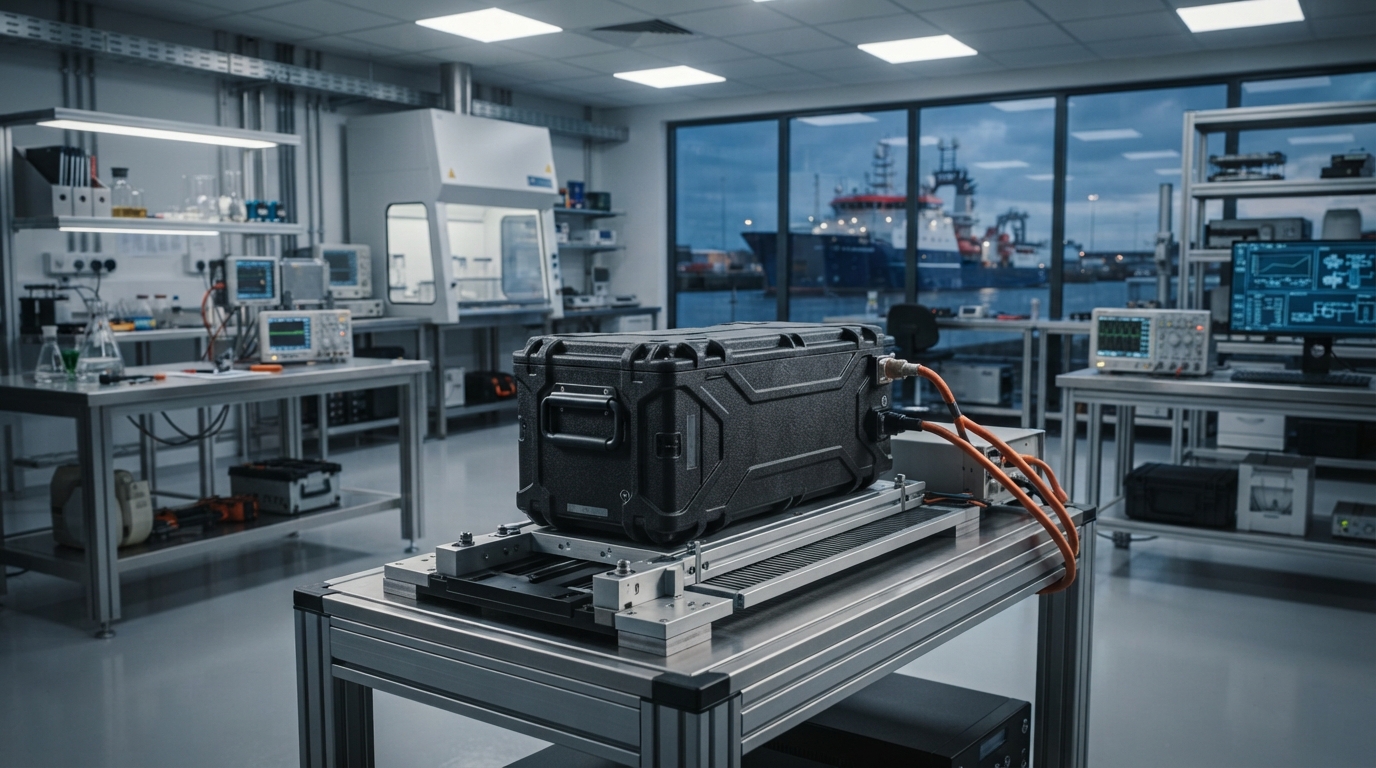
Battery enclosures are engineered for impact resistance, thermal management, and water ingress protection. Monitoring systems track temperature, voltage, and load continuously. Software limits power output under unsafe conditions.
Rather than assuming batteries will never be stressed, the system is designed to manage stress safely.
This layered approach dramatically reduces risk compared to early electric platforms.
Reducing cognitive load on operators
Many accidents occur because operators are overloaded—mentally rather than physically.
Complex controls, conflicting information, and constant micro-corrections increase fatigue and reduce situational awareness.
Safety-first design simplifies interaction.
Clear feedback, intuitive controls, and automated background adjustments allow the operator to focus on navigation and awareness rather than system management.
Reducing cognitive load is a powerful safety tool, particularly in demanding or unfamiliar environments.
Regulation drives but does not define safety
Regulatory frameworks set minimum safety standards, but safety-first design goes beyond compliance.
Manufacturers increasingly recognise that exceeding regulatory requirements is a competitive advantage, not a burden.
Craft that feel safer, behave predictably, and inspire confidence are more likely to be adopted, recommended, and retained.
Safety becomes part of the value proposition rather than a checkbox.
Cultural shift in how safety is perceived
Perhaps the most important change is cultural.
Safety is no longer seen as something that limits enjoyment or performance. It is increasingly understood as what enables people to enjoy water sports more often, in more places, with greater confidence.
A craft that feels safe invites use. A craft that feels unpredictable discourages it.
Safety-first design aligns directly with broader goals of accessibility, inclusivity, and sustainability.
The competitive gap widens
Manufacturers who continue to treat safety as an afterthought will struggle.
As active safety systems, intelligent control, and predictive monitoring become standard, legacy designs will feel crude and outdated.
The gap between safety-led platforms and traditional designs will widen, particularly in premium and professional markets.
Long-term implications for water sports
Safety-first design philosophy is reshaping the entire water sports ecosystem.
It influences who can participate, how often they do so, where they operate, and how long they remain engaged.
It supports infrastructure-free adoption, professional deployment, and broader public acceptance.
Safety is no longer a constraint on growth. It is a driver of it.
The long-term outlook
The future of water sports technology will be defined by systems that anticipate, adapt, and assist rather than react.
Safety-first design is not about removing risk entirely. It is about managing it intelligently, transparently, and responsibly.
As watercraft become smarter, quieter, and more capable, safety will increasingly be embedded into their very architecture.
The most advanced watercraft of the future will not be those that go fastest.
They will be those that make safe performance feel effortless.
See More at www.vectorwatercraft.com.au