For most of modern history, watercraft categories evolved in isolation. Boats were boats. Personal watercraft were personal watercraft. Rescue equipment, boards, and specialty craft followed their own paths, governed by distinct engineering traditions, regulatory frameworks, and consumer expectations. Technologies rarely crossed boundaries, and when they did, it was slowly and reluctantly.
That separation is now collapsing.
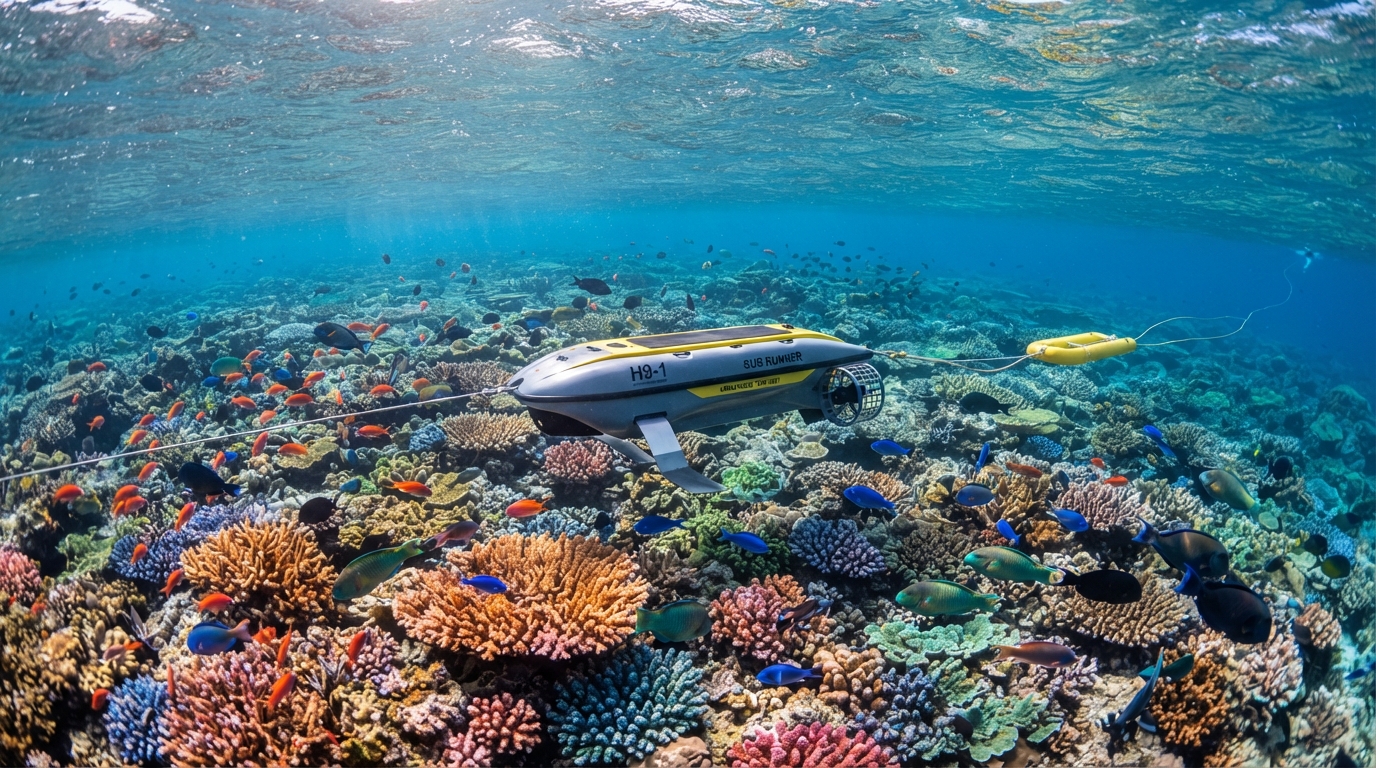
Electrification, digital control systems, advanced materials, and modular design principles are forcing technology convergence across watercraft categories. Boundaries that once seemed fixed are becoming porous. Capabilities once exclusive to professional or niche craft are appearing in recreational products. Design ideas from boards are influencing boats. Rescue technology is shaping leisure craft. Software is becoming a shared layer across everything that floats and moves.
The future of water sports will not be defined by rigid categories — it will be defined by shared platforms, shared technologies, and adaptable use cases.
Why Traditional Categories Are Breaking Down
Historically, categories existed because propulsion systems dictated design.
Internal combustion engines required:
- specific hull forms
- fixed intake and exhaust layouts
- heavy structural reinforcement
- standardised fuel systems
- predictable mechanical controls
These constraints naturally separated craft types. A jet ski could not behave like a boat. A rescue craft could not share much DNA with a leisure platform. Boards and boats lived in entirely different engineering worlds.
Electric propulsion removes many of those constraints.
Once power delivery becomes compact, silent, digitally controlled, and modular, the differences between categories become less about what the craft is and more about how it is configured.
Electric Power as the Universal Enabler
Electric motors and batteries function as universal building blocks. The same core technologies can be scaled up or down, repositioned, and repurposed across a wide range of watercraft.
This enables:
- shared motor architectures across multiple craft types
- common battery modules used in different platforms
- standardised control electronics and software stacks
- interchangeable charging infrastructure
- unified diagnostic and safety systems
In practical terms, this means a manufacturer can develop one high-quality propulsion and control ecosystem and deploy it across personal watercraft, rescue craft, compact boats, and specialist platforms.
This is not theoretical — it is already happening.
Software Is Becoming the Common Language
Mechanical systems vary widely between categories. Software does not.
As watercraft become digitally controlled, software becomes the layer that unifies categories. Throttle mapping, stability assistance, power limits, fault detection, GPS integration, and user profiles are no longer category-specific features — they are software configurations.
A single software architecture can support:
- beginner recreational modes
- professional rescue modes
- training and restricted operation modes
- performance-oriented modes
- autonomous or semi-autonomous assistance
This convergence allows a craft’s behaviour to change without changing its hardware. What once required an entirely different machine can now be delivered through software logic and configuration.
Control Systems Flowing Between Categories
Some of the most important convergence is happening in control systems.
Rescue and professional craft have long prioritised:
- predictable response
- safety overrides
- redundancy
- remote monitoring
These principles are now migrating into recreational watercraft as consumers demand safer, more intuitive experiences.
At the same time, leisure-focused innovations — such as refined user interfaces, smooth throttle curves, and responsive handling — are improving professional and rescue craft by making them easier to operate under stress.
This two-way flow is accelerating convergence and raising standards across all categories.
Hull Design and Materials Are Cross-Pollinating
Advanced materials and manufacturing techniques are dissolving traditional boundaries between boards, inflatables, rigid hulls, and hybrid designs.
Lightweight composites, reinforced polymers, and high-strength inflatable structures are being used in:
- compact boats that behave like personal watercraft
- boards with integrated propulsion and control systems
- rescue craft that blend buoyancy, speed, and portability
- modular platforms that combine rigid and inflatable elements
Designers are no longer asking “What category does this belong to?” They are asking “What problem does this solve?” — and selecting materials accordingly.
This mindset naturally leads to hybrid craft that defy old labels.
The Rise of Multi-Role Platforms
Convergence is most visible in the emergence of multi-role platforms.
Instead of single-purpose craft, manufacturers are developing base platforms that can be configured for different roles using accessories, software modes, and modular components.
A single platform might support:
- recreational use on weekends
- training or supervision during the week
- light rescue or safety monitoring in specific contexts
- different rider profiles through software limits
This is only possible because propulsion, control, and safety systems are no longer tied rigidly to one category or use case.
Multi-role platforms reduce cost, simplify ownership, and expand market appeal — powerful incentives in both consumer and institutional markets.
Rescue Technology Influencing Recreational Design
One of the most important convergence trends is the migration of rescue-oriented thinking into recreational design.
Features once reserved for professional equipment — such as:
- enhanced visibility
- predictable low-speed control
- redundancy and fault tolerance
- remote monitoring capability
- rapid deployment logic
— are increasingly expected in recreational craft.
This does not make leisure craft less fun. It makes them more usable, more inclusive, and more trusted by regulators and families.
The line between “professional-grade” and “consumer-grade” is blurring, and that blurring favours better engineering across the board.
Recreational Innovation Improving Professional Craft
Convergence also flows in the opposite direction.
Recreational markets move quickly and demand refinement, aesthetics, and intuitive interaction. These pressures drive innovation in:
- user interfaces
- ergonomic controls
- compact packaging
- efficient power usage
Professional and rescue craft benefit directly from these advances. Operators get equipment that is easier to learn, easier to maintain, and less fatiguing to use.
When technology converges, everyone gains.
Regulatory Frameworks Are Adapting to Convergence
Regulators historically relied on rigid categories to set rules. As technology converges, those rules are being forced to evolve.
Electric, digitally controlled craft with predictable behaviour challenge traditional assumptions about:
- power classification
- licensing requirements
- access restrictions
- safety equipment standards
This creates both opportunity and complexity.
Craft that demonstrate controlled behaviour, low noise, and strong safety systems are often treated more favourably — regardless of which category they once belonged to.
Manufacturers who design with convergence in mind are better positioned to navigate this evolving regulatory landscape.
Infrastructure Convergence: Charging Over Fuel
Infrastructure is another area where convergence is accelerating.
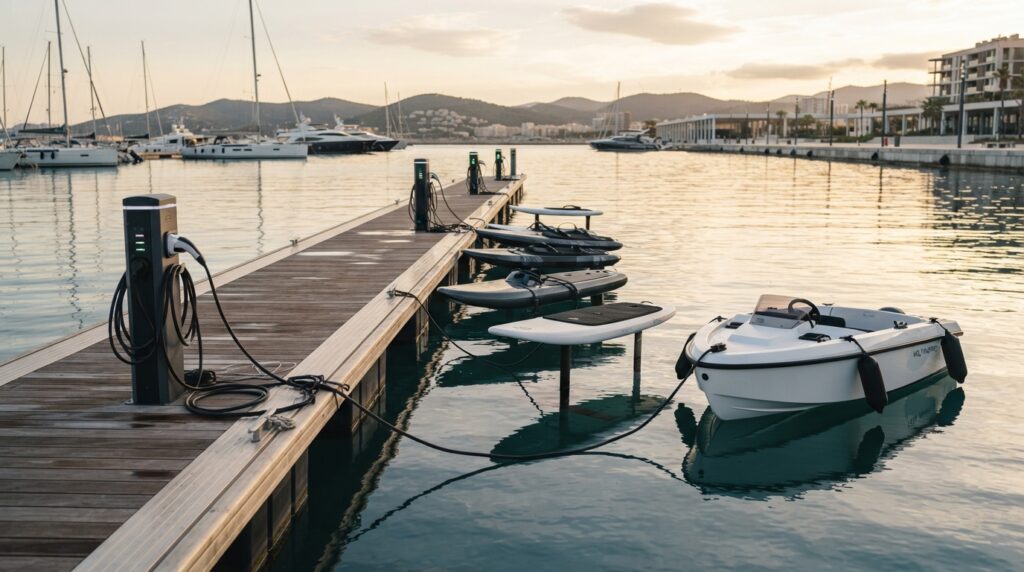
As electric craft proliferate, charging infrastructure becomes shared across categories. A single charging solution can support:
- personal watercraft
- compact boats
- rescue equipment
- training platforms
This stands in stark contrast to fuel-based systems, where storage, handling, and safety requirements differed significantly between craft types.
Shared infrastructure reduces friction, lowers costs, and encourages adoption across multiple markets simultaneously.
Market Expectations Are Shifting Toward Flexibility
Consumers increasingly expect technology to be adaptable rather than fixed.
They are used to:
- software updates
- configurable devices
- multi-purpose tools
- platforms that evolve over time
Watercraft are now entering this expectation set.
A craft that can only do one thing, in one way, begins to feel outdated. Converged platforms that adapt to different uses feel modern, future-proof, and better value.
This psychological shift is just as important as the technical one.
The Competitive Advantage of Convergence
From a manufacturing perspective, convergence offers powerful advantages:
- reduced development duplication
- shared component supply chains
- faster innovation cycles
- easier quality control
- scalable product families
Companies that treat each category as a silo will struggle to compete with those building unified ecosystems.
In the long run, convergence is not just a design philosophy — it is a business strategy.
What the Next Decade Will Look Like
Over the next decade, expect to see:
- fewer rigidly defined categories
- more hybrid and crossover craft
- shared propulsion and control platforms
- increasing software-driven differentiation
- growing overlap between recreational, professional, and rescue markets
The question will not be “What category is this craft in?” but “What can this platform do, and how easily can it adapt?”
Conclusion: Categories Are Fading, Capabilities Are Rising
Technology convergence across watercraft categories is not erasing diversity — it is enabling smarter diversity.
By freeing designers from rigid constraints, electrification and digital systems allow watercraft to be shaped around real needs rather than historical labels.
The future belongs to platforms that are flexible, intelligent, and adaptable. As categories blur, capability becomes the new measure of value.
Those who understand this shift will build the watercraft that define the next era of marine recreation and safety.
See More at www.vectorwatercraft.com.au.