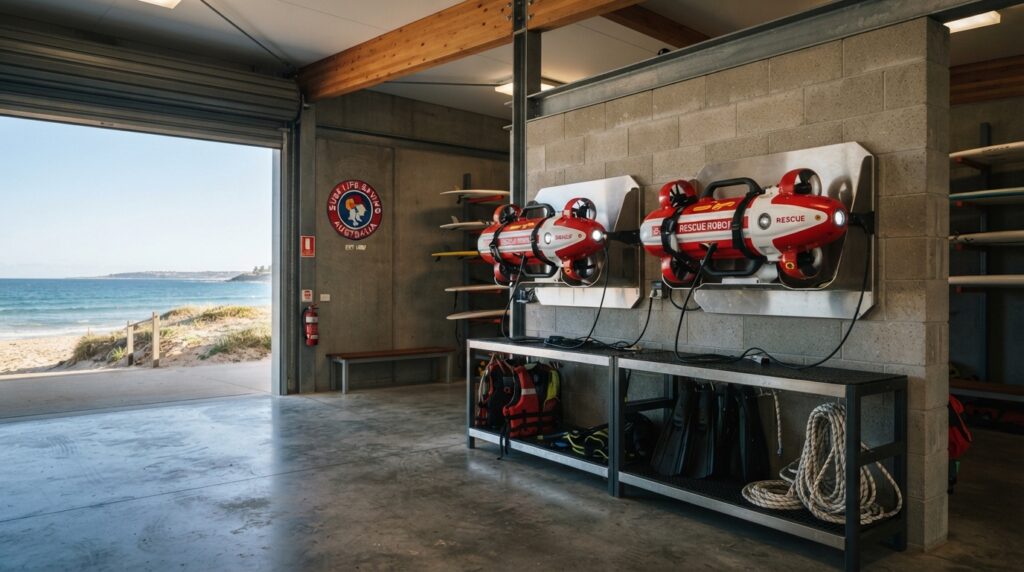

When evaluating safety equipment, the focus often begins with purchase price. However, as with any specialised tool, the true cost of Remote Control Rescue Buoys (RCRBs) extends beyond initial investment. Understanding the full financial picture—including operating costs, maintenance requirements, training, and long-term value—is essential for organisations considering their adoption.
For Australian operators, including lifeguard services, councils, and commercial marine businesses, this analysis is particularly important. Budgets must be justified, equipment must deliver measurable value, and safety outcomes must be improved in a cost-effective manner.
This article provides a comprehensive examination of the real cost of RCRBs, focusing on practical financial considerations and long-term value.
Initial Investment
What Influences Price
RCRB pricing depends on:
- build quality
- propulsion system
- battery capacity
- control technology
Positioning
RCRBs are:
- professional-grade equipment
- designed for reliability
Operating Costs
Energy Consumption
RCRBs use electric propulsion:
- low cost per operation
- minimal consumables
Comparison to Traditional Equipment
Traditional rescue methods:
- rely on physical effort
- may require additional resources
RCRBs:
- reduce reliance on physical deployment
Maintenance Requirements
Routine Maintenance
Includes:
- cleaning after use
- inspection of components
- battery care
Mechanical Simplicity
- fewer moving parts
- reduced maintenance complexity
Battery Lifecycle Costs
Battery Considerations
- gradual degradation
- eventual replacement
Cost Impact
- infrequent but significant
- mitigated through proper care
Training Costs
Operator Training
- initial familiarisation
- ongoing practice
Benefit
Improved efficiency and safety outcomes.
Cost vs Value Analysis
What Defines Value
- improved rescue outcomes
- reduced risk
- faster response
Financial Perspective
Investment must be viewed in terms of:
- risk reduction
- operational efficiency
Commercial Use Case
Marinas and Facilities
- improved safety
- compliance support
Tourism Operators
- enhanced safety perception
- customer reassurance
Australian Context
High Water Activity
- strong need for safety equipment
Regulatory Considerations
- increasing focus on safety
Long-Term Value
RCRBs provide:
- consistent performance
- reduced risk exposure
- long-term operational benefit
Common Cost Misconceptions
- focusing only on purchase price
- underestimating operational benefits
Strategic Investment Perspective
RCRBs should be viewed as:
- safety infrastructure
- long-term asset
Conclusion
While RCRBs require an upfront investment, their low operating costs, reduced maintenance requirements, and significant contribution to safety outcomes make them a valuable long-term asset. For Australian operators, they represent a practical and effective solution for improving water rescue capability.