
For decades, speed was the dominant measure of progress in water sports. Faster hulls, bigger engines, higher top-end numbers — these were the benchmarks manufacturers used to compete, and the figures consumers were trained to chase. Speed equalled excitement, prestige, and technical superiority.
That era is quietly ending.
Across virtually every category of modern watercraft, a clear shift is underway: performance is no longer defined primarily by maximum speed, but by control, precision, safety, and usability. This change has been accelerated by electrification, but it reflects a deeper evolution in how people actually use watercraft — and what they value once the novelty of speed wears off.
The future of water sports will not belong to the fastest craft. It will belong to the best-controlled ones.
Why Speed Became the Wrong Benchmark
Speed is easy to measure and easy to market. It provides a single, dramatic number that implies superiority without explaining trade-offs. For manufacturers, it offered a simple way to differentiate products. For buyers, it promised excitement and status.
In real-world conditions, however, speed delivers diminishing returns.
Most recreational watercraft rarely operate anywhere near their maximum velocity. Congested waterways, safety regulations, weather conditions, and user skill levels impose natural limits. What matters far more is how a craft behaves at low to medium speeds, where almost all real use occurs.
Historically, combustion-powered craft struggled here. Engines were inefficient at low RPM, throttle response was coarse, and control systems were mechanical rather than intelligent. The industry compensated by marketing speed, even though it was the least relevant attribute for most users.
Electric propulsion exposes this contradiction.
Electric Power Changes the Performance Equation
Electric motors deliver torque instantly and predictably. Power can be modulated with extraordinary precision, and response curves can be tuned digitally rather than mechanically. This fundamentally alters how watercraft behave.
Instead of asking “How fast can it go?”, designers now ask:
- How precisely can power be delivered?
- How stable is the craft during acceleration and deceleration?
- How intuitively does it respond to rider input?
- How forgiving is it when mistakes are made?
These questions define control-focused design, and they are reshaping everything from personal watercraft to professional rescue platforms.
Control as a Safety Multiplier
Speed increases risk linearly. Control reduces risk exponentially.
Well-controlled craft allow riders to:
- Maintain balance during rapid manoeuvres
- Adjust power smoothly in confined spaces
- Recover from instability without panic inputs
- Operate confidently in poor visibility or rough water
Electric systems enable layered safety controls that were previously impossible. Throttle mapping can be softened for beginners. Maximum output can be limited dynamically based on conditions. Sudden loss of traction or excessive pitch can trigger automatic power reduction.
This does not make water sports boring — it makes them accessible.
As the user base expands beyond experienced enthusiasts to families, older riders, councils, and organisations, control becomes the decisive factor in adoption.
The Decline of Brute-Force Design
Traditional high-speed craft were often over-engineered to compensate for poor control. Larger engines, heavier hulls, and reinforced components were used to stabilise aggressive performance. The result was complexity, weight, and maintenance burden.
Control-focused design reverses this logic.
By prioritising predictability and balance, engineers can reduce structural demands. Hulls can be lighter. Power systems can be smaller. Stress on components is reduced because performance is managed rather than unleashed.
This leads to craft that are:
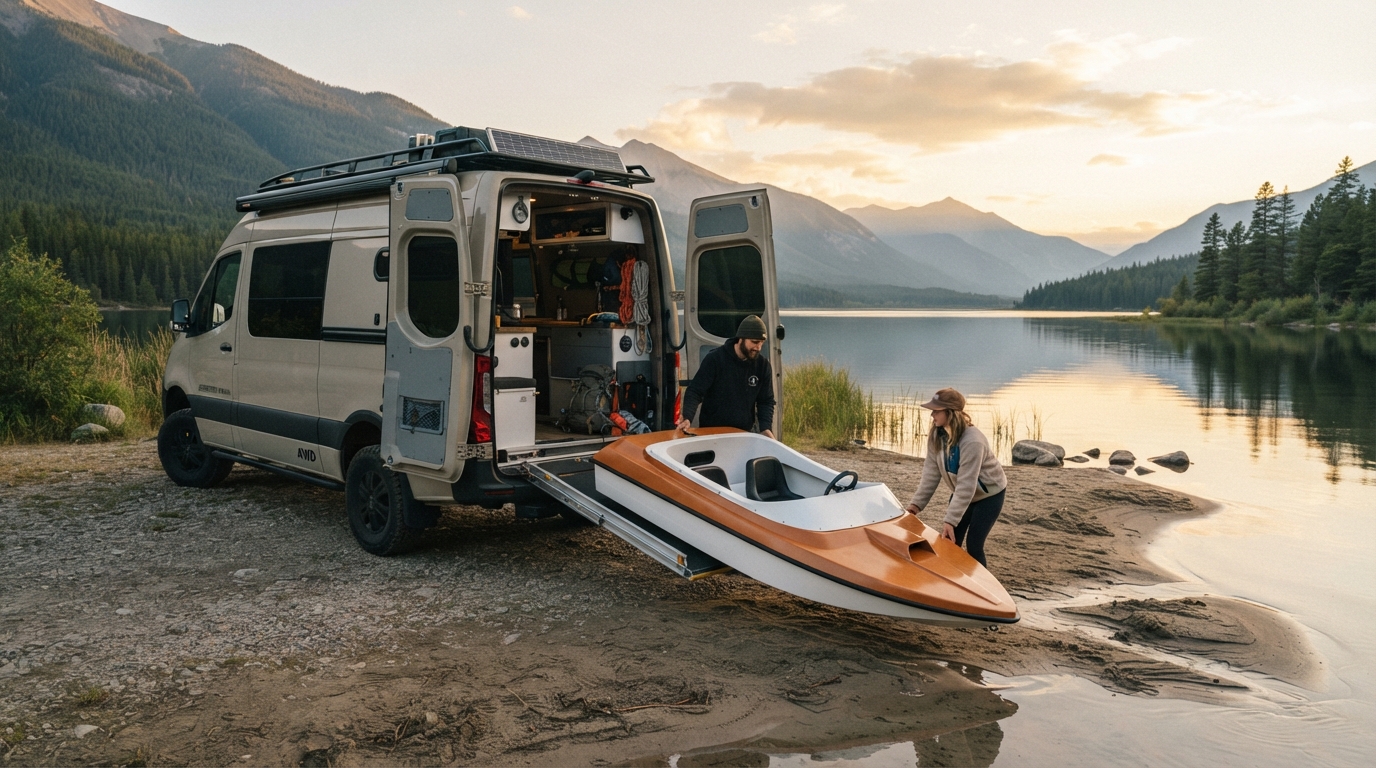
- Easier to transport
- Easier to launch and retrieve
- Less fatiguing to operate
- More durable over time
Speed-centric design demands strength. Control-centric design demands intelligence.
Why Real Users Prefer Control Over Speed
As water sports broaden beyond niche enthusiast communities, user expectations are changing rapidly.
Most buyers today want:
- Confidence, not intimidation
- Smoothness, not aggression
- Reliability, not constant tuning
- Enjoyment, not exhaustion
Control-focused craft deliver a superior emotional experience. Riders feel connected rather than challenged. They enjoy longer sessions with less fatigue. They are more likely to share the experience with others.
Speed impresses briefly. Control satisfies consistently.
This is why many users who transition to electric craft report that they do not miss the extra speed they once thought essential.
Digital Control Systems as the New Differentiator
In the coming decade, competitive advantage will not be defined by engine size or peak output. It will be defined by software.
Control systems increasingly manage:
- Throttle response curves
- Torque delivery profiles
- Stability assistance
- Regenerative braking or deceleration control
- User-specific performance modes
These systems allow manufacturers to tailor behaviour to specific use cases — training, recreation, rescue, or professional deployment — using the same underlying hardware.
This modularity is only possible because electric propulsion separates power generation from power control. Once that separation exists, refinement becomes a software problem rather than a mechanical one.
Speed Still Matters — But Differently
This shift does not mean speed is irrelevant. It means speed is no longer the primary objective.
In control-focused design, speed becomes:
- A by-product of efficiency
- A parameter to be managed, not maximised
- Something accessed selectively rather than constantly
Well-controlled craft often feel faster at moderate speeds because acceleration is smooth and predictable. Riders reach usable performance sooner and with greater confidence.
In practice, this delivers more usable performance than raw top-end numbers ever did.
Implications for Regulation and Infrastructure
Regulators are increasingly receptive to craft that demonstrate control-first design principles. Noise reduction, predictable behaviour, and integrated safety systems make regulation easier and enforcement more practical.
This creates a feedback loop:
- Controlled craft gain broader access
- Broader access increases adoption
- Adoption drives further innovation
Speed-centric designs, by contrast, face increasing restriction and scrutiny.
The future regulatory environment favours control.
Why Control-Focused Design Is Inevitable
The shift away from speed is not ideological — it is structural.
Electrification, digital systems, environmental pressure, safety expectations, and broader demographics all point in the same direction. Watercraft are becoming tools for enjoyment, access, and utility rather than raw performance statements.
Manufacturers who cling to speed as their defining metric will increasingly find themselves designing for a shrinking audience. Those who embrace control-focused design will shape the mainstream future of water sports.
The New Definition of Performance
In the next generation of watercraft, performance will be measured by:
- How confidently a craft can be operated
- How safely it behaves in imperfect conditions
- How intuitively it responds to human input
- How adaptable it is across users and environments
Speed will still exist — but it will no longer define excellence.Control will.
See www.vectorwatercraft.com.au