
Introduction: When Automotive Thinking Enters the Marine World
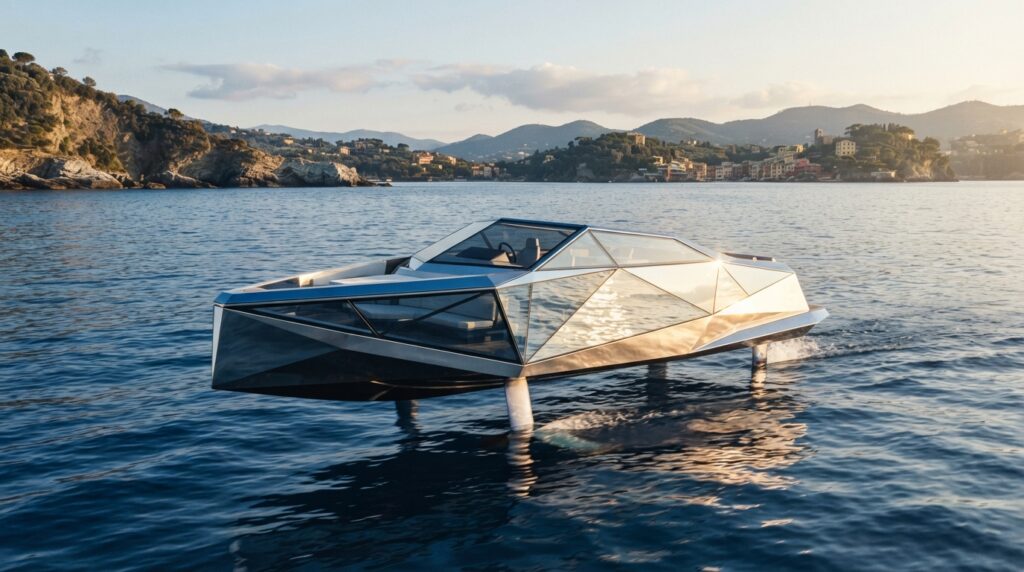
The BMW ICON hydrofoil boat is not simply a stylish concept vessel; it is a deliberate experiment in applying automotive design philosophy, digital integration, and electric mobility thinking to the marine environment. Developed by BMW Group Design in collaboration with TYDE, the ICON represents a rare moment when a major automotive manufacturer steps outside its traditional domain and challenges how boats are conceived, built, and experienced.
Rather than starting with marine tradition, the BMW ICON begins with questions more commonly asked in the automotive and technology sectors:
How should humans interact with machines?
How can digital intelligence improve efficiency and comfort?
And what happens when propulsion, structure, and user experience are designed as a single system?
The result is a striking electric hydrofoil watercraft that rises above the water, minimises resistance, and redefines what a premium personal boat might become in an electrified future.
Origins of the BMW ICON Project
BMW’s involvement in marine design is not entirely new, but the ICON project marks its most serious exploration of watercraft as a mobility platform rather than a novelty exercise.
The project emerged from BMW Group Design’s long-term research into future mobility, sustainability, and human–machine interaction. Rather than producing a conventional electric boat, BMW sought a partner with deep technical expertise in foiling and electric propulsion. That partner was TYDE, a German startup specialising in high-performance electric hydrofoil vessels.
The collaboration allowed BMW to focus on:
- Design language and user experience
- Digital systems and interfaces
- Sustainability and materials philosophy
While TYDE contributed:
- Foil engineering
- Electric propulsion systems
- Marine structural expertise
The ICON is therefore a true cross-industry hybrid, blending automotive, marine, and aerospace thinking.
Why Hydrofoils Are Central to the Concept
At the heart of the BMW ICON is its hydrofoil system. Hydrofoils fundamentally change how a vessel interacts with water by lifting the hull clear of the surface once sufficient speed is reached.
This offers several decisive advantages, particularly for electric craft:
- Dramatically reduced hydrodynamic drag
- Higher efficiency at cruising speeds
- Smoother ride in moderate chop
- Reduced wake and water disturbance
For electric propulsion, efficiency is everything. Batteries are heavy, energy-dense fuel is unavailable, and range anxiety is real. Hydrofoils address these constraints directly by allowing electric boats to travel farther and faster on the same energy budget.
Foil Design and Lift Mechanics
The BMW ICON employs computer-optimised foils, engineered to provide stable lift at relatively low speeds while maintaining control at higher velocities.
Key characteristics include:
- Forward and aft foil arrangement for pitch stability
- Narrow struts to minimise drag
- Precisely tuned foil profiles for electric cruising speeds
Once foil-borne, the vessel experiences a dramatic reduction in resistance. The sensation is often described as “flying above the water,” a feeling that aligns strongly with BMW’s emphasis on emotional user experience.
Electric Propulsion and Power Delivery
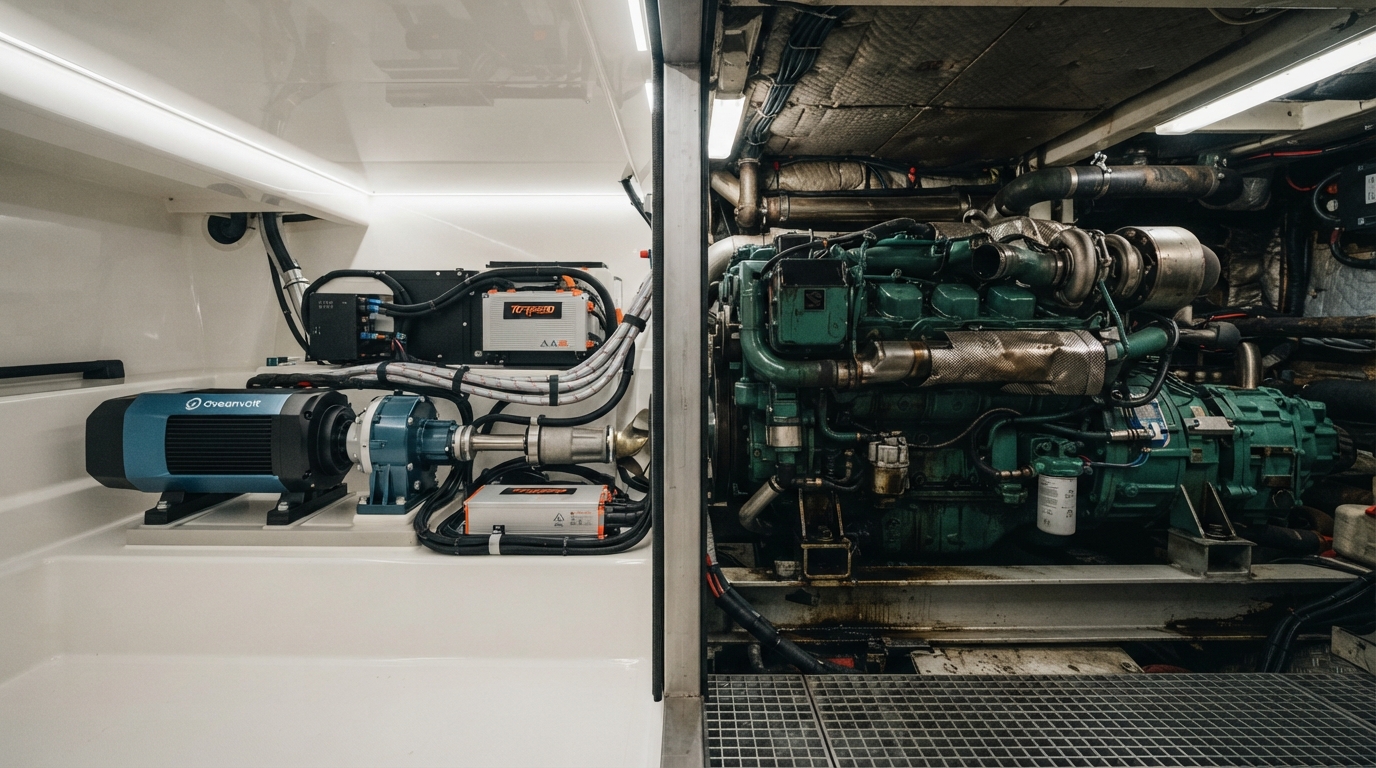
The ICON is powered entirely by electric motors, drawing energy from onboard battery systems. Unlike internal combustion engines, electric motors deliver instant torque, which is particularly valuable for hydrofoil lift-off.
Benefits of electric propulsion in this context include:
- Smooth, linear acceleration
- Near-silent operation
- Reduced vibration
- Precise throttle control
The combination of electric motors and hydrofoils allows the ICON to reach efficient cruising speed quickly and maintain it with minimal energy expenditure.
Battery Systems and Energy Strategy
While BMW has not released full technical specifications, the ICON’s battery system reflects automotive-style thinking rather than traditional marine design.
Key principles include:
- Modular battery architecture
- Active thermal management
- Integration with digital energy monitoring
The emphasis is not simply on capacity, but on intelligent energy use, ensuring that propulsion, onboard systems, and user comfort are balanced dynamically.
Digital Intelligence and Human–Machine Interface
One of the most distinctive aspects of the BMW ICON is its digital cockpit philosophy. Rather than treating navigation, propulsion, and comfort as separate systems, the ICON integrates them into a unified digital environment.
Features include:
- Panoramic digital displays
- Context-aware controls
- Minimalist physical interfaces
The operator experience is closer to piloting a modern electric car than driving a traditional boat. Information is prioritised intelligently, reducing cognitive load and enhancing situational awareness.
Design Language: Automotive Meets Marine
Visually, the BMW ICON is unmistakably influenced by automotive design.
Key design cues include:
- Flowing, sculptural surfaces
- Panoramic glazing reminiscent of concept cars
- Clean separation of functional and aesthetic elements
Unlike many concept boats that exaggerate marine tropes, the ICON deliberately looks non-nautical, reinforcing the idea that it belongs to a new category of watercraft.
Structural Materials and Sustainability
Sustainability is central to the ICON’s philosophy. BMW has explored the use of:
- Lightweight composite materials
- Recyclable structural components
- Environmentally conscious interior finishes
Weight reduction is critical for electric hydrofoils, as every kilogram affects lift, efficiency, and range. The ICON treats sustainability not as an add-on, but as a functional requirement.
Ride Quality and Comfort
Once foil-borne, the ICON delivers a markedly different ride compared to conventional boats.
Benefits include:
- Reduced impact from waves
- Lower noise levels
- Minimal spray
For passengers, the experience is closer to gliding than boating. This aligns with BMW’s broader emphasis on premium comfort through engineering, not excess.
Safety and Control Systems
Hydrofoil boats require sophisticated control systems to remain stable across varying speeds and sea states.
The BMW ICON integrates:
- Real-time foil adjustment
- Active stabilisation algorithms
- Redundant electronic systems
These systems constantly monitor speed, pitch, roll, and water conditions, adjusting foil angles to maintain stability and comfort.
Market Position and Intended Audience
The BMW ICON is not designed for mass production in its current form. Instead, it targets:
- Early adopters of electric mobility
- Design-led technology enthusiasts
- Luxury buyers seeking exclusivity
- Innovators interested in future transport concepts
Its true value lies in demonstration, not immediate commercialisation.
Why the BMW ICON Qualifies as an Emerging Watercraft
The BMW ICON belongs firmly within emerging watercraft and experimental concepts because it represents a convergence of multiple disruptive trends:
- Electric propulsion
- Hydrofoil efficiency
- Digital-first control systems
- Automotive design philosophy applied to marine mobility
Rather than improving existing boats, it proposes an entirely different framework for personal water transport.
Influence on the Future of Marine Design
While the ICON itself may remain a concept, its influence is likely to extend far beyond this single project.
Its ideas are already relevant to:
- Electric ferries and tenders
- High-end recreational craft
- Autonomous marine vehicles
- Future luxury water mobility platforms
As battery energy density improves and foiling technology matures, vessels inspired by the ICON are likely to move from experimental to practical.
Conclusion
The BMW ICON hydrofoil boat is not about speed records or market disruption today. It is about direction.
By combining electric propulsion, hydrofoil efficiency, digital intelligence, and automotive-grade design thinking, BMW has produced a compelling vision of how watercraft may evolve in the coming decades. It challenges the assumption that boats must be noisy, inefficient, and mechanically complex.
In doing so, the ICON earns its place among the most important emerging watercraft concepts of the modern era.
www.vectorwatercraft.com.au