
Introduction: The Silent Shift No One Is Naming
For more than a century, watercraft design has revolved around one central object: the engine. Hull shapes, weight distribution, controls, safety assumptions, maintenance regimes, and even rider behaviour were all dictated by the needs and limitations of internal combustion machinery.
As water sports enter the electric era, something far more profound than propulsion change is occurring. The engine is no longer the organising principle. In its place sits a broader, more intelligent framework: energy management.
This article explains why future watercraft will no longer be “engine-led” machines, but energy-managed systems, and why this distinction matters far more than debates about speed, range, or fuel type.
The Engine-Centred Era: A Design Straitjacket
Traditional watercraft engineering begins with the engine and works outward.
This approach imposes fixed realities:
• Power delivery is mechanical and delayed
• Weight is concentrated and immovable
• Cooling is reactive rather than predictive
• Fuel use is largely uncontrolled
• Efficiency is secondary to output
As a result, design compromises became normalised:
• Heavier hulls to absorb vibration
• Reinforced mounts and structures
• Exhaust routing constraints
• Fixed balance points
• Limited adaptability
In petrol-era thinking, the craft exists to support the engine.
Energy Management Reverses the Hierarchy
Electric systems flip this hierarchy entirely.
Instead of asking, “How do we fit an engine?”, designers now ask:
• How is energy stored?
• How is it distributed?
• How is it protected?
• How is it recovered or conserved?
• How is it matched to the rider and environment?
In energy-managed watercraft:
• The motor is a component, not the centre
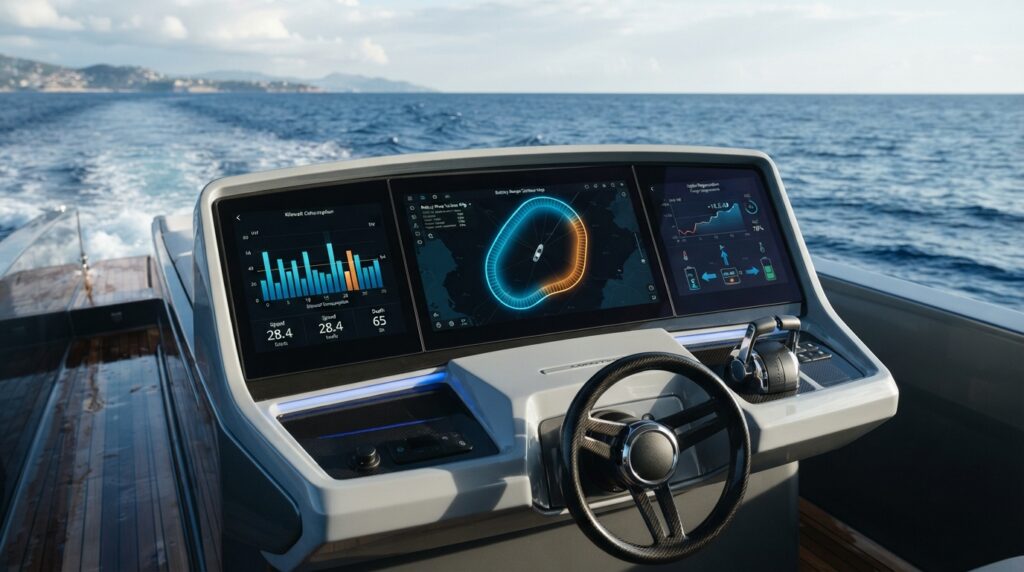
• Control systems govern output continuously
• Performance is shaped by software logic
• Design decisions are systemic, not mechanical
This is a philosophical shift as much as a technical one.
Energy Is Finite — and That Changes Everything
Petrol encourages wasteful thinking:
• Fuel is abundant
• Consumption is invisible
• Inefficiency is tolerated
• Refuelling is instant
Electric energy is different:• Finite• Measurable• Valuable• Actively managed
This reality forces smarter design.
Energy-managed watercraft must consider:
• Drag reduction
• Load efficiency
• Thermal control
• User behaviour
• Mission profiles
Efficiency becomes central, not optional.
From Throttle Control to Energy Governance
Petrol throttles control fuel flow.Electric systems govern energy.
This distinction matters.
Energy governance includes:
• Torque curve shaping
• Output smoothing
• Peak-load limitation
• Recovery windows
• Protective throttling under stress
The result is watercraft that feel:
• More predictable
• More controlled
• Less fatiguing
• Safer at limits
• More forgiving for novices
The rider is no longer wrestling a machine — they are working with a system.
Design Implications: Freedom Where It Matters
When engines no longer dictate layout, designers gain freedom in critical areas.
Energy-managed design allows:
• Centralised mass placement
• Lower centres of gravity
• Balanced fore–aft loading
• Modular component placement
• Scalable platform sizing
This is why future watercraft increasingly blur lines between:
• Boards and boats
• Recreation and utility
• Personal and shared equipment
Design becomes purpose-led, not engine-led.
Thermal Management Becomes Strategic
In petrol systems, heat is tolerated.In electric systems, heat is managed.
Energy management frameworks monitor:
• Battery temperature
• Motor efficiency zones
• Controller load
• Ambient conditions
• Water temperature interactions
This enables:
• Predictive derating instead of sudden failure
• Longer component lifespan
• Stable performance across conditions
• Reduced catastrophic breakdowns
Thermal intelligence is now part of performance.
Safety Moves From Reaction to Prevention
Engine-based systems rely heavily on:• Rider response• Mechanical failsafes• Operator judgement
Energy-managed systems enable:
• Power reduction before instability
• Controlled shutdowns
• Load-based output limits
• Automated protection logic
• System-level fault isolation
Safety is no longer an afterthought — it is embedded.
This is particularly critical in:
• Youth training
• Rescue applications
• Public-use equipment
• Rental fleets
• Emergency response scenarios
Energy Management Changes Skill Curves
Petrol-powered watercraft reward aggression and experience.
Electric energy-managed craft reward precision and balance.
This reshapes participation:
• Shorter learning curves
• Broader demographic appeal
• Reduced intimidation factor
• Safer progression paths
• Greater retention of new users
In future water sports, control literacy will matter more than brute strength.
Maintenance Is Reframed as System Health
Engine-centric ownership assumes:
• Frequent servicing
• Wear-based replacement
• Reactive maintenance
• Mechanical intervention
Energy-managed ownership focuses on:
• Battery health metrics
• Controller diagnostics
• Software updates
• Predictive alerts
• Lifecycle optimisation
Watercraft begin to behave more like aircraft systems than motorcycles.
This is a profound shift for councils, clubs, and commercial operators.
Lifecycle Thinking Becomes Mandatory
Energy-managed design forces long-term thinking:
• Battery replacement pathways
• Component upgradeability
• Modular repairs
• Platform longevity
• Reduced total environmental impact
Future watercraft will increasingly be judged not by launch-day performance, but by 10-year usability.
This favours manufacturers who design systems, not just products.
The Market Consequences Are Structural
As energy management becomes dominant:
• Access restrictions ease
• Insurance models adapt
• Training frameworks expand
• Public-sector adoption increases
• Shared-use fleets become viable
This expands the market far beyond traditional enthusiasts.
Energy-managed watercraft are not toys — they are infrastructure-ready devices.
Why Some Manufacturers Will Fail This Transition
Companies that cling to engine-era thinking will:
• Oversize motors
• Underspec energy storage
• Ignore thermal limits
• Chase headline speeds
• Create fragile platforms
These products will:
• Age poorly
• Fail under real-world use
• Disappoint non-expert users
• Face regulatory resistance
• Lose institutional buyers
Energy management exposes shortcuts.
The Next Decade Will Favour System Builders
The future belongs to manufacturers who:
• Design platforms, not models
• Prioritise energy efficiency
• Build modular architectures
• Invest in control intelligence
• Think in lifecycles, not seasons
In water sports, the engine era rewarded horsepower.The energy era rewards judgement.
Conclusion: Engines Are Ending — Systems Are Beginning
The most important realisation is this:
The engine is no longer the heart of the watercraft.Energy management is.
This shift changes:• Design• Safety• Ownership• Access• Economics• Participation
Water sports technology is no longer about how much power you have — but how intelligently you use it.
That is the defining difference between the past and the future.
See More at www.vectorwatercraft.com.au