
The Misunderstood Metric in Small Watercraft Performance
In the world of recreational boating, horsepower has long been the headline figure. It is often the first specification buyers look for and the most commonly used benchmark when comparing vessels. This mindset, however, can be misleading—particularly when applied to compact, high-performance craft such as mini jet boats.
In these smaller vessels, raw horsepower tells only part of the story. The true determinant of performance, safety, and usability is not absolute power, but how that power interacts with the total weight of the craft. This relationship—commonly referred to as power-to-weight balance—is the defining factor that separates a well-engineered mini jet boat from one that is difficult, inefficient, or even unsafe to operate.
This article explores why power-to-weight balance is the critical metric in mini jet boat design, how it influences real-world performance, and why buyers who focus solely on horsepower risk making fundamentally flawed decisions.
Understanding Power-to-Weight Balance
Power-to-weight balance refers to the ratio between the propulsion system’s output and the total weight of the vessel. In a mini jet boat, this includes:
- Hull weight
- Motor weight
- Battery system (in electric boats)
- Passenger load
- Additional equipment
Rather than asking, “How powerful is the motor?”, the more relevant question is:
“How effectively does this power move the total mass of the boat?”
A properly balanced system ensures that the available power is sufficient to:
- Achieve smooth acceleration
- Maintain stable planing
- Provide responsive control
- Operate efficiently without overstressing components
Why Horsepower Alone Is Misleading
The Illusion of Performance
A high horsepower figure can create the impression of superior performance. However, in a mini jet boat, excessive power relative to weight can produce undesirable and dangerous characteristics.
These may include:
- Sudden, uncontrolled acceleration
- Difficulty maintaining directional stability
- Increased sensitivity to throttle input
- Reduced margin for operator error
In contrast, a well-balanced system may have a lower headline power figure but deliver far superior real-world usability.
The Problem with Overspecification
In many cases, buyers are drawn to the highest power option available, assuming it represents the best value. This approach ignores the fact that mini jet boats operate within tightly defined design parameters.
When power exceeds what the hull is designed to handle:
- The boat may become unstable at speed
- Structural stress increases significantly
- Control becomes less predictable
This is particularly relevant in electric systems, where torque is delivered instantly.
The Role of Weight in Electric Mini Jet Boats
Battery Systems: The Defining Factor
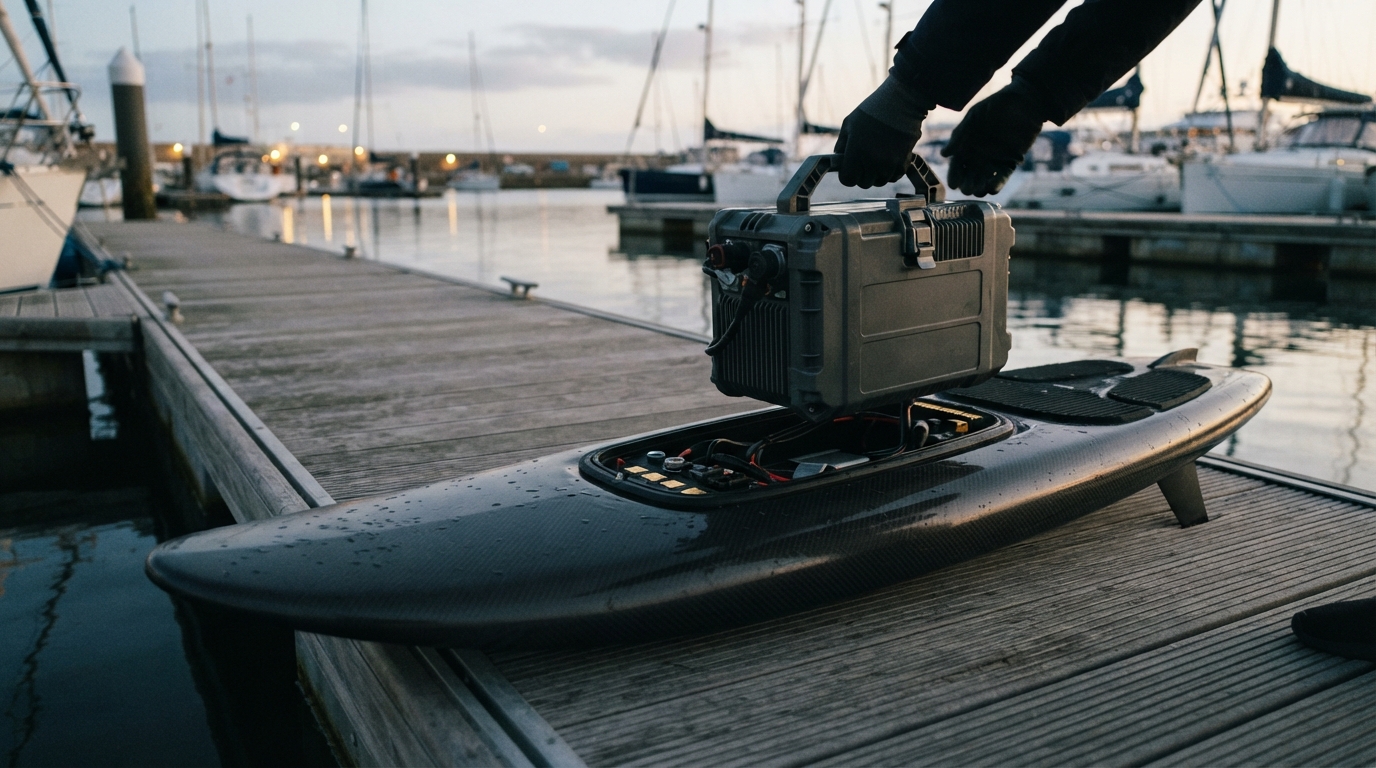
Unlike petrol-powered craft, electric mini jet boats rely on battery systems that contribute significantly to overall weight. These batteries must be carefully integrated into the design to maintain balance and performance.
Poorly managed weight can result in:
- Improper trim (nose up or down)
- Reduced efficiency in the water
- Increased drag and energy consumption
- Compromised handling
In a professionally engineered mini jet boat, battery placement is optimised to achieve:
- Correct centre of gravity
- Even weight distribution
- Stable planing characteristics
Passenger Load Variability
Mini jet boats are often used in varying configurations—single operator, two passengers, or additional gear. Each of these scenarios alters the overall weight and balance of the vessel.
A well-designed power-to-weight ratio accounts for these variations, ensuring that the boat remains:
- Responsive under load
- Stable in turns
- Predictable during acceleration and deceleration
Acceleration: Where Balance Matters Most
Acceleration is one of the defining characteristics of mini jet boats, particularly electric models. Instant torque delivery can create rapid forward motion, which must be carefully controlled.
Balanced Systems Deliver Controlled Acceleration
In a properly balanced mini jet boat:
- Acceleration is smooth and progressive
- The hull transitions cleanly onto plane
- The operator maintains full control
Imbalanced Systems Create Instability
When power exceeds what the hull can manage:
- Acceleration may become abrupt or jerky
- The bow may lift excessively
- Steering response may lag behind power delivery
This disconnect between power and control is a key contributor to unsafe operation.
Handling and Stability
The Relationship Between Speed and Control
As speed increases, the demands on the hull and steering system also increase. A balanced power-to-weight ratio ensures that the boat remains controllable across its full operating range.
This includes:
- Predictable turning behaviour
- Stable tracking in straight lines
- Consistent response to throttle adjustments
The Risk of Overpowering
An overpowered mini jet boat may reach speeds that exceed its stable handling envelope. This can result in:
- Increased likelihood of spin-outs
- Difficulty correcting course
- Reduced reaction time for the operator
In extreme cases, the boat may become unstable enough to pose a rollover risk.
Efficiency and Range
Energy Consumption in Electric Systems
In electric mini jet boats, efficiency is directly tied to how effectively power is used. A balanced system minimises wasted energy, resulting in:
- Longer run times
- Lower operating costs
- Reduced strain on battery systems
The Cost of Imbalance
When power and weight are not aligned:
- The motor may work harder than necessary
- Energy consumption increases
- Heat generation rises, requiring more cooling
This reduces the overall efficiency of the system and can shorten component lifespan.
Structural Considerations
Load Distribution and Stress
The forces generated by acceleration, turning, and impact are transmitted through the hull. A balanced system ensures that these forces remain within safe limits.
When power is excessive:
- Structural stress increases
- Mounting points may weaken over time
- Long-term durability is compromised
Fatigue Over Time
Even if an overpowered boat performs well initially, repeated exposure to excessive forces can lead to:
- Micro-fractures in the hull
- Degradation of structural integrity
- Increased risk of sudden failure
This highlights the importance of designing within appropriate power-to-weight parameters.
The Human Factor: Control and Confidence
Operator Experience
Mini jet boats are often marketed as accessible and easy to use. However, this accessibility depends on predictable and manageable performance.
A balanced system allows operators to:
- Learn quickly
- Build confidence
- Operate safely in a variety of conditions
The Impact of Poor Balance
An imbalanced boat can be:
- Difficult to control
- Unforgiving of mistakes
- Intimidating for inexperienced users
This reduces overall enjoyment and increases the likelihood of accidents.
Real-World Applications in Australian Conditions
Australian waterways present a wide range of conditions, from calm inland lakes to flowing rivers and coastal environments.
A well-balanced mini jet boat is better suited to:
- Shallow water navigation
- Variable current conditions
- Launching and retrieval in non-traditional locations
In these scenarios, predictable performance and efficient power delivery are far more valuable than excessive horsepower.
The Engineering Advantage of Integrated Systems
Designed as a Complete Package
Professionally manufactured mini jet boats are engineered with power-to-weight balance as a central consideration. This involves:
- Selecting the appropriate motor output
- Designing the hull to match expected loads
- Positioning components for optimal balance
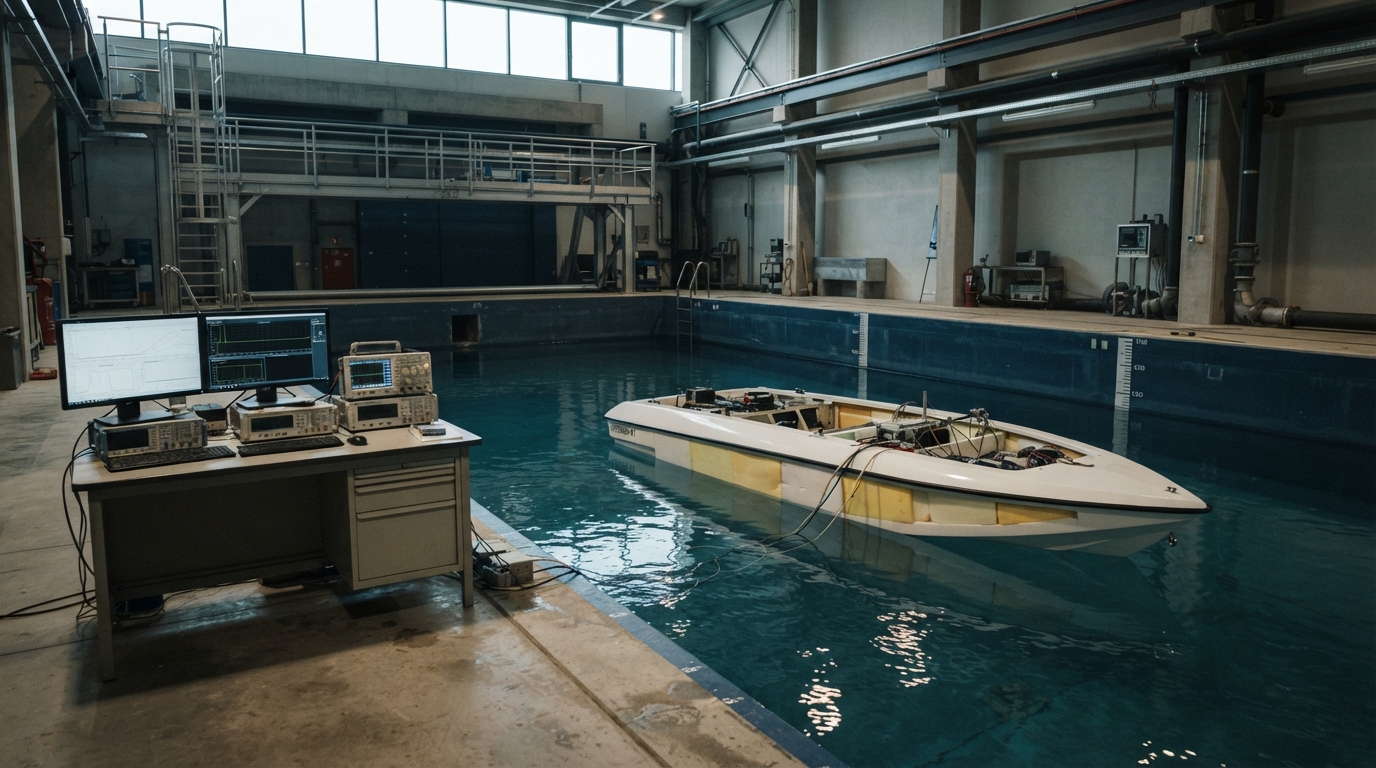
Tested Under Real Conditions
These systems are not theoretical—they are tested under real-world conditions to ensure that:
- Performance meets expectations
- Handling remains stable
- Safety margins are maintained
This level of validation is difficult to achieve in custom or kit-based builds.
Long-Term Value
Durability and Maintenance
Balanced systems experience less stress, resulting in:
- Lower maintenance requirements
- Longer component lifespan
- Greater reliability over time
Resale Considerations
Buyers in the secondary market are increasingly aware of the importance of engineered systems. A mini jet boat with a proven, balanced design is likely to:
- Retain value more effectively
- Attract more interest
- Provide confidence to prospective buyers
Conclusion: Balance Defines Performance
In mini jet boats, the traditional emphasis on horsepower is misplaced. While power is important, it must be considered in relation to the total weight and design of the vessel.
Power-to-weight balance determines:
- How the boat accelerates
- How it handles at speed
- How efficiently it operates
- How safe it is to use
A well-balanced mini jet boat delivers a harmonious combination of performance, control, and reliability. An imbalanced system, by contrast, introduces unnecessary risk and compromises the overall experience.
For buyers, the lesson is clear: do not be swayed by headline power figures alone. Focus instead on how that power is integrated into the complete system. In the world of mini jet boats, balance is not just important—it is everything.
See More at www.vectorwatercraft.com.au