Electric water sports have moved beyond experimentation. What began as a fringe alternative driven by environmental curiosity and early adopters is now entering a decisive, structural phase. The long-term outlook is no longer a question of if electric water sports will dominate significant segments of the market, but how, where, and how fast that dominance will unfold.
This outlook is shaped by forces far broader than technology alone. Economics, regulation, demographics, urbanisation, environmental pressure, infrastructure change, and cultural expectation are converging to create conditions uniquely favourable to electric platforms.
The future of water sports will not simply include electric craft. It will be built around them.
From transition phase to structural shift
Every major technological transition follows a recognisable pattern: novelty, resistance, early adoption, parallel markets, and finally structural replacement.
Electric water sports are now firmly in the parallel market phase. Petrol-powered craft still dominate in volume and legacy use, but electric platforms are no longer curiosities. They are viable, increasingly preferred solutions in defined use cases.
The long-term outlook points clearly toward structural replacement in multiple categories—particularly personal watercraft, light recreational craft, rescue platforms, inland waterway use, and urban-adjacent marine recreation.
This transition will not be uniform. It will be uneven, segmented, and context-specific. But it will be irreversible.
Economics increasingly favour electric platforms
One of the most powerful long-term drivers is economics.
Electric watercraft benefit from declining battery costs, simplified drivetrains, reduced maintenance, and predictable operating expenses. While upfront pricing may remain higher in some segments in the near term, total cost of ownership increasingly favours electric systems.
Petrol-powered craft face rising fuel costs, tightening emissions standards, and increasing maintenance complexity. These pressures compound over time.
In the long term, electric platforms benefit from the same economic forces that transformed other industries: scale, standardisation, and learning curves.
As volumes increase, costs fall. As costs fall, adoption accelerates.
Battery evolution reshapes feasibility
Battery technology will not improve overnight, but it does not need to.
Incremental improvements in energy density, charging speed, thermal management, and cycle life compound significantly over a decade. Even modest annual gains reshape what is practical.
More importantly, system-level optimisation—lighter structures, smarter control, better hydrodynamics—often delivers greater real-world benefit than raw battery improvements alone.
The long-term outlook is not defined by a single breakthrough, but by cumulative refinement.
Electric watercraft will steadily expand their viable operating envelope until petrol alternatives are left serving only narrow extremes.
Regulation will increasingly favour electric use
Regulatory pressure is one of the most underestimated long-term forces shaping water sports.
Noise limits, emissions rules, wildlife protection, and community impact regulations are tightening globally. These pressures disproportionately affect petrol-powered craft.
Electric watercraft align naturally with regulatory objectives. Quiet operation, zero local emissions, and controllable behaviour simplify compliance rather than complicate it.
Over time, regulation will not need to explicitly mandate electrification. It will simply make alternatives less viable.
Access will follow compliance.
Urbanisation drives demand for quiet, clean watercraft
As populations concentrate around coastlines, rivers, and urban waterways, tolerance for disruptive recreation declines.
Electric watercraft thrive in exactly these environments.
Quiet operation, low wake, and minimal pollution allow coexistence with residential areas, paddlers, swimmers, and commercial traffic. This compatibility expands access rather than constraining it.
The long-term outlook strongly favours platforms that integrate into shared spaces rather than dominate them.
Urban-adjacent water sports will increasingly be electric by default.
Professional and institutional adoption anchors credibility
Long-term adoption is reinforced by professional use.
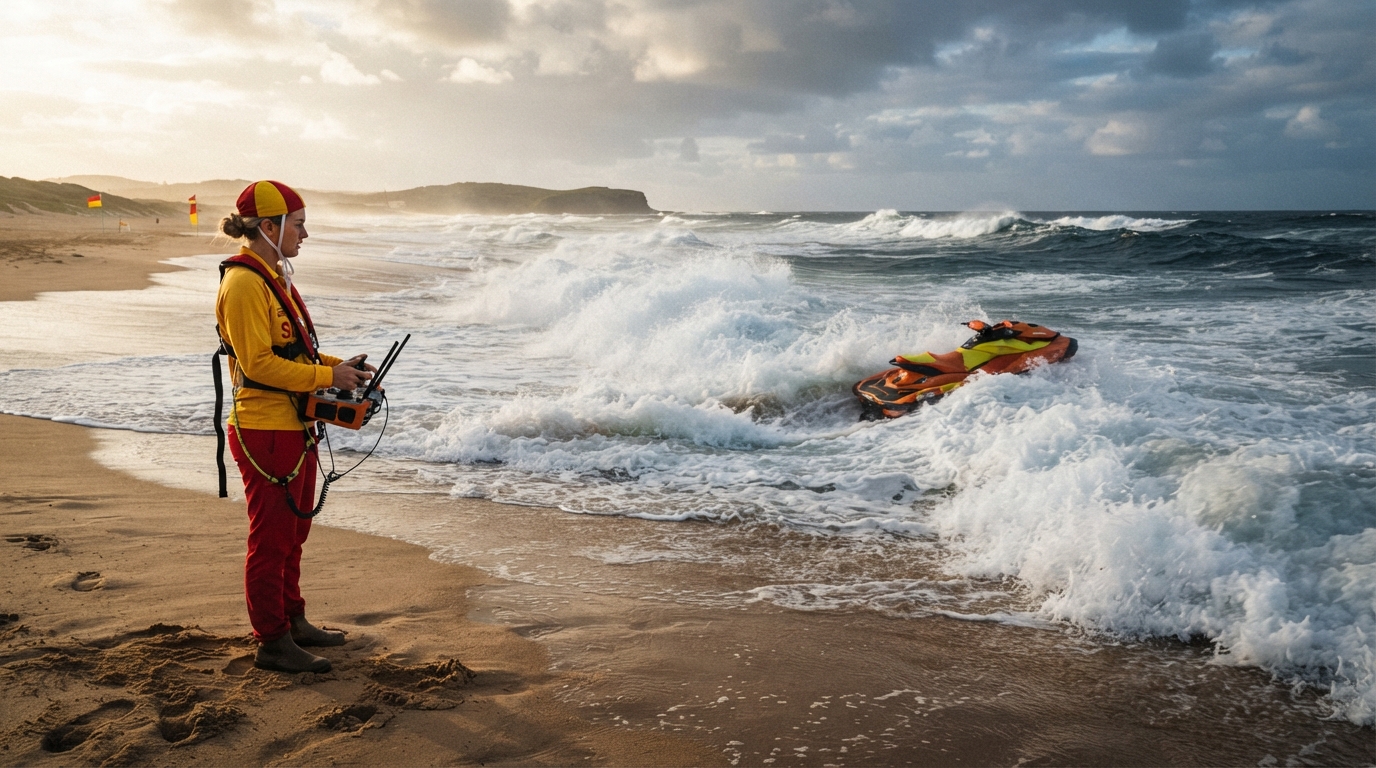
Rescue services, councils, environmental agencies, and patrol units increasingly rely on electric and hybrid platforms because they deliver predictable performance, lower operating cost, and reduced community impact.
Professional adoption normalises technology. It builds trust. It creates standards.
As these platforms prove themselves under demanding conditions, recreational confidence follows.
The long-term future of electric water sports is anchored not in marketing claims, but in operational reality.
Cultural perception continues to shift
Cultural attitudes toward power, noise, and responsibility are changing.
Younger generations place higher value on sustainability, access, and experience than on mechanical bravado. Older users increasingly value comfort, predictability, and ease of use.
Electric watercraft align with both.
Over time, petrol-powered noise will feel increasingly out of place—much as smoking indoors or idling engines in urban centres now does.
Cultural momentum rarely reverses once it passes a tipping point.
Electric platforms enable new categories of use
One of the most important long-term effects of electrification is not replacement, but creation.
Electric platforms enable categories of water sports that were previously impractical or socially unacceptable. Fitness-oriented use, educational programmes, urban exploration, environmental monitoring, and distributed safety deployment all become feasible.
These new categories expand the market rather than cannibalise it.
The long-term outlook is not just substitution, but expansion of what water sports can be.
Infrastructure independence compounds growth
Electric watercraft increasingly operate independently of traditional infrastructure.
Home charging, portable deployment, informal access points, and decentralised storage reduce barriers to entry. Ownership becomes simpler. Use becomes more frequent.
This independence compounds adoption by reducing friction.
Over the long term, markets favour technologies that minimise dependency rather than increase it.
Electric platforms do exactly that.
Safety expectations align with electric capability
Safety-first design philosophies align naturally with electric systems.
Precise control, adaptive behaviour, and integrated monitoring allow safety to be engineered proactively rather than reactively.
As safety expectations rise, electric platforms gain an advantage that petrol systems struggle to match without significant compromise.
Over time, safety performance becomes a baseline requirement rather than a differentiator—further favouring electric designs.
Market segmentation stabilises adoption
The long-term future will not see a single dominant electric watercraft type.
Instead, markets will segment intelligently. Lightweight recreational craft, performance-oriented platforms, professional systems, and mixed-use designs will coexist.
Electric propulsion is flexible enough to serve all of these segments.
Petrol systems are not.
This flexibility supports stable, long-term growth rather than boom-and-bust cycles.
Legacy resistance will fade, not fight
Resistance to electric water sports will persist, but it will fade rather than intensify.
As with other transitions, resistance is strongest when alternatives feel unfamiliar and weakest once benefits are experienced directly.
Few users return to louder, more complex systems once they experience quiet, responsive electric platforms in appropriate contexts.
Experience dissolves ideology.
Global supply chains reinforce momentum
Global investment in electric mobility, renewable energy, and battery manufacturing reinforces water sports adoption indirectly.
Watercraft benefit from advancements driven by far larger industries. They do not carry the burden alone.
This external momentum ensures that electric water sports continue to improve even without massive standalone investment.
The long-term trajectory is supported from multiple directions.
Risks and realistic constraints remain
The long-term outlook is positive, but not without constraints.
Extreme endurance, high-speed offshore use, and heavy commercial applications may retain petrol or hybrid solutions for longer. Battery disposal, recycling infrastructure, and supply chain ethics require continued attention.
These challenges are manageable, not disqualifying.
They will shape how electrification unfolds, not whether it does.
The end state: electric as the default
In the long term, electric water sports will reach the same status as automatic transmissions in cars or digital navigation in aviation.
They will no longer be described as electric. They will simply be watercraft.
Petrol-powered systems will persist at the margins, serving specialised niches rather than defining the market.
This is how technological maturity expresses itself—not through elimination, but through normalisation.
The long-term outlook
The future of water sports technology is electric not because it is fashionable, but because it is better aligned with economic reality, environmental necessity, regulatory direction, and human behaviour.
Electric water sports offer quieter access, safer control, broader participation, and lower long-term friction.
They integrate rather than disrupt.
Over time, these advantages compound until alternatives feel increasingly out of step with the world around them.
The long-term outlook is clear.
Electric water sports are not the future because they replace the past.
They are the future because they fit the present—and scale naturally into what comes next.
See More at www.vectorwatercraft.com.au