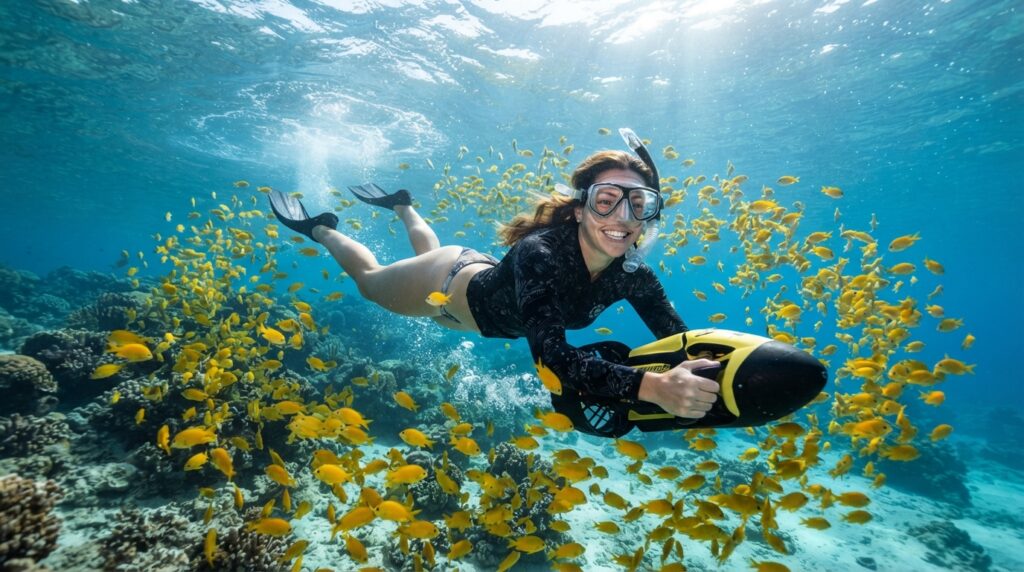

Underwater scooters, often referred to as diver propulsion vehicles (DPVs), have become an increasingly important tool in both recreational and professional diving. Originally developed to extend the range of divers and reduce physical effort, these devices have evolved into a broad category of equipment with varying levels of performance, complexity, and application.
While high-performance systems such as the H9 Sub Jet Pro and integrated devices like the Sub Runner represent advanced ends of the spectrum, the majority of underwater scooters fall into a more general category. These devices are designed to provide practical, accessible propulsion for a wide range of users, from casual snorkellers to experienced divers.
Understanding this category is essential for anyone considering underwater mobility, as it forms the foundation from which more advanced systems have developed.
The Purpose of Underwater Scooters
Underwater scooters are designed to:
- assist movement underwater
- extend range
- reduce physical effort
Why They Matter
Swimming underwater requires:
- energy
- endurance
- time
Scooters reduce these demands.
How Underwater Scooters Work
Core Components
- electric motor
- propeller or jet system
- battery
- control mechanism
Operation
- user holds device
- motor provides forward thrust
- user steers through body positioning
Types of Underwater Scooters
Entry-Level Devices
- lower power
- shorter range
- suitable for casual use
Mid-Range Devices
- improved performance
- better efficiency
Advanced Devices
- higher power
- extended capability
Performance Characteristics
Speed
- moderate
- varies by model
Range
- limited by battery
- dependent on usage
Control
- simple
- intuitive
Applications
Snorkelling
- enhanced movement
- reduced effort
Diving
- extended exploration
- improved efficiency
Recreational Use
- accessible to broad audience
Advantages
- ease of use
- reduced fatigue
- improved range
Limitations
- battery dependency
- limited power in basic models
Australian Context
Australia’s underwater environments make scooters:
- highly relevant
- widely usable
Conclusion
Underwater scooters provide a practical and accessible way to enhance underwater mobility. While they vary in performance and capability, they form the foundation of modern underwater exploration and continue to evolve alongside advancements in technology.